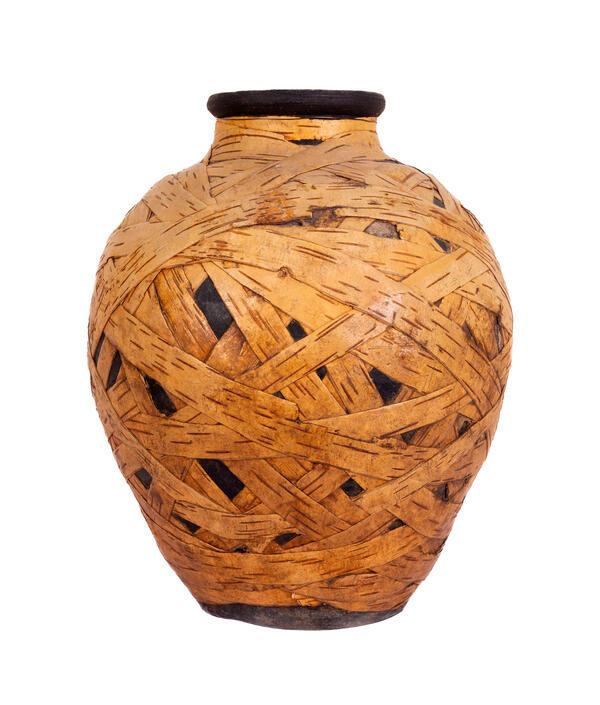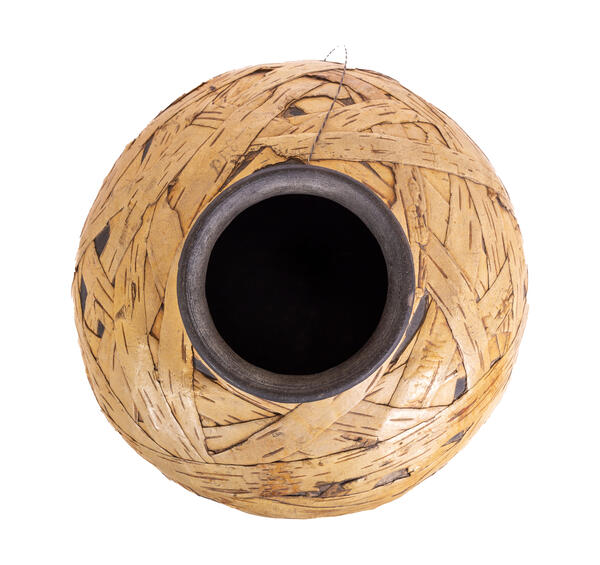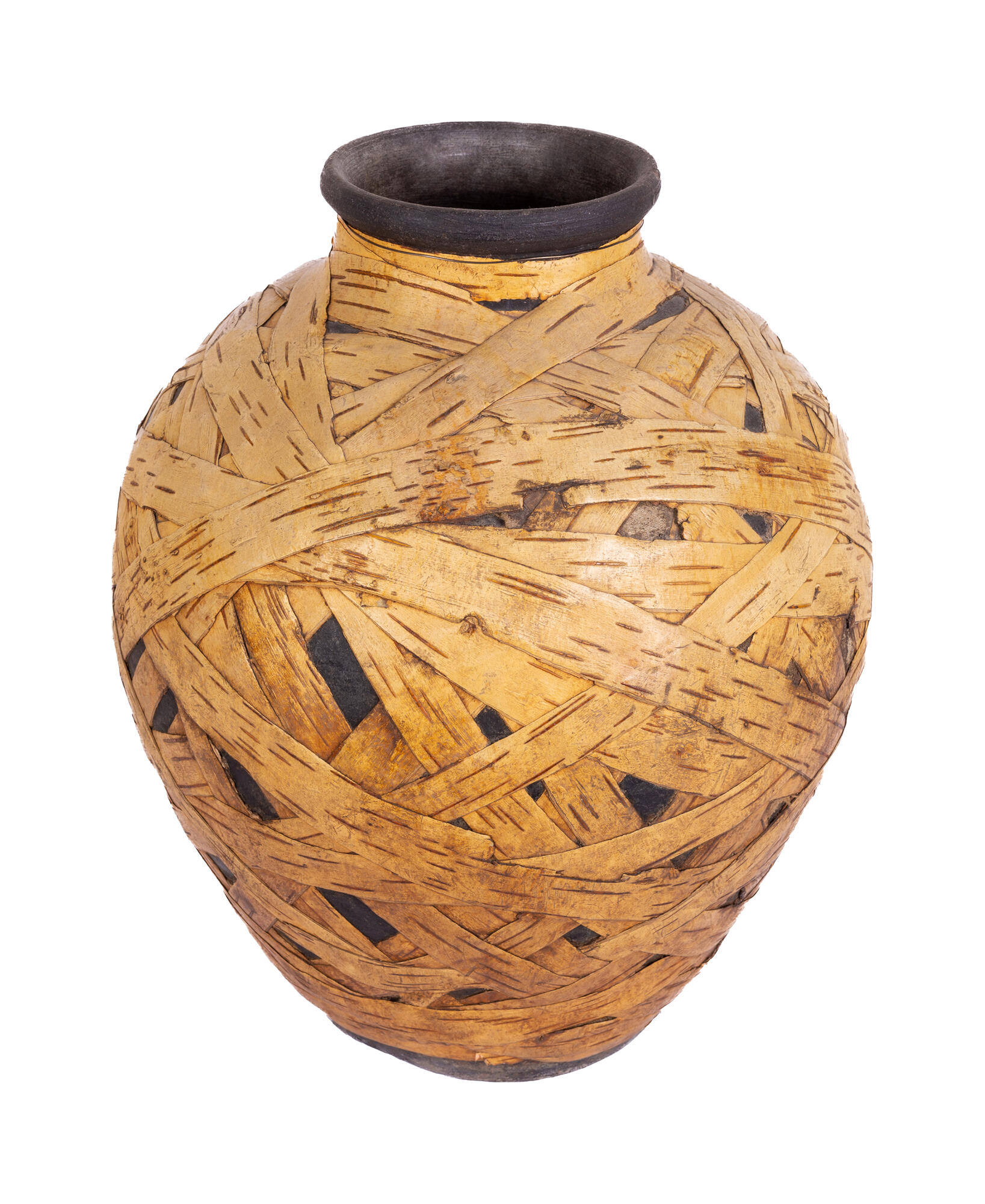


A pot is a clay vessel with a wide open top, which has a low corolla, and a rounded body, smoothly tapering to the bottom. Pots were used for cooking, storing and serving various dishes.
Clay, a porous material that creates the necessary ventilation and prevents food from spoiling for a long time, was used to make these vessels. There were two ways of shaping a pot: by coiling and on the wheel. In the first case, the potter rolled clay coils, put them one on another to form the walls of the future vessel, and simultaneously smoothed them with a wet cloth to make a silhouette. The second method required a kick-wheel, and the vessel of a specified shape was drawn from the clay blank by hand. The pliable material did not virtually limit the imagination of the craftsman in terms of decoration.
A pot most often symbolizes a human being. In Russian, parts of a pot are identified with parts of a human body (a throat, a lip, a hand, a nose), in proverbs — with a head (“a head as an empty pot”). In rites, a pot acted as a “replacement” of a person, and in riddles it turned into a participant of important events, while at the same time trying on itself a human life scenario: “I was born in the stone mountain, baptized in the fiery river, taken out to the market place; a maiden came, struck her gold ring with my crumbly bones, which cannot be put into a coffin, and cannot be commemorated with pancakes.”
Many significant stages of human life associated with a change of status were accompanied by the breaking of pots. In the past, pots were broken with prayer during difficult childbirth; after a christening lunch, the godfather would break a pot, and with it, in a symbolic way, the godchild’s illnesses. The pot was used to store the “double” of the newborn — the placenta. At the end of the wedding feast, they smashed the pot on the stove and wished the bride and groom as many children as the number of shards. The morning after the first wedding night started with the pot smashing, but this time it had a different implication: it was used to confirm that the bride lost her “integrity” only during that night. In a funeral rite, the pots used to wash the deceased were broken, thus symbolizing the end of life.
However, it was considered bad luck if a pot cracked for no apparent reason: it meant the ancestors were discontented.
A pot of porridge was a sign of prosperity: it was attached to the tie beam when building a house, wishing the owners wealth, and was placed on the highest place in the house at the christening, so that the child would grow strong and tall.