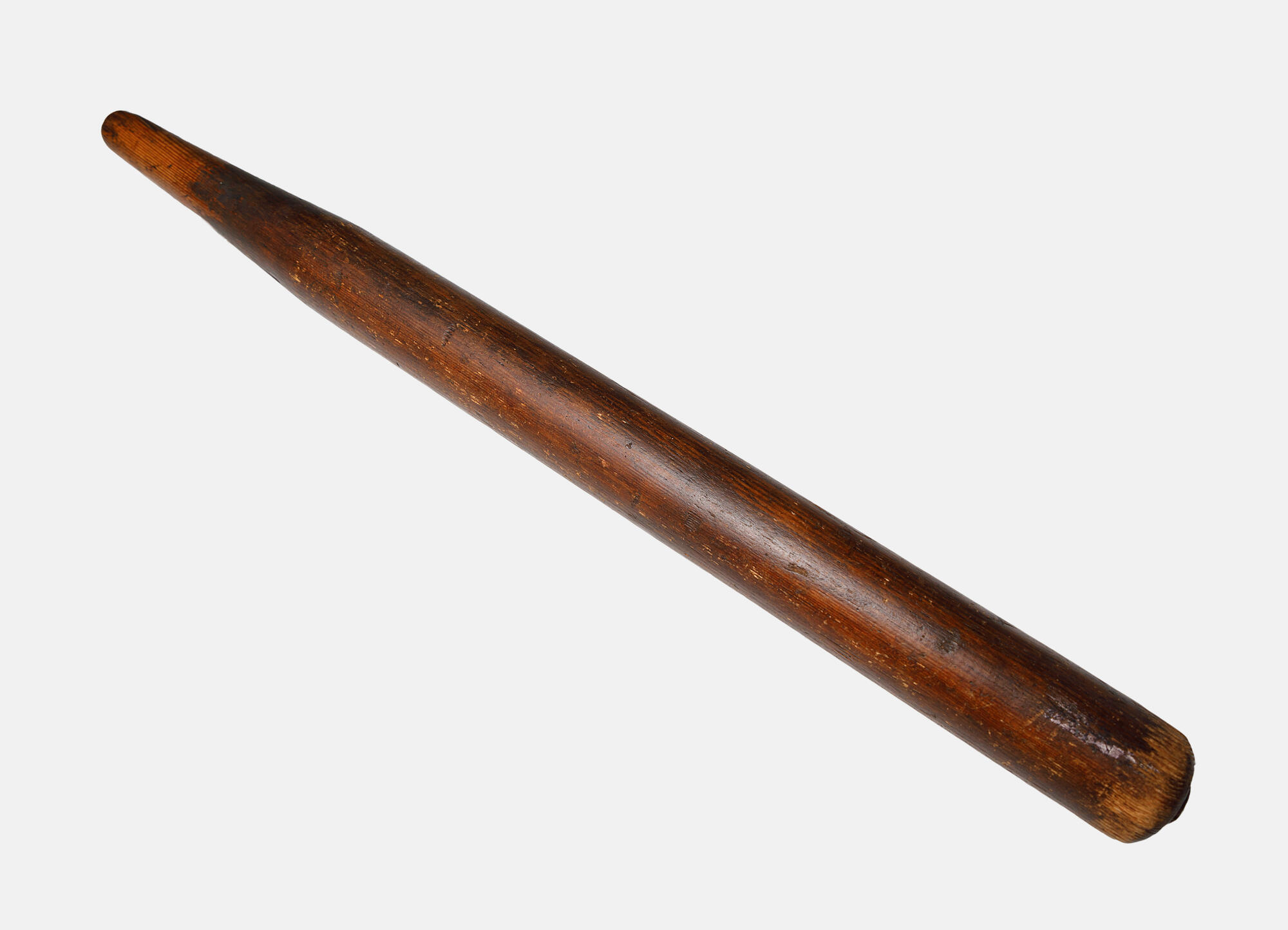


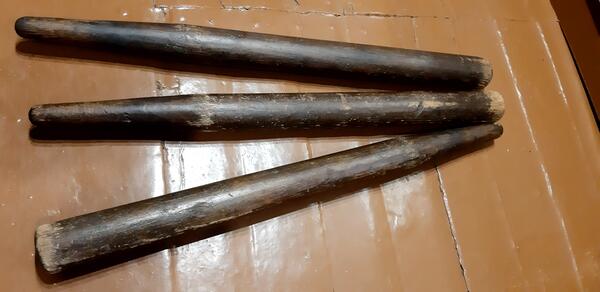
Gorodki was one of the academician Pavlov’s favorite games. Ivan Petrovich started playing it as a child with his brothers at the Pavlov estate in Ryazan. The history of the game of gorodki dates back several centuries. It is mentioned in fairy tales and legends of ancient Rus. The game originated as entertainment for soldiers who threw bats at a target.
In 1647, by decree of Tsar Aleksey Mikhailovich Romanov, the first Russian military charter was printed in Moscow under the title “Training and stratagem of the infantry military structure.” The chapter on the possession of weapons mentioned a game similar to gorodki, where the soldiers “were familiar with it and threw bats at a target.” Different regions of the country had their own names for the game: ryukhi, churki, chuvili, babki, and svaika. In Ryazan, where Ivan Pavlov was born, the game was known as chukhi and popki.
The game of gorodki went down in Russian history as part of the national culture. It was played by Peter I, Leo Tolstoy, Feodor Chaliapin, Alexander Suvorov, Vladimir Lenin, and Joseph Stalin. The games were organized in summer or autumn in the form of a sports tournament. Two teams competed in strength, dexterity and accuracy. The goal of the game was to knock the gorodki out, that is, to throw the bat in such a way as to hit the ryukhi — wooden pins that were used to create different formations. Ryukhi, or gorodki, were placed inside a marked square, called the gorod, hence the name “gorodki”. Figures inside the gorod must be knocked out with a bat from a distance of over 10 meters. The winner was the team that threw the fewest bats but also knocked out the most figures.
Ivan Petrovich Pavlov typically used five figures during the game. The first one called “pile” included three gorodki laid in a thick row in the middle of the gorod front line, and two gorodki were placed on top of them. “Goose” was the second figure, for which two gorodki were placed in the middle of the first line on top of one another, the other two were put behind to form supports, and the fifth was positioned vertically. In the “fence”, all five gorodki were placed in the middle of the first line, forming a solid fence.
Alexander Fyodorovich Pavlov described the fourth figure the following way,
In 1647, by decree of Tsar Aleksey Mikhailovich Romanov, the first Russian military charter was printed in Moscow under the title “Training and stratagem of the infantry military structure.” The chapter on the possession of weapons mentioned a game similar to gorodki, where the soldiers “were familiar with it and threw bats at a target.” Different regions of the country had their own names for the game: ryukhi, churki, chuvili, babki, and svaika. In Ryazan, where Ivan Pavlov was born, the game was known as chukhi and popki.
The game of gorodki went down in Russian history as part of the national culture. It was played by Peter I, Leo Tolstoy, Feodor Chaliapin, Alexander Suvorov, Vladimir Lenin, and Joseph Stalin. The games were organized in summer or autumn in the form of a sports tournament. Two teams competed in strength, dexterity and accuracy. The goal of the game was to knock the gorodki out, that is, to throw the bat in such a way as to hit the ryukhi — wooden pins that were used to create different formations. Ryukhi, or gorodki, were placed inside a marked square, called the gorod, hence the name “gorodki”. Figures inside the gorod must be knocked out with a bat from a distance of over 10 meters. The winner was the team that threw the fewest bats but also knocked out the most figures.
Ivan Petrovich Pavlov typically used five figures during the game. The first one called “pile” included three gorodki laid in a thick row in the middle of the gorod front line, and two gorodki were placed on top of them. “Goose” was the second figure, for which two gorodki were placed in the middle of the first line on top of one another, the other two were put behind to form supports, and the fifth was positioned vertically. In the “fence”, all five gorodki were placed in the middle of the first line, forming a solid fence.
Alexander Fyodorovich Pavlov described the fourth figure the following way,