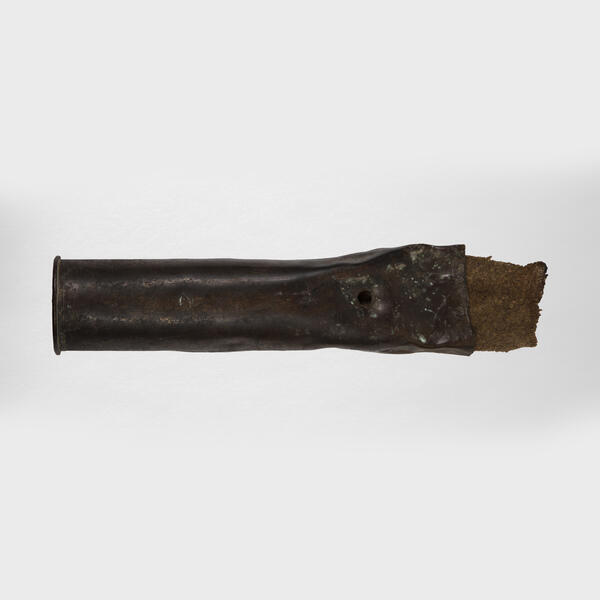
During World War II, there often was a shortage of everyday objects, including lamps. The soldiers used artillery shells as candles. They poured a combustible material into a flattened shell and put a wick into the narrow slot. There is such a candle in the Zimovniki Museum collection.
An artillery shell candle was brighter than an ordinary candle. It could light up an entire trench. Such candles helped prolong the daylight hours and allowed the military to work, read, or write letters in the evenings and at night. Although the dugouts were temporary shelters, the soldiers needed rest and comfort. Hand-made lamps not only illuminated the room but also decorated the humble dwelling.
Sometimes, the lamps were made of large-caliber shells that reached 25 centimeters in length — like the shell on display. The shell was flattened to form a narrow slot at its top, into which a cloth wick was inserted. Below, on the side of the shell, there was made a hole to pour a kerosene. The wick absorbed the kerosene, and then the wick was lit. The soldiers often called the artillery shell lamp “a smokehouse” because of black smoke.
Such lamps were used on all fronts. The soldiers had no machine-made lamps: all factories worked to meet the war needs — produce ammunition and necessary equipment.
Front-line writers mentioned artillery shell candles in works dedicated to these difficult times. For example, Konstantin Simonov in his novel “The Living and the Dead” and Mikhail Matusovsky in his poem:
An artillery shell candle was brighter than an ordinary candle. It could light up an entire trench. Such candles helped prolong the daylight hours and allowed the military to work, read, or write letters in the evenings and at night. Although the dugouts were temporary shelters, the soldiers needed rest and comfort. Hand-made lamps not only illuminated the room but also decorated the humble dwelling.
Sometimes, the lamps were made of large-caliber shells that reached 25 centimeters in length — like the shell on display. The shell was flattened to form a narrow slot at its top, into which a cloth wick was inserted. Below, on the side of the shell, there was made a hole to pour a kerosene. The wick absorbed the kerosene, and then the wick was lit. The soldiers often called the artillery shell lamp “a smokehouse” because of black smoke.
Such lamps were used on all fronts. The soldiers had no machine-made lamps: all factories worked to meet the war needs — produce ammunition and necessary equipment.
Front-line writers mentioned artillery shell candles in works dedicated to these difficult times. For example, Konstantin Simonov in his novel “The Living and the Dead” and Mikhail Matusovsky in his poem: