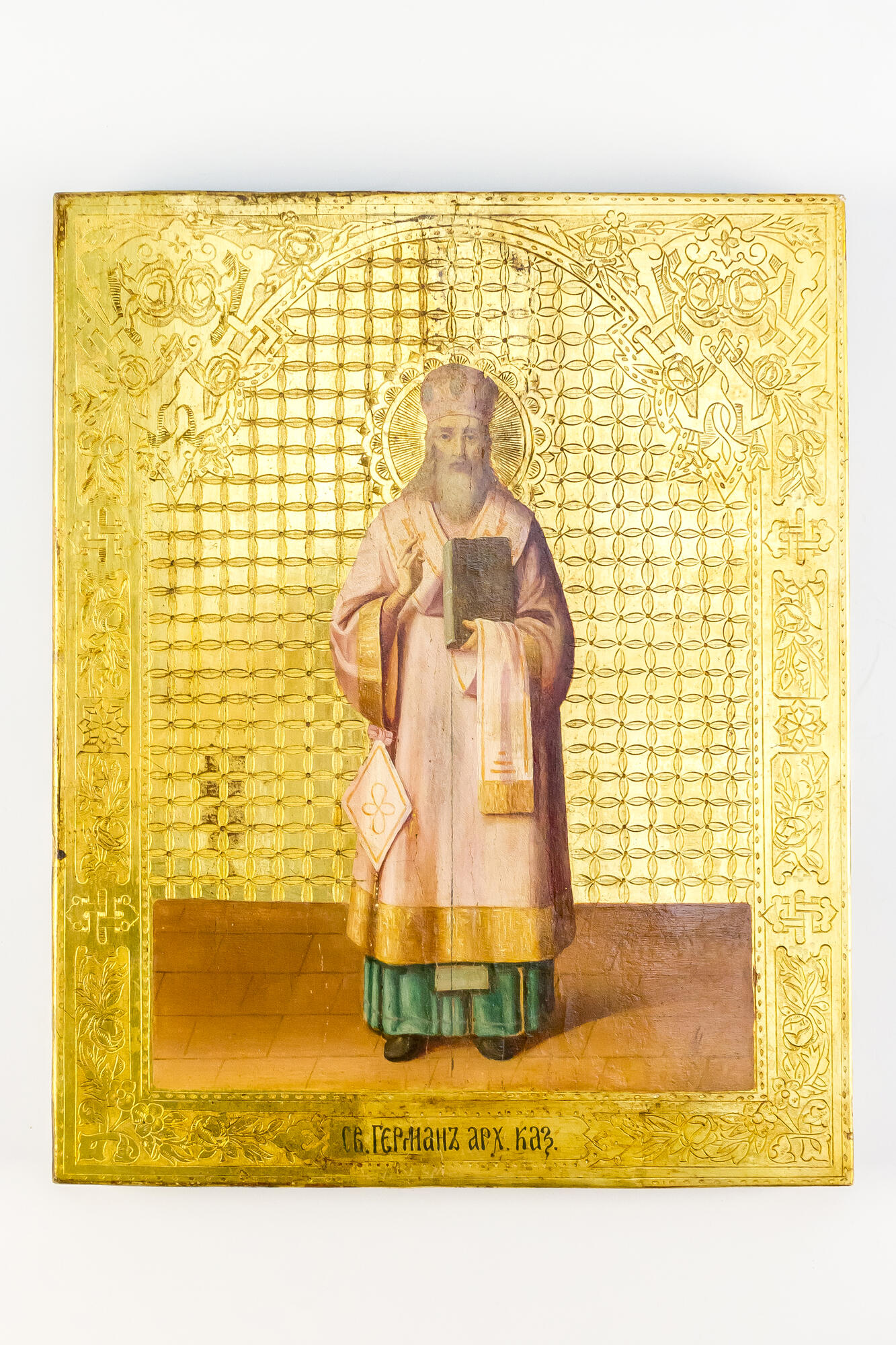


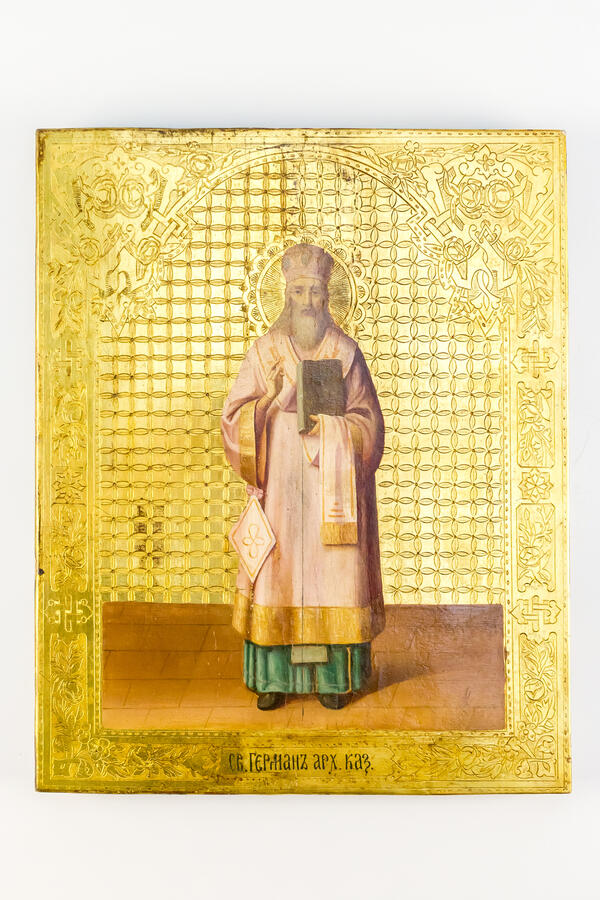
Saint Herman, Archbishop of Kazan, lived in the 16th century. He was born in the city of Staritsa into a family that belonged to the ancient boyar family Polevykh. In his younger years, Gregory (as was his name before he became a monk) was tonsured at the Joseph-Volokolamsk Monastery by Abbot Guria, later the holy archbishop of Kazan.
Saint Gury was engaged in the arrangement of the monastery of the Assumption of the Most Holy Theotokos in the city of Sviyazhsk, and helped Saint Herman to become the rector.
A stone cathedral with a bell tower and monastic cells was built for the monastery. Despite his high position, Saint Herman lived very modestly: he occupied a small cell under the cathedral bell tower. The abbot was especially concerned about the collection of the library, and soon his monastery became the center of education for the Kazan region. On March 12, 1564, when Saint Gury passed away, Saint Herman was ordained Bishop of Kazan.
He diligently took care of the construction of churches and the enlightenment of the region, and in 1566 he was summoned to Moscow by Ivan the Terrible: the tsar ordered to elect the saint to the metropolitan seat — that is, to make him the chief priest of the northeastern (Moscow) part of the Russian Church. Saint Herman wanted to relinquish this burden, but the ruler did not tolerate objections: the archbishop was ordered to settle in the metropolitan chambers before being ordained.
Conversing with Ivan the Terrible in private, the saint decided to test his heart: he began to talk to him about sins and Christian repentance, mentioned the Last Judgment and the eternal torment of the wicked. Ivan left the bishop in a gloomy mood and asked those close to him what they thought of such speeches. The favorites answered:
Saint Gury was engaged in the arrangement of the monastery of the Assumption of the Most Holy Theotokos in the city of Sviyazhsk, and helped Saint Herman to become the rector.
A stone cathedral with a bell tower and monastic cells was built for the monastery. Despite his high position, Saint Herman lived very modestly: he occupied a small cell under the cathedral bell tower. The abbot was especially concerned about the collection of the library, and soon his monastery became the center of education for the Kazan region. On March 12, 1564, when Saint Gury passed away, Saint Herman was ordained Bishop of Kazan.
He diligently took care of the construction of churches and the enlightenment of the region, and in 1566 he was summoned to Moscow by Ivan the Terrible: the tsar ordered to elect the saint to the metropolitan seat — that is, to make him the chief priest of the northeastern (Moscow) part of the Russian Church. Saint Herman wanted to relinquish this burden, but the ruler did not tolerate objections: the archbishop was ordered to settle in the metropolitan chambers before being ordained.
Conversing with Ivan the Terrible in private, the saint decided to test his heart: he began to talk to him about sins and Christian repentance, mentioned the Last Judgment and the eternal torment of the wicked. Ivan left the bishop in a gloomy mood and asked those close to him what they thought of such speeches. The favorites answered: