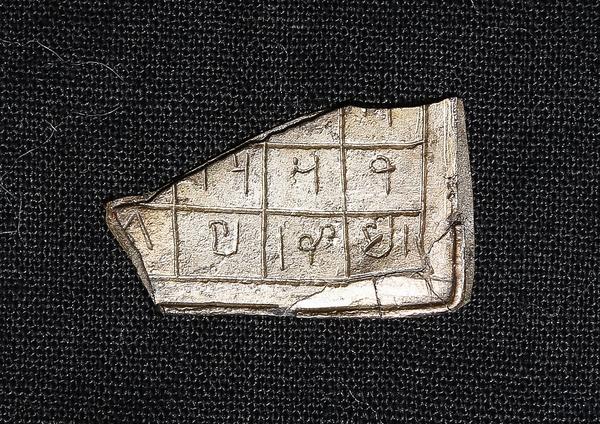
The silver plate from the Astrakhan Museum Reserve collection was discovered in 2000 at the SamosdElka archeological site, among the remains of the medieval fortified town. The cultural layers of the SamosdElka archeological site contain the remains of three towns that replaced one another. They are a Khazar town located on the spot in the 9th–10th centuries, a town of the pre-Mongolian time of the 11th–12th centuries and a Golden Horde settlement of the 13th–14th centuries.
The plate, as the researchers believe, was crafted between the XII and XVI centuries. It is decorated with engravings: there is a square on one side, and an Arabic inscription on the other one.
The magic square is a table filled with natural numbers. They are arranged in such a way that the sum of the numbers in each row, each column and on both diagonals is the same. The first magic square sized 3 × 3 and inscribed on the shell of a turtle was found in China and dates back to 2200 BC.
In the era of the Golden Horde, such magic squares were used in religious and magical rituals. During that period, they were usually filled with figures of Eastern Arabic content. The figures were inscribed by people who studied magic: medicine men, shamans, and bakshy folk singers from among the Turkic peoples.
Scientists have studied medieval written sources and found out how the population of the Golden Horde used such magic squares. For example, they depicted such images on the walls of vessels to protect the contents from deterioration. Also, medieval magic treatises advised to use such squares to survive childbirths, bake good bread, or make it rain during a drought. They recommended to have the squares on hand as amulets, sew them into clothes, and even swallow some as medicine.
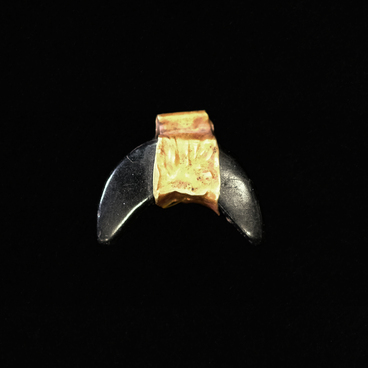
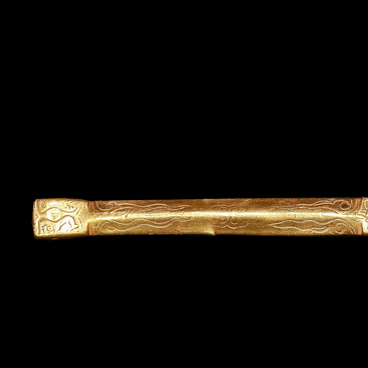
Also, other items induing with special qualities were used together with the mystical squares for rituals. There are cowrie shells, ornaments with sympathetic inscriptions, and tumArs (amulets cases). And also it were ongOns that were figurines or images considered to be containers for the souls of deceased ancestors.
The traditions to use the magic squares in the everyday magic were preserved in Central Asia within the areas that used to be parts of the Golden Horde.
The plate, as the researchers believe, was crafted between the XII and XVI centuries. It is decorated with engravings: there is a square on one side, and an Arabic inscription on the other one.
The magic square is a table filled with natural numbers. They are arranged in such a way that the sum of the numbers in each row, each column and on both diagonals is the same. The first magic square sized 3 × 3 and inscribed on the shell of a turtle was found in China and dates back to 2200 BC.
In the era of the Golden Horde, such magic squares were used in religious and magical rituals. During that period, they were usually filled with figures of Eastern Arabic content. The figures were inscribed by people who studied magic: medicine men, shamans, and bakshy folk singers from among the Turkic peoples.
Scientists have studied medieval written sources and found out how the population of the Golden Horde used such magic squares. For example, they depicted such images on the walls of vessels to protect the contents from deterioration. Also, medieval magic treatises advised to use such squares to survive childbirths, bake good bread, or make it rain during a drought. They recommended to have the squares on hand as amulets, sew them into clothes, and even swallow some as medicine.
Also, other items induing with special qualities were used together with the mystical squares for rituals. There are cowrie shells, ornaments with sympathetic inscriptions, and tumArs (amulets cases). And also it were ongOns that were figurines or images considered to be containers for the souls of deceased ancestors.
The traditions to use the magic squares in the everyday magic were preserved in Central Asia within the areas that used to be parts of the Golden Horde.