The scientific description of the wooly mammoth was first given by the German scientist Johann Friedrich Blumenbach in 1799. He called the animal Elephas primigenius— “the first-born elephant”. The Russian peoples of the North had legends about a “mamut” or “common mole”: it was believed that this mythical monster lived underground, and when it came out into the light, it turned into stone (that is why only fossilized bones stuck out from under the ground). Another legend says that huge elephants covered with long thick hair were seen in the dense Siberian forests in the second half of the 16th century by the soldiers of the Cossack ataman and conqueror of these lands Yermak Timofeyevich.
Some of the most famous finds in paleontology of the 19th — first half of the 20th century are associated with the Russian North. Those include the specimens found near the Lena River, the Beryozovka River, the Oyosh River and the Taymyr Peninsula, and some other mammoths, as well as the calves Dima, Lyuba and Yuka. In Siberia, these animals appeared about 450,000 years ago.
In comparison to steppe mammoths, wooly mammoths were rather small: they reached a height of 2.7–3.4 meters; males weighed up to 8 tons, females — about 4.5. The ears and tail of the animal were small; tusks were needed for defense and digging food out of the ground. The largest known male tusk is 4.2 meters long and weighs 91 kg.
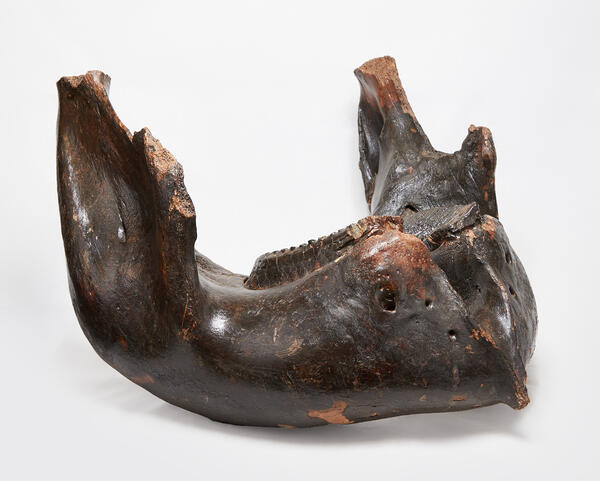
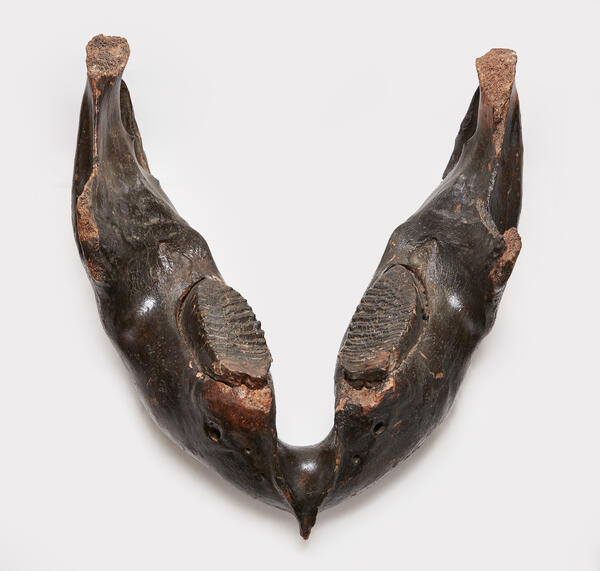
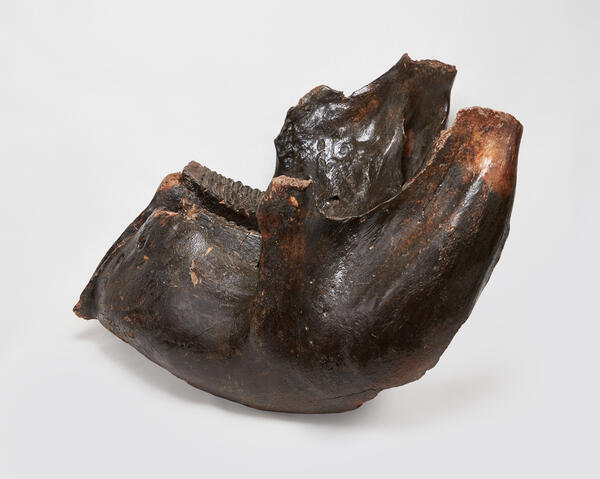
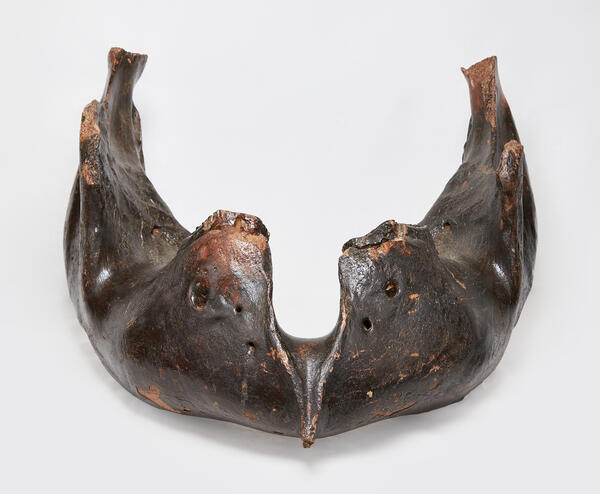
The wooly mammoth’s diet included plant food: grass, sedge, shrubs, moss, bark and foliage. These animals devoted 18–20 hours a day to eating. The four molars (two each on the upper and lower jaw) resembled graters with strong and tough enamel ridges, however, over time they would get erased almost to the root. The mammoth’s teeth were replaced six times during the lifetime of an individual (50–70 years). When the last set of molars was worn out, the animal would be unable to chew, and it would die of starvation.
Modern genetic scientists have come to the conclusion that a mammoth tooth is no less valuable for science than its whole carcass, as it is in the bone tissue that fossil molecules are most preserved.
The presented fragment of a mammoth jaw was found on the territory of the Oktyabrsky District of the Khanty-Mansiysk Autonomous Okrug — Yugra, near the village of Sherkaly, in the Sherkalka River.