Font
Color
Graphics
Изображение точки

To see AR mode in action:

1. Install ARTEFACT app for iOS or Android;

2. Find the exhibition «Man from the Legend»

3. Push the «Augmented reality» button and point your phone's camera at the exhibit;

Скрыть точки интересаПоказать точки интереса

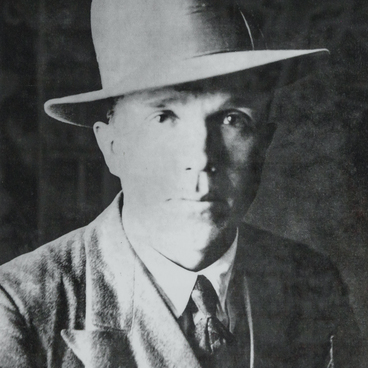
Nikolai Kuznetsov

Creation period
the 20th century
Dimensions
8,1x3,5 cm
Technique
photographic paper, photographic printing
1
Open in app
#1

In 1938, on the recommendation of Mikhail Ivanovich Zhuravlyov, People’s Commissar of the NKVD of the Komi ASSR, Nikolai Ivanovich Kuznetsov was recruited for a highly classified assignment and became a special agent reporting directly to the leadership of Soviet counterintelligence. It was during this period that he began mastering the delicate and dangerous craft of intelligence work. Experienced operatives trained him in the arts of conspiracy, agent handling, report writing, and remaining undetectable in hostile environments.


Kuznetsov’s greatest asset was his exceptional command of the German language — by that time, he spoke almost like a native. He absorbed new knowledge with extraordinary ease, studying with genuine passion and dedication. At the same time, he was distinguished by seriousness, restraint in judgment, and remarkable objectivity in his reports.


Beyond his linguistic gifts, Kuznetsov possessed another rare quality: the ability to inspire trust. He had a unique way of listening that made interlocutors feel truly heard — so much so that they often opened up to him almost imperceptibly, revealing their most private thoughts. Yet Nikolai Kuznetsov never pressured them or asked direct questions; instead, he created an atmosphere of quiet confidence in which others felt safe to speak.


During these years, Soviet counterintelligence conducted intense operational activities aimed at infiltrating foreign embassies in Moscow. Particular attention was focused on German and Slovak diplomats, many of whom maintained ties to German intelligence services. The Chekists understood all too well that war was drawing near.


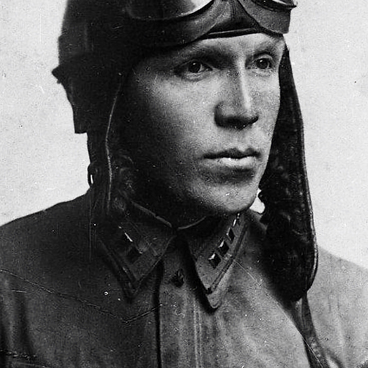
By the outbreak of the Great Patriotic War, Kuznetsov had already completed several complex and critical missions. He was given the operational pseudonym “Colonist” and issued a forged passport in the name of Rudolf Wilhelmovich Schmidt, an ethnic German. Operating under this cover in Moscow, he established contact with staff from the former German and Slovak embassies and took part in operations to intercept German diplomatic correspondence.


Documentary evidence of his Moscow activities survives. In his book “The Legend of Soviet Intelligence — N. Kuznetsov”, Teodor Kirillovich Gladkov quotes from Kuznetsov’s personal file:

#5

Thanks to his knowledge of the German language, his distinguished appearance, personal qualities, and ability to move comfortably among representatives of the former bourgeois society, "Colonist" rapidly established extensive contacts in Moscow among foreigners, employees of foreign missions and embassies, particularly those of the former German embassy. He was known as a German-speaking Soviet citizen working as a tester at one of Moscow’s aviation plants. "Colonist" actively worked to cultivate this circle of individuals in the period leading up to the war with Nazi Germany.


With his participation, several successful operations were carried out to develop and recruit assets from foreign embassies and missions in Moscow.

#4

The cover identity of engineer Rudolf Schmidt remained undetected by German intelligence. Soon, however, that persona had to be abandoned to make way for a new one: Paul Wilhelm Siebert.

View in the State Catalogue
read morehide
00:00
00:00
1x

Nikolai Kuznetsov

Creation period
the 20th century
Dimensions
8,1x3,5 cm
Technique
photographic paper, photographic printing
1
Point your smartphone camera to open in the app
Share
VkontakteOdnoklassnikiTelegram
Share on my website
Copy linkCopied
Copy
Open in app
To see AR mode in action:
  1. Install ARTEFACT app for 
  2. iOS or Android;
  3. Find and download the «Paintings in Details» exhibition
  4. Push the «Augmented reality» button and point your phone's camera at the painting;
  5. Watch what happens on your phone screen whilst you flip through the pictures.
 
We use Cookies
Cookies on the Artefact Website. We use cookies to ensure that we give you the best experience on our website. If you continue without changing your settings, we'll assume that you are happy to receive all cookies on the Artefact website. However, if you would like to, you can change your cookie settings at any time.
Learn more about useHide
Content is available only in Russian

X

Нашли опечатку?...

%title%%type%