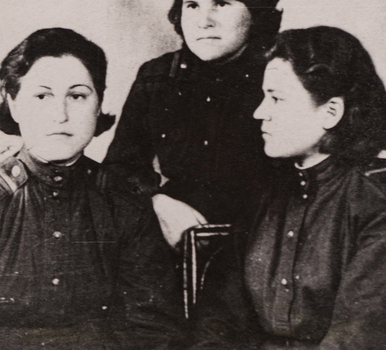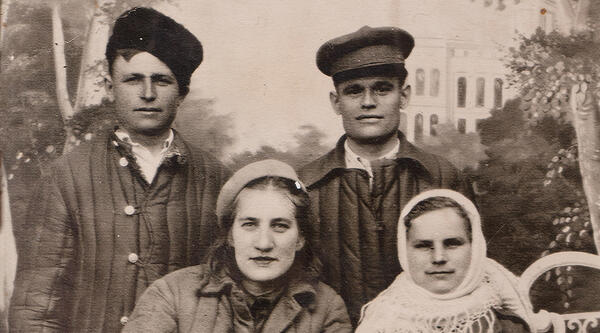
Maria Volkova was born in the village of Novorozhdestvenka, Yaysk district of Kemerovo region. She started to work early — from the age of 14, she worked in a collective farm and then moved to Anzhero-Sudzhensk and got a job in a canteen. At first, Maria Volkova helped in the kitchen — peeling vegetables — and later, she began waitressing. According to the recollections of former colleagues, she watched the work of cooks in her free time and dreamed of getting this profession in the future.
However, when the war broke out, Maria Volkova went to the front and finished the courses of military drivers. She was assigned to the 2nd Ukrainian Front, her task was to deliver ammunition to the front line.
Volkova was wounded in the leg and head during the war: her car was shelled by the Germans near Budapest. Despite bleeding, the chauffeur delivered the valuable cargo to the front line and only then she went to the hospital.
Maria Volkova returned to Anzhero-Sudzhensk on September 20, 1945. She was working at the brick plant of ‘Anzherougol’ trust and in 1953, she took a job as a waitress in a canteen No. 3 at the same enterprise. Then worked as a cook in canteens No. 3 and No. 14. Volkova retired in 1975.
Colleagues recalled that Maria Volkova was modest. Only on the eve of the 30th anniversary of the Victory, they learned that the cook received the highest award of a soldier — the Order of Glory, 3rd class, which was established on November 8, 1943 for ‘privates and sergeants’.
The order was a continuation of St. George awards tradition in Russia. The previous version of the medallion had a cross on it, which during the war was associated with the swastika. Therefore, the five-pointed star with the image of the Spasskaya Tower was chosen for the new design. At the bottom was a red ribbon with the inscription ‘Glory’, and on the reverse side — the letters ‘USSR’. The order was on a St. George’s ribbon with black and orange stripes.
The Order of Glory had three classes. 1st class medallion was made of gold, 2nd class was made of silver with gilding, and 3d class was made entirely of silver. During the war, about one million badges of the Order of Glory of 3d class, more than 46 thousand of 2nd class and 2678 of 1st class were awarded to soldiers.
However, when the war broke out, Maria Volkova went to the front and finished the courses of military drivers. She was assigned to the 2nd Ukrainian Front, her task was to deliver ammunition to the front line.
Volkova was wounded in the leg and head during the war: her car was shelled by the Germans near Budapest. Despite bleeding, the chauffeur delivered the valuable cargo to the front line and only then she went to the hospital.
Maria Volkova returned to Anzhero-Sudzhensk on September 20, 1945. She was working at the brick plant of ‘Anzherougol’ trust and in 1953, she took a job as a waitress in a canteen No. 3 at the same enterprise. Then worked as a cook in canteens No. 3 and No. 14. Volkova retired in 1975.
Colleagues recalled that Maria Volkova was modest. Only on the eve of the 30th anniversary of the Victory, they learned that the cook received the highest award of a soldier — the Order of Glory, 3rd class, which was established on November 8, 1943 for ‘privates and sergeants’.
The order was a continuation of St. George awards tradition in Russia. The previous version of the medallion had a cross on it, which during the war was associated with the swastika. Therefore, the five-pointed star with the image of the Spasskaya Tower was chosen for the new design. At the bottom was a red ribbon with the inscription ‘Glory’, and on the reverse side — the letters ‘USSR’. The order was on a St. George’s ribbon with black and orange stripes.
The Order of Glory had three classes. 1st class medallion was made of gold, 2nd class was made of silver with gilding, and 3d class was made entirely of silver. During the war, about one million badges of the Order of Glory of 3d class, more than 46 thousand of 2nd class and 2678 of 1st class were awarded to soldiers.