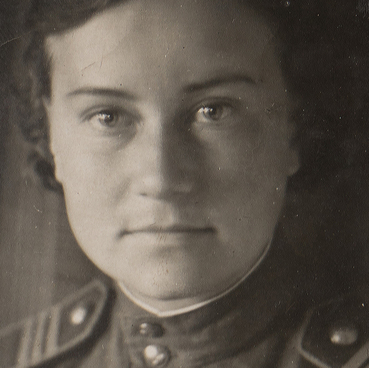
Serafim Shelepov was born in 1915, in a worker’s settlement at the Anzhersk coal mines. From a young age, he worked as an assistant coal miner at the Mine No. 9/15, transporting ore up and installing special fasteners to hold back the rock mass.
In 1937, Shelepov was called up for military service. He was sent to serve in the border guard troops in Komsomolsk-on-Amur, where he took part in the battles with the Japanese on Lake Khasan. In November 1939, Shelepov volunteered to go to the Finnish war, and in March 1941, he was again in Siberia — he was assigned to the mortarmen and sent to Tomsk for retraining.
From the first days of the war, Serafim Shelepov served on the front lines, and in July 1941, got seriously wounded for the first time near the town of Vyazma. After the hospital, the fighter was sent to Stalingrad, and there he was wounded for the second time. Shelepov spent a long time in hospitals and underwent several surgeries before returning to active military duty.
After his recovery, Serafim Shelepov was sent on a new assignment — to the tank forces, where he led the reconnaissance division of the 13th Guards Tank Brigade. In the battles in Belgorod Region, he was awarded the medal “For Valor” for his bravery and skill. Shelepov suffered two more wounds but did not want to stay in hospital for long, escaping from there and returning to the front.
In the last months of the war, Shelepov participated in the liberation of Ukraine, Poland, and Germany. His squad conducted reconnaissance operations and established where the enemy had firing points. The news of the Victory reached the soldiers in the vicinity of Prague.
Serafim Shelepov received government awards for his merits: three Orders of the Red Star, the Order of the Red Star of the Czechoslovak Republic, and numerous commendations from the Supreme Commander-in-Chief.
Shelepov returned to Anzhero-Sudzhensk from the front. The city party committee sent him to an important job — to head the artel “RKKA”. Under the guidance of the former commander, the workshop workers sewed mattresses, vests, suits of the Honorable Miner and carried out individual orders for the townspeople. Serafim Shelepov received a medal “For Valorous Labor” awarding his labor achievements.
In 1937, Shelepov was called up for military service. He was sent to serve in the border guard troops in Komsomolsk-on-Amur, where he took part in the battles with the Japanese on Lake Khasan. In November 1939, Shelepov volunteered to go to the Finnish war, and in March 1941, he was again in Siberia — he was assigned to the mortarmen and sent to Tomsk for retraining.
From the first days of the war, Serafim Shelepov served on the front lines, and in July 1941, got seriously wounded for the first time near the town of Vyazma. After the hospital, the fighter was sent to Stalingrad, and there he was wounded for the second time. Shelepov spent a long time in hospitals and underwent several surgeries before returning to active military duty.
After his recovery, Serafim Shelepov was sent on a new assignment — to the tank forces, where he led the reconnaissance division of the 13th Guards Tank Brigade. In the battles in Belgorod Region, he was awarded the medal “For Valor” for his bravery and skill. Shelepov suffered two more wounds but did not want to stay in hospital for long, escaping from there and returning to the front.
In the last months of the war, Shelepov participated in the liberation of Ukraine, Poland, and Germany. His squad conducted reconnaissance operations and established where the enemy had firing points. The news of the Victory reached the soldiers in the vicinity of Prague.
Serafim Shelepov received government awards for his merits: three Orders of the Red Star, the Order of the Red Star of the Czechoslovak Republic, and numerous commendations from the Supreme Commander-in-Chief.
Shelepov returned to Anzhero-Sudzhensk from the front. The city party committee sent him to an important job — to head the artel “RKKA”. Under the guidance of the former commander, the workshop workers sewed mattresses, vests, suits of the Honorable Miner and carried out individual orders for the townspeople. Serafim Shelepov received a medal “For Valorous Labor” awarding his labor achievements.