#1
Photographs
#2
#4
#3
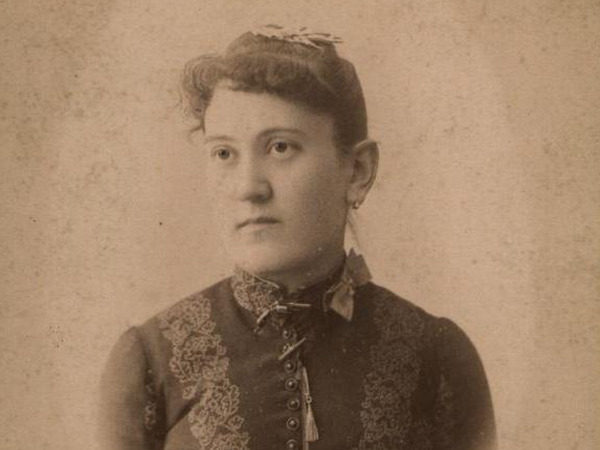
A copy of the photo of Olga Aderman, née Belyavskaya, is on display at the Tula Historical and Architectural Museum. The original image is housed in The State Archive of the Tula region.
Olga Belyavskaya is one of the daughters of the founder and first owner of the ‘Old Tula Pharmacy’ Ferdinand Belyavsky and his wife Jeanette Siebert. She was born on May 30, 1869, in Tula. As a child, Belyavskaya often helped her mother with the housework: she planted flowers and took care of pets. In her memoirs, she writes that she was her father’s ‘sunshine’. At the age of 10, Olga Belyavskaya enrolled in the first grade of the women’s gymnasium in Tula, and later studied at the women’s gymnasium in Moscow for two years, the founders and managers of which were Alexandra Evenius and Maria Poussel. The best teachers of Moscow taught there. They taught Russian, French, and German, gave music lessons. Olga Belyavskaya passed the last exam on her 17th birthday on May 30, 1886.
A year later, in 1887, Friedrich Aderman started to work at the pharmacy of Ferdinand Belyavsky as a pharmacist, shortly after his graduation from the University of Dorpat. On December 4, 1888, Aderman and Olga Belyavskaya got engaged, and two years later they got married. From 1891 to 1896, four sons were born in the family: Erich, Felix, Voldemar Richard, and Georg Ferdinand. The two eldest sons died in childhood, and Georg lived only to be 22: in 1918, he died of the ‘Spanish flu’, the epidemic which then swept the whole world. The marriage of Belyavskaya and Aderman lasted 24 years, in 1914 Friedrich Aderman died. The third son of the Adermans, Voldemar, was admitted to the Mikhailovsky Artillery School in December 1914, and eight months later he was sent to the front. After the revolution of 1917, Olga Aderman knew nothing about her son’s fate for almost three years.
In January 1918, the new government took possession of the pharmacy and then confiscated the house. Now Aderman had to pay rent for the premises. After her husband’s death, she occupied only one room — the former dining room. I couldn’t pay more, because there was no income after the confiscation. When they began introducing bread and ration cards, Olga Aderman did not receive them: the cards were issued only to those who had a profession. In hard times, the food supplies the family had once stocked up on, and barter trade, an exchange of goods for food, helped her to survive. Thus, Olga Aderman managed to live in Bolshevik Russia for five years.
In the spring of 1921, she received news from her only surviving son, Voldemar. He was in Berlin. In 1923, Aderman requested permission from the authorities to travel to Germany because of ill health. On October 1, 1923, she arrived in Berlin and spent the rest of her life in Germany with her family and friends. Olga Aderman died in 1939.
Olga Belyavskaya is one of the daughters of the founder and first owner of the ‘Old Tula Pharmacy’ Ferdinand Belyavsky and his wife Jeanette Siebert. She was born on May 30, 1869, in Tula. As a child, Belyavskaya often helped her mother with the housework: she planted flowers and took care of pets. In her memoirs, she writes that she was her father’s ‘sunshine’. At the age of 10, Olga Belyavskaya enrolled in the first grade of the women’s gymnasium in Tula, and later studied at the women’s gymnasium in Moscow for two years, the founders and managers of which were Alexandra Evenius and Maria Poussel. The best teachers of Moscow taught there. They taught Russian, French, and German, gave music lessons. Olga Belyavskaya passed the last exam on her 17th birthday on May 30, 1886.
A year later, in 1887, Friedrich Aderman started to work at the pharmacy of Ferdinand Belyavsky as a pharmacist, shortly after his graduation from the University of Dorpat. On December 4, 1888, Aderman and Olga Belyavskaya got engaged, and two years later they got married. From 1891 to 1896, four sons were born in the family: Erich, Felix, Voldemar Richard, and Georg Ferdinand. The two eldest sons died in childhood, and Georg lived only to be 22: in 1918, he died of the ‘Spanish flu’, the epidemic which then swept the whole world. The marriage of Belyavskaya and Aderman lasted 24 years, in 1914 Friedrich Aderman died. The third son of the Adermans, Voldemar, was admitted to the Mikhailovsky Artillery School in December 1914, and eight months later he was sent to the front. After the revolution of 1917, Olga Aderman knew nothing about her son’s fate for almost three years.
In January 1918, the new government took possession of the pharmacy and then confiscated the house. Now Aderman had to pay rent for the premises. After her husband’s death, she occupied only one room — the former dining room. I couldn’t pay more, because there was no income after the confiscation. When they began introducing bread and ration cards, Olga Aderman did not receive them: the cards were issued only to those who had a profession. In hard times, the food supplies the family had once stocked up on, and barter trade, an exchange of goods for food, helped her to survive. Thus, Olga Aderman managed to live in Bolshevik Russia for five years.
In the spring of 1921, she received news from her only surviving son, Voldemar. He was in Berlin. In 1923, Aderman requested permission from the authorities to travel to Germany because of ill health. On October 1, 1923, she arrived in Berlin and spent the rest of her life in Germany with her family and friends. Olga Aderman died in 1939.
#5
Full name: A copy of the photograph of Olga Ferdinandovna Aderman (Belyavskaya)
Date: 2014
Technique: color printing
Place: Tula
Copyright: Tula Historical and Architectural Museum
Dimensions: 25×17 cm
Date: 2014
Technique: color printing
Place: Tula
Copyright: Tula Historical and Architectural Museum
Dimensions: 25×17 cm
#6
Ferdinand Belyavsky
#7
#8
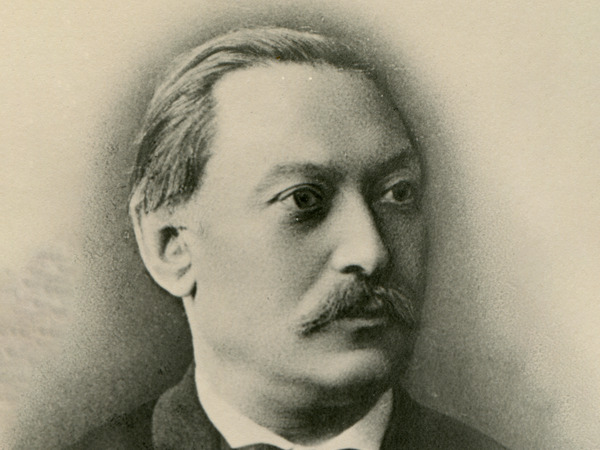
The museum exposition presents a copy of Ferdinand Belyavsky’s photo; the original is stored in The State Archive of the Tula region. The original picture was made in the second half of the 19th century in black-and-white printing technique on photo paper.
Ferdinand Belyavsky is the founder and the first owner of the ‘Old Tula Pharmacy’. He was born on January 21, 1834, in the family of a Polish petty nobleman Georg Belyavsky and his wife Anna in the city of Kovno (modern Kaunas, Lithuania). At the age of 16, he sent a petition to Nicholas I for permission to change his confession from Catholic to Evangelical. Despite the protests of his relatives, Belyavsky was soon confirmed in one of the evangelical churches in Riga.
Belyavsky studied pharmacy at the University of Dorpat (today — Tartu, Estonia), from which he graduated and received the degree of pharmacist in 1861. After that, he worked in one of the pharmacies in St. Petersburg, and then moved to Tula, where he bought a pharmacy from a university friend Roman Beyer in 1864.
In the 1870-s of the 19th century, the demand for medicines in the city increased significantly, the old house turned out to be too small for their production, and on April 15, 1882, Belyavsky was granted permission to build a two-story stone building of a new pharmacy, next to the old one. In 1884, the construction was completed. The new institution was called ‘Old Tula Pharmacy’ so that customers would not doubt the continuity.
Here, in Tula, Belyavsky met his future wife — Jeanette Siebert. As it turned out later, Ferdinand and Jeanette, being yet strangers, arrived in the city on the same day. On December 30, 1864, they got married. Four daughters were born in their marriage: Helena, Jenny, Olga, and Fanny. According to the memories of his daughter Olga that have survived to this day, Ferdinand Belyavsky was a loving and patient father.
Belyavsky took an active part in the public life of Tula: he was a member of the society of Tula doctors, for many years he was the chairman of the Church Council of the Tula Evangelical Lutheran Church, for several years he served as a councilor and chairman of the Tula City Duma. He was also engaged in charity work: since 1872 he was a member of the provincial patronage of the Nikolaev, Mariinsky, and Krasnoglazovsky orphanages, and also donated to the church and construction funds of the Lutheran community 1.150 rubles. With this money, it was possible to maintain an entire estate for a year.
Ferdinand Belyavsky died on April 4, 1903, at the age of 69, and was buried in the Lutheran section of the Cemetery of All Saints. The exact place of his burial is unknown.
Ferdinand Belyavsky is the founder and the first owner of the ‘Old Tula Pharmacy’. He was born on January 21, 1834, in the family of a Polish petty nobleman Georg Belyavsky and his wife Anna in the city of Kovno (modern Kaunas, Lithuania). At the age of 16, he sent a petition to Nicholas I for permission to change his confession from Catholic to Evangelical. Despite the protests of his relatives, Belyavsky was soon confirmed in one of the evangelical churches in Riga.
Belyavsky studied pharmacy at the University of Dorpat (today — Tartu, Estonia), from which he graduated and received the degree of pharmacist in 1861. After that, he worked in one of the pharmacies in St. Petersburg, and then moved to Tula, where he bought a pharmacy from a university friend Roman Beyer in 1864.
In the 1870-s of the 19th century, the demand for medicines in the city increased significantly, the old house turned out to be too small for their production, and on April 15, 1882, Belyavsky was granted permission to build a two-story stone building of a new pharmacy, next to the old one. In 1884, the construction was completed. The new institution was called ‘Old Tula Pharmacy’ so that customers would not doubt the continuity.
Here, in Tula, Belyavsky met his future wife — Jeanette Siebert. As it turned out later, Ferdinand and Jeanette, being yet strangers, arrived in the city on the same day. On December 30, 1864, they got married. Four daughters were born in their marriage: Helena, Jenny, Olga, and Fanny. According to the memories of his daughter Olga that have survived to this day, Ferdinand Belyavsky was a loving and patient father.
Belyavsky took an active part in the public life of Tula: he was a member of the society of Tula doctors, for many years he was the chairman of the Church Council of the Tula Evangelical Lutheran Church, for several years he served as a councilor and chairman of the Tula City Duma. He was also engaged in charity work: since 1872 he was a member of the provincial patronage of the Nikolaev, Mariinsky, and Krasnoglazovsky orphanages, and also donated to the church and construction funds of the Lutheran community 1.150 rubles. With this money, it was possible to maintain an entire estate for a year.
Ferdinand Belyavsky died on April 4, 1903, at the age of 69, and was buried in the Lutheran section of the Cemetery of All Saints. The exact place of his burial is unknown.
#9
Full name: Moulage photos of Ferdinand Georgievich Belyavsky
Date: 2014
Technique: color printing
Place: Tula
Copyright: Tula Historical and Architectural Museum
Dimensions: 25×17 cm
Date: 2014
Technique: color printing
Place: Tula
Copyright: Tula Historical and Architectural Museum
Dimensions: 25×17 cm
#10
Old Tula pharmacy
#11
#12
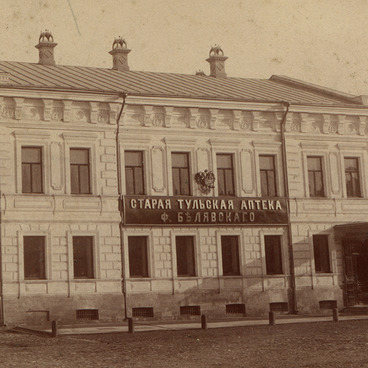
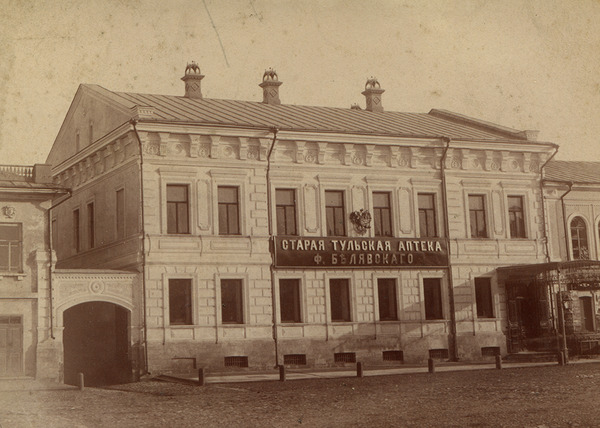
The exhibition of the Tula Historical and Architectural Museum presents a photo postcard, which depicts a two-story building in an eclectic style — ‘Old Tula Pharmacy’.
Initially, the pharmacy was located not in this house, but the neighboring one (today — Lenin Avenue, 25). The pharmacy, as well as the nearby building, which at that time was the local winter theater, was bought in 1864 by St. Petersburg’s pharmacist Ferdinand Belyavsky from the apothecary Roman Beyer. The purchase cost him 30.000 rubles. In the theater, Belyavsky even had a personal box. The building also housed the largest haberdashery shop in the city. In December 1868, the store burned down. In 1881, Belyavsky decided to build a new pharmacy on the ashes.
The construction lasted for four summers as before the twentieth century no construction work was done in winter. In the first year, a drainage system was arranged, the soil was very boggy. In 1884, a new pharmacy opened. It was called ‘Old Tula’.
The renewed pharmacy was arranged considering all the requirements that were imposed on such institutions. A retail space, a prescription department, a laboratory, and a manager’s office were situated on the ground floor. The second floor was occupied by the Belyavsky family. Herbs were dried in the spacious attic and mineral and fruit waters were prepared in the basement; medicines were stored in the ice storage room. Ferdinand Belyavsky’s ‘Old Tula Pharmacy’ was one of the most popular in the city. Citizens compared it to Carl Ferrein’s pharmacy in the centre of Moscow, the largest in Russia.
In 1918, the pharmacy was nationalized, it became state-owned and existed on that site until 2011. Its general history goes back almost 200 years, which is quite rare for a Russian province.
The building has preserved the layout and fragments of the original pharmacy interior: the original wall safe, cast-iron staircase, stoves, and doors. In 2012, both buildings — the Craft House, where the pharmacy was originally located, and the ‘Old Tula Pharmacy’ were transferred to the Tula Historical and Architectural Museum. Rare items were found in the attic: prescription forms, pharmacy utensils, labels, write-on labels. These artifacts formed the basis of the permanent museum exhibition ‘Old Tula Pharmacy’, which was opened in 2014.
Initially, the pharmacy was located not in this house, but the neighboring one (today — Lenin Avenue, 25). The pharmacy, as well as the nearby building, which at that time was the local winter theater, was bought in 1864 by St. Petersburg’s pharmacist Ferdinand Belyavsky from the apothecary Roman Beyer. The purchase cost him 30.000 rubles. In the theater, Belyavsky even had a personal box. The building also housed the largest haberdashery shop in the city. In December 1868, the store burned down. In 1881, Belyavsky decided to build a new pharmacy on the ashes.
The construction lasted for four summers as before the twentieth century no construction work was done in winter. In the first year, a drainage system was arranged, the soil was very boggy. In 1884, a new pharmacy opened. It was called ‘Old Tula’.
The renewed pharmacy was arranged considering all the requirements that were imposed on such institutions. A retail space, a prescription department, a laboratory, and a manager’s office were situated on the ground floor. The second floor was occupied by the Belyavsky family. Herbs were dried in the spacious attic and mineral and fruit waters were prepared in the basement; medicines were stored in the ice storage room. Ferdinand Belyavsky’s ‘Old Tula Pharmacy’ was one of the most popular in the city. Citizens compared it to Carl Ferrein’s pharmacy in the centre of Moscow, the largest in Russia.
In 1918, the pharmacy was nationalized, it became state-owned and existed on that site until 2011. Its general history goes back almost 200 years, which is quite rare for a Russian province.
The building has preserved the layout and fragments of the original pharmacy interior: the original wall safe, cast-iron staircase, stoves, and doors. In 2012, both buildings — the Craft House, where the pharmacy was originally located, and the ‘Old Tula Pharmacy’ were transferred to the Tula Historical and Architectural Museum. Rare items were found in the attic: prescription forms, pharmacy utensils, labels, write-on labels. These artifacts formed the basis of the permanent museum exhibition ‘Old Tula Pharmacy’, which was opened in 2014.
#13
Full name: Photo postcard with a view of the building of the “Old Tula pharmacy”
Date: late 19th — early 20th centuries
Technique: printing (b/w)
Place: Tula
Copyright: Tula Historical and Architectural Museum
Dimensions: 10×12 cm
Date: late 19th — early 20th centuries
Technique: printing (b/w)
Place: Tula
Copyright: Tula Historical and Architectural Museum
Dimensions: 10×12 cm
#14
Ministry of Culture of the Russian Federation
read morehide
00:00
00:00
1x
Photographs
Exhibition
0
 Point your smartphone camera to open in the app
Open in app
Share