

In the 19th and 20th centuries, cast iron cookie and waffle molds were very popular with housewives and all those interested in cooking.
Cookies were originally invented in medieval Persia and, along with other Eastern sweets such as halva, baklava, Turkish delight, sherbet, and nougat, came to Europe with the Arab invasion and during the Reconquista and the Crusades. Initially, Europeans baked unsweetened cookies called hardtacks, which were popular among sailors, but the Age of Discovery, the colonization of the New World, and the access to cheaper sugar and spices led to the advent of sweetened cookies.
The British word for cookies is biscuits, which derives from Latin. With a slightly modified meaning, this word was borrowed by Russians. “Cupcake” and “muffin” were also introduced into the Russian language. If cookies are salty, they are called crackers. As for the word “cookie”, it was adopted by the British from their Dutch competitors, who invented waffles.
Waffles got their name from the ancient German word “Wabe” meaning honeycombs because the hexagonal waffle cells resembled the wax ones. Waffle irons of this type were designed by an American inventor of Dutch extraction. On August 24, 1869, after much experimentation and a series of unsuccessful trials, Cornelius Swartwout, a resident of Troy, New York, received the USA’s first patent for a special frying pan for baking waffles. It consisted of two parts (a bottom and a lid). The pan had to be turned over so that waffles baked evenly. Of course, the earliest waffle irons originated in the Netherlands as early as the 14th century. They were typically made of two hinged iron plates connected to two long wooden handles. The plates often imprinted elaborate patterns on the waffles, including various coats of arms, landscapes, and religious symbols. Swartwout improved the design by adding new handles and hinges that swiveled in a cast-iron collar, allowing to turn the waffle iron over with no danger of dropping it or getting burned.
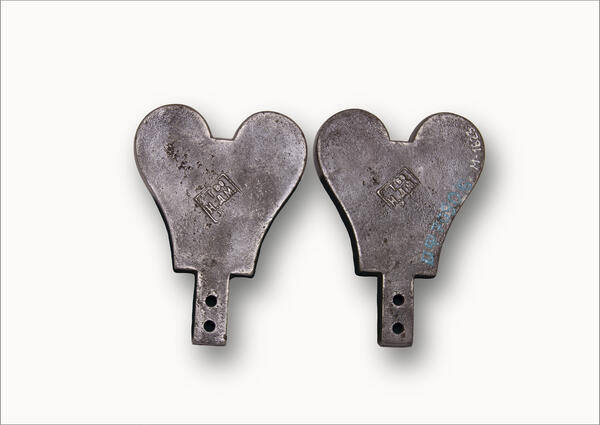
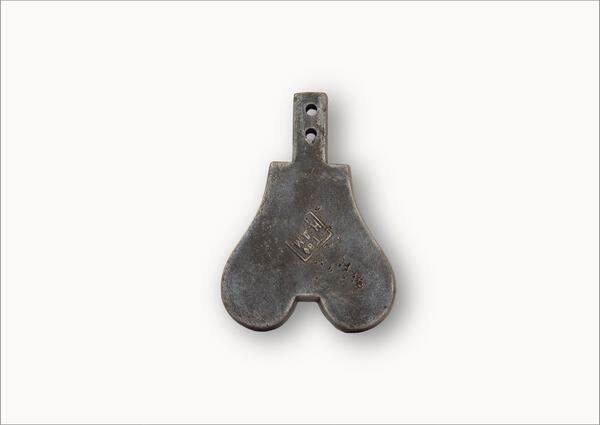
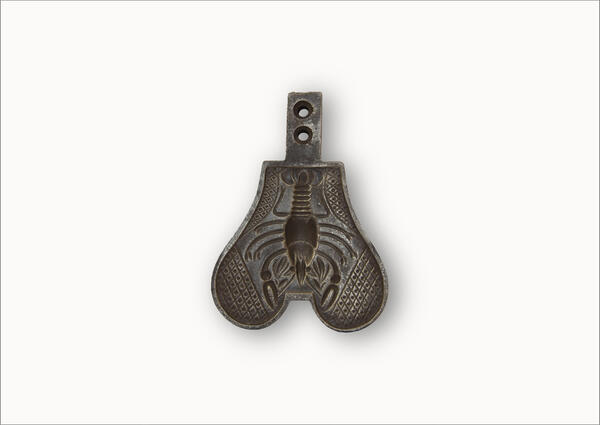
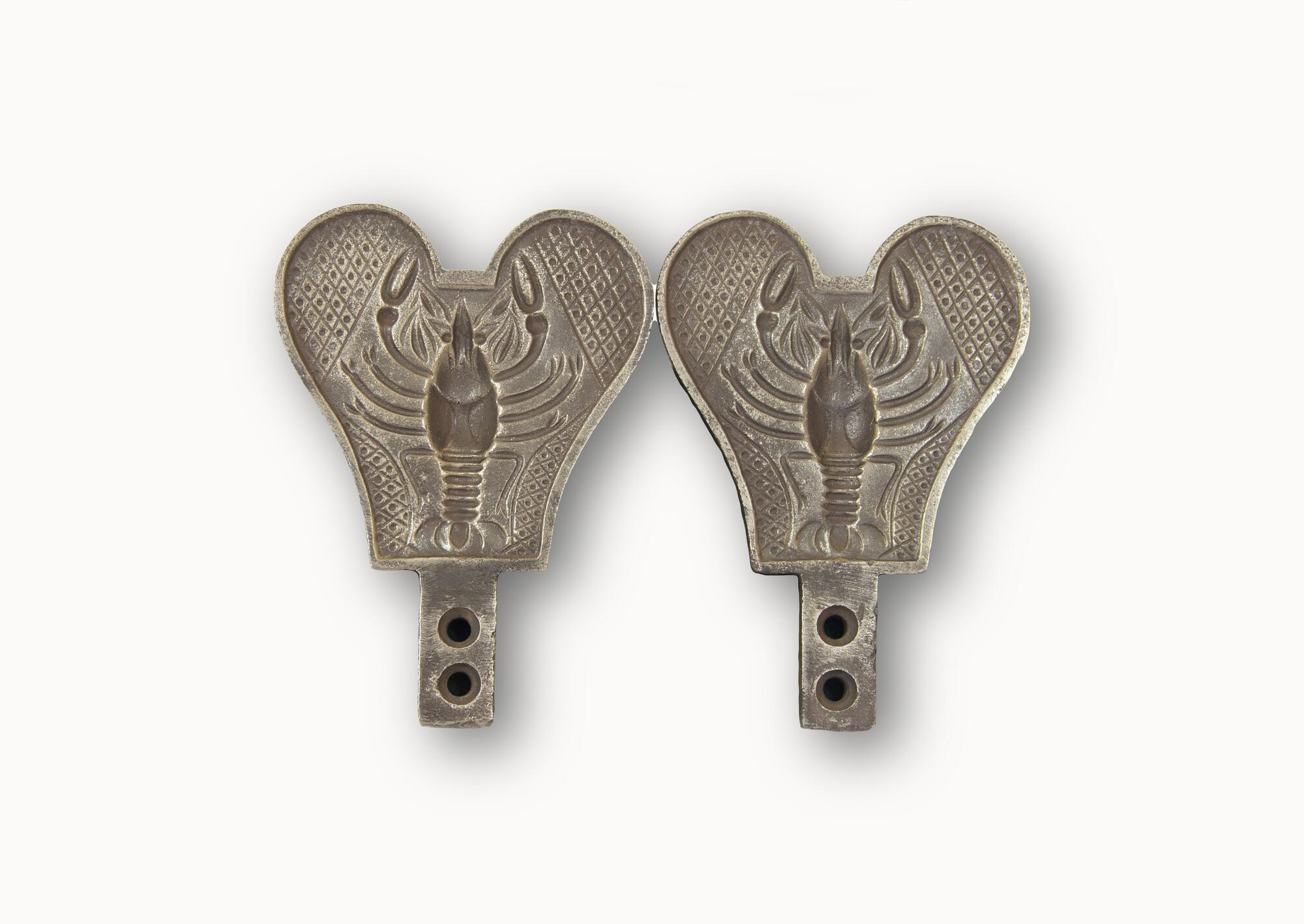
The heart-shaped waffle iron from the museum collection features the pattern of the Cancer zodiac sign. Presumably, there was a whole series of molds for waffle-type cookies with all the zodiac signs. The form on display was made in Tyumen at the Masharov factory, which is confirmed by the brand stamp “N.D. Masharov and Co.”
Cookies were originally invented in medieval Persia and, along with other Eastern sweets such as halva, baklava, Turkish delight, sherbet, and nougat, came to Europe with the Arab invasion and during the Reconquista and the Crusades. Initially, Europeans baked unsweetened cookies called hardtacks, which were popular among sailors, but the Age of Discovery, the colonization of the New World, and the access to cheaper sugar and spices led to the advent of sweetened cookies.
The British word for cookies is biscuits, which derives from Latin. With a slightly modified meaning, this word was borrowed by Russians. “Cupcake” and “muffin” were also introduced into the Russian language. If cookies are salty, they are called crackers. As for the word “cookie”, it was adopted by the British from their Dutch competitors, who invented waffles.
Waffles got their name from the ancient German word “Wabe” meaning honeycombs because the hexagonal waffle cells resembled the wax ones. Waffle irons of this type were designed by an American inventor of Dutch extraction. On August 24, 1869, after much experimentation and a series of unsuccessful trials, Cornelius Swartwout, a resident of Troy, New York, received the USA’s first patent for a special frying pan for baking waffles. It consisted of two parts (a bottom and a lid). The pan had to be turned over so that waffles baked evenly. Of course, the earliest waffle irons originated in the Netherlands as early as the 14th century. They were typically made of two hinged iron plates connected to two long wooden handles. The plates often imprinted elaborate patterns on the waffles, including various coats of arms, landscapes, and religious symbols. Swartwout improved the design by adding new handles and hinges that swiveled in a cast-iron collar, allowing to turn the waffle iron over with no danger of dropping it or getting burned.
The heart-shaped waffle iron from the museum collection features the pattern of the Cancer zodiac sign. Presumably, there was a whole series of molds for waffle-type cookies with all the zodiac signs. The form on display was made in Tyumen at the Masharov factory, which is confirmed by the brand stamp “N.D. Masharov and Co.”