Font
Color
Graphics
Изображение точки

To see AR mode in action:

1. Install ARTEFACT app for iOS or Android;

2. Find the exhibition «Man from the Legend»

3. Push the «Augmented reality» button and point your phone's camera at the exhibit;

Скрыть точки интересаПоказать точки интереса

Flask

Creation period
the 1940s
Dimensions
20x12 cm
Technique
aluminum
1
Open in app
#2

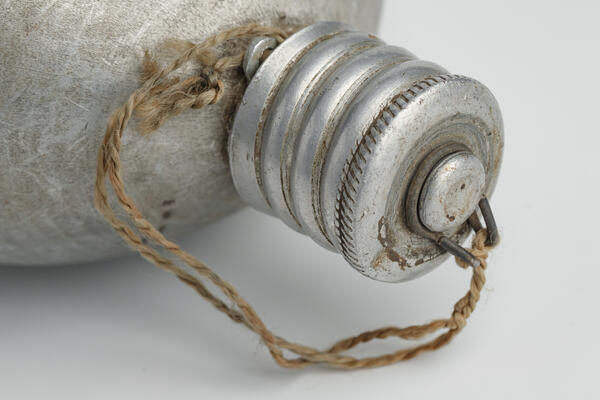
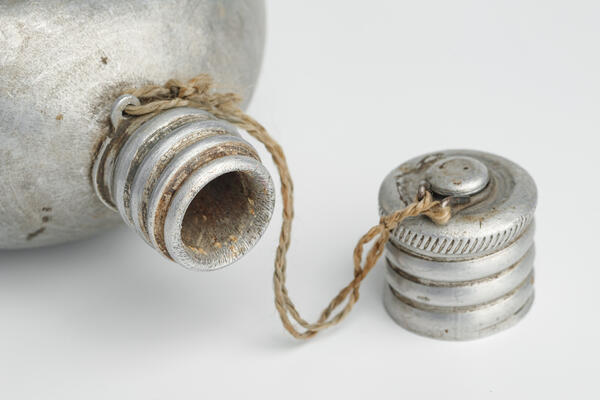
This aluminum soldier’s flask from the Museum of Intelligence Officer Nikolai Kuznetsov is more than a simple utilitarian object — it is a piece of history, a silent witness to the heroic years of the Great Patriotic War. Using such simple flasks, soldiers quenched their thirst on the front lines: in muddy trenches, during grueling marches, or in brief respites between battles. It endured the scorching heat of summer and the bitter cold of winter, holding not only water but perhaps also a sip of something stronger — just enough to warm the body and steady the soul in moments of hardship.


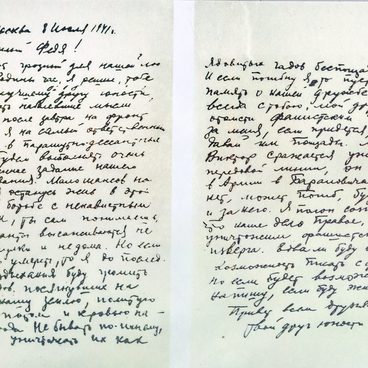
This flask carries a remarkable story. In 1976, it was donated to the museum by Mikhail Makarovich Shevchuk, a fellow partisan and comrade of Nikolai Ivanovich Kuznetsov in “The Winners” (Pobediteli) sabotage and reconnaissance unit. Kuznetsov carried this very flask during his covert operations in Rovno — the city that shaped the course of the war.


In 1970, while visiting Sverdlovsk, Shevchuk recounted his memories of Kuznetsov to journalist Nikolai Kodratov:
#3

One day, our detachment commander, Dmitry Nikolaevich Medvedev, called me into his office and said:

“Tomorrow, Mikhail, you have a mission. You’ll go to Rovno with Nikolai Vasilyevich Grachyov [Kuznetsov’s wartime alias]. He’ll be dressed as a German officer named Paul Siebert”.

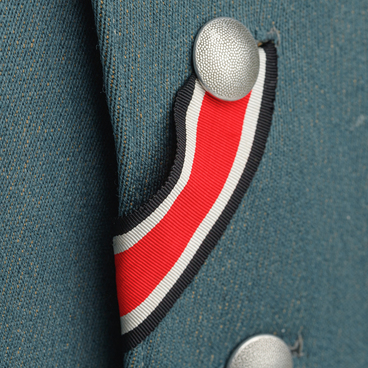
Early in our journey, we ran into a group of about thirty Nazis. Their leader, a captain, strode up to our ‘German’ with arrogance — until he noticed the Iron Cross and the Wound Badge on Siebert’s chest. His demeanor changed instantly.

“Who are you?” he asked.

“The General Staff Commissioner for Material Resources”, Paul Siebert replied calmly. “Why is the food supply so weak here? Don’t you realize the front is suffering from shortages?”

Though senior in rank, the German officer grew flustered and began making excuses. And just like that, we parted ways. That day, I knew for certain: N. I. Kuznetsov was not only brave but brilliantly resourceful. With a man like that, any mission seemed possible.

#1

Aluminum military flasks were first produced in Russia at the beginning of the 20th century. Early models were sealed with rubber or bark stoppers. In 1932, a unified standard was introduced: flasks with capacities of 0.75 or 1 liter, made of aluminum, tinplate, or brass, and distinguished by a screw cap with a fine five-thread pitch. After the war, the design was simplified to a three-thread version.


Manufactured to a single, practical pattern, these flasks featured a lightweight oval aluminum body (weighing approximately 200 grams) and a lid attached by a short chain. Their simplicity, durability, and reliability made them indispensable companions to soldiers in the harshest conditions.


The flask donated by Mikhail Shevchuk is far more than a museum artifact. It is a symbol of continuity across generations — a tangible reminder of Nikolai Kuznetsov’s courage, ingenuity, and unwavering resolve. It carries within it the memory of war, the fate of an extraordinary man, and our shared duty to honor and preserve that legacy.

#4
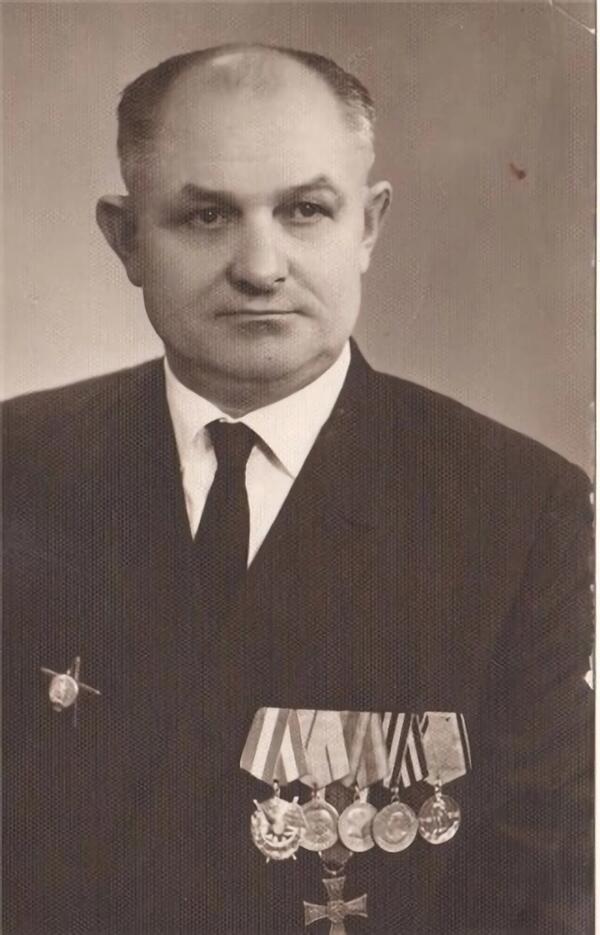
Mikhail Makarovich Shevchuk, comrade of Nikolai Kuznetsov, known in Rovno as “Pan Bolek”
#5
Flask
View in the State Catalogue
read morehide
00:00
00:00
1x

Flask

Creation period
the 1940s
Dimensions
20x12 cm
Technique
aluminum
1
Point your smartphone camera to open in the app
Share
VkontakteOdnoklassnikiTelegram
Share on my website
Copy linkCopied
Copy
Open in app
To see AR mode in action:
  1. Install ARTEFACT app for 
  2. iOS or Android;
  3. Find and download the «Paintings in Details» exhibition
  4. Push the «Augmented reality» button and point your phone's camera at the painting;
  5. Watch what happens on your phone screen whilst you flip through the pictures.
 
We use Cookies
Cookies on the Artefact Website. We use cookies to ensure that we give you the best experience on our website. If you continue without changing your settings, we'll assume that you are happy to receive all cookies on the Artefact website. However, if you would like to, you can change your cookie settings at any time.
Learn more about useHide
Content is available only in Russian

X

Нашли опечатку?...

%title%%type%