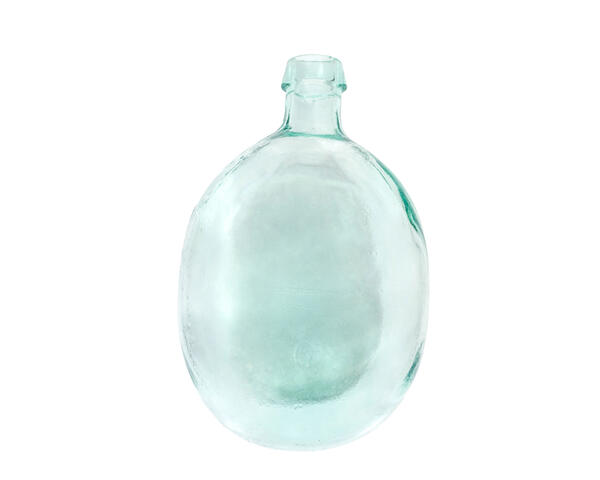
The first glass canteens in the Russian soldiers' accouterments appeared in the 19th century. At that time, they were covered with black paint and worn on a shoulder belt on the left side. In 1899, they were replaced by aluminum containers with cork stoppers and cloth covers. They were lighter and more durable than the glass ones but more expensive to produce.
During the Russian Civil War (1917-1923), the Red Army soldiers decided to use glass canteens because they were more available. However, in the 1920-s, the army was again supplied with metal containers. They were popular till the beginning of the Great Patriotic War (1941-1945). In the 1940-s, the USSR government concluded that aluminum was much more needed in other areas — for example, in the aircraft industry. The soldiers were again equipped with the glass vessels.
Such canteens were produced according to a unified industry standard which provided two volumes — 0.75 liters for small canteens and 1 liter for large ones.
The glass canteens were worn in cloth covers which were hung over the shoulders. Pockets for cotton wool, sawdust, or other material were sewn to the inside of such bags. They neutralized the damage to the glass from impact or fall. In the heat, some soldiers wetted the covers with water, so that the canteen remained cool for a longer time.
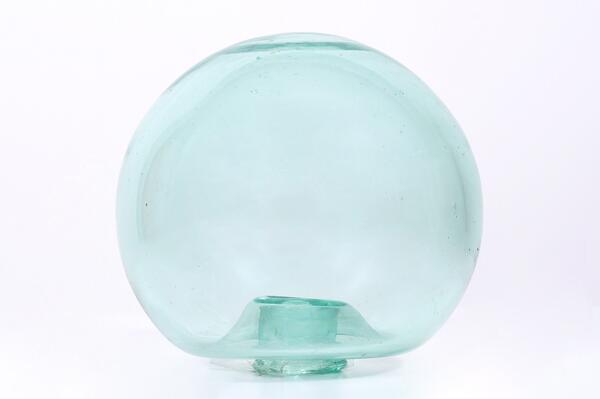
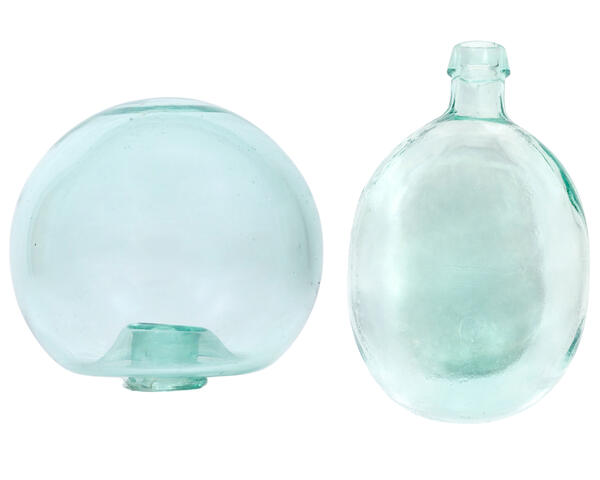
The collection of the National Museum of the Republic of Mari El includes a glass soldier’s canteen with a capacity of 0.75 liters. It was produced in the Mari Autonomous Soviet Socialist Republic at the Krasny Steklovar factory. This factory was founded in the mid-19th century. At that time, it was called Kuzhersky factory, from the name of the Kuzhery village where it was located. The merchant of the first guild, Pyotr Mestnikov, owned the factory. After the Russian revolution (1917), the factory became the property of the new state, and it was renamed “Krasny Steklovar” (“Red Glassmaker”), which also became the name for the worker’s village around the factory.
In Soviet times, “Krasny Steklovar” was one of the largest manufacturers of glassware — dining, medical, and technical. In the 1930-s, it was modernized: electricity was installed, and some of the equipment was replaced with semi-automatic lines. The factory worked until the middle of the 1980-s and was closed during Perestroika.
During the Russian Civil War (1917-1923), the Red Army soldiers decided to use glass canteens because they were more available. However, in the 1920-s, the army was again supplied with metal containers. They were popular till the beginning of the Great Patriotic War (1941-1945). In the 1940-s, the USSR government concluded that aluminum was much more needed in other areas — for example, in the aircraft industry. The soldiers were again equipped with the glass vessels.
Such canteens were produced according to a unified industry standard which provided two volumes — 0.75 liters for small canteens and 1 liter for large ones.
The glass canteens were worn in cloth covers which were hung over the shoulders. Pockets for cotton wool, sawdust, or other material were sewn to the inside of such bags. They neutralized the damage to the glass from impact or fall. In the heat, some soldiers wetted the covers with water, so that the canteen remained cool for a longer time.
The collection of the National Museum of the Republic of Mari El includes a glass soldier’s canteen with a capacity of 0.75 liters. It was produced in the Mari Autonomous Soviet Socialist Republic at the Krasny Steklovar factory. This factory was founded in the mid-19th century. At that time, it was called Kuzhersky factory, from the name of the Kuzhery village where it was located. The merchant of the first guild, Pyotr Mestnikov, owned the factory. After the Russian revolution (1917), the factory became the property of the new state, and it was renamed “Krasny Steklovar” (“Red Glassmaker”), which also became the name for the worker’s village around the factory.
In Soviet times, “Krasny Steklovar” was one of the largest manufacturers of glassware — dining, medical, and technical. In the 1930-s, it was modernized: electricity was installed, and some of the equipment was replaced with semi-automatic lines. The factory worked until the middle of the 1980-s and was closed during Perestroika.