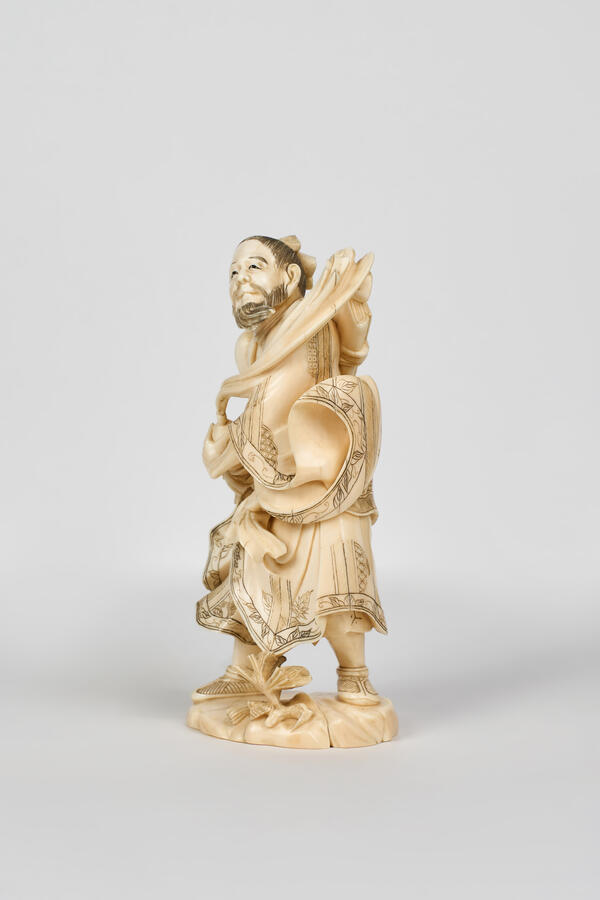
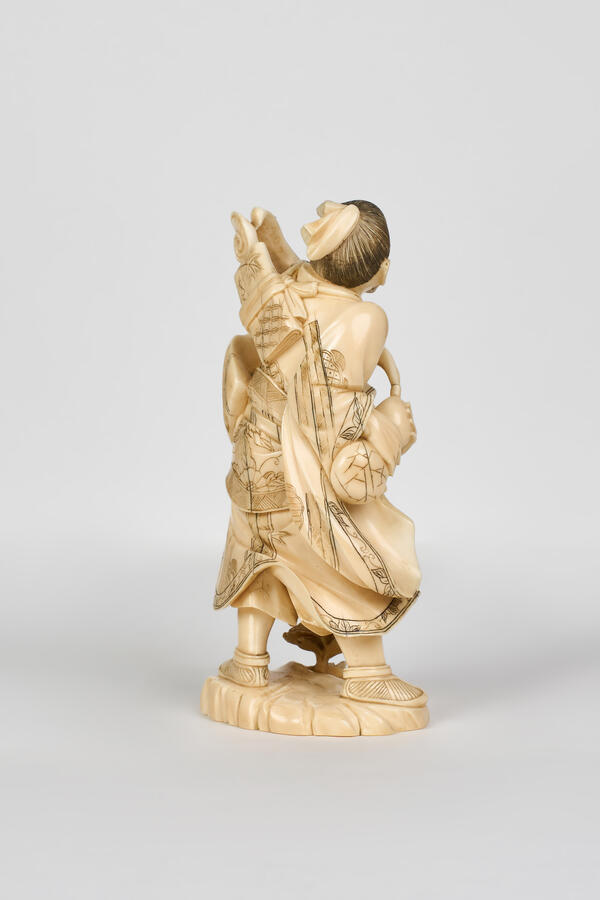
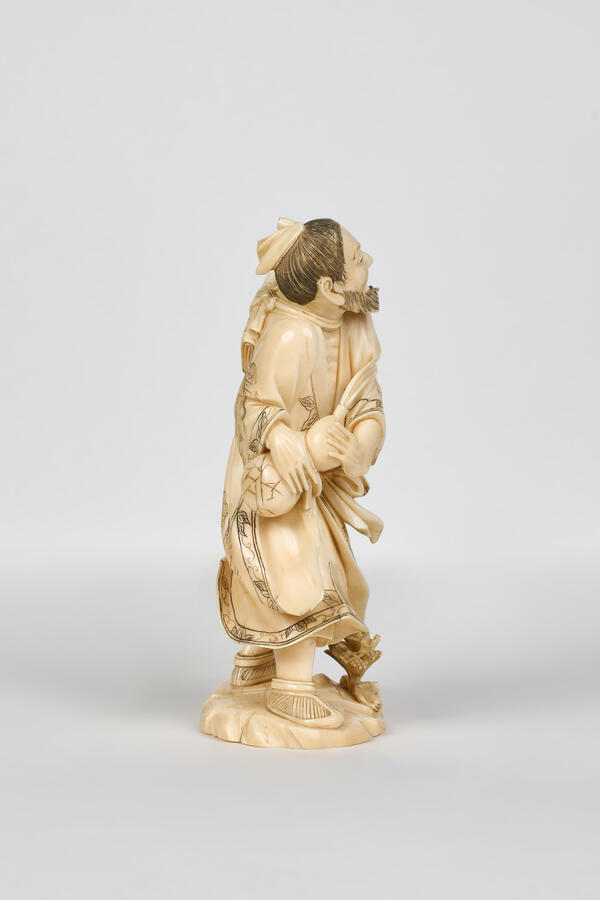
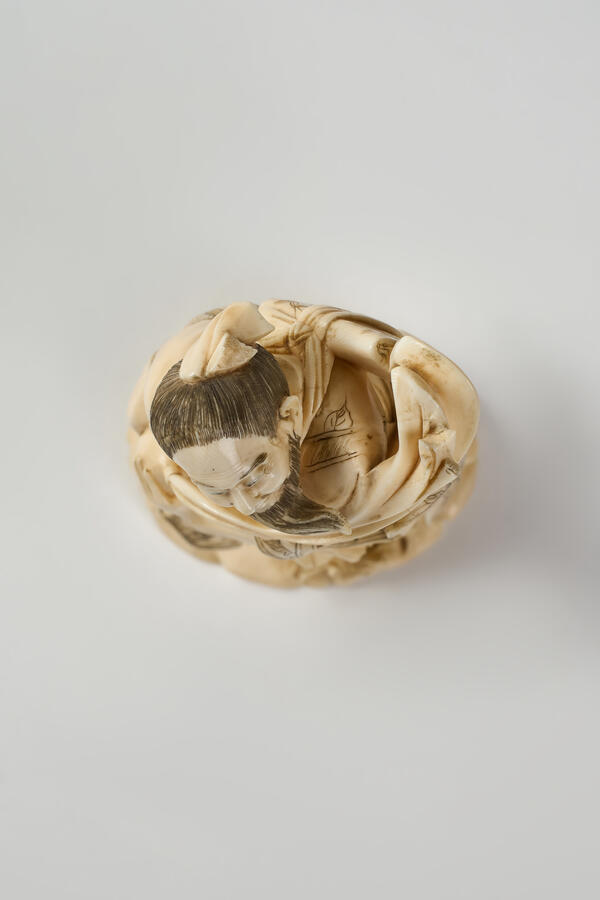
Okimono are Japanese ornaments or decorative statuettes that are often displayed in Japanese houses.
The history of okimono goes back centuries. The birthplace of this art is ancient China. It is believed that it came to Japan during the military campaigns in Korea launched by the ruler Toyotomi Hideyoshi. Probably, Korean merchants brought okimono figurines from Chinese monasteries, buying or exchanging them for various goods.
In Europe and the US, okimono art became known only in the 19th century after the Vienna World’s Fair, where Japan demonstrated its achievements, cultural traditions and crafts.
Most commonly, okimono were images of deities of different religious systems borrowed from the Chinese pantheon. Hotei, Benzaiten and Daikokuten are Buddhist deities, Jurojin and Fukurokuju are gods, according to Taoist beliefs. Figurines of famous philosophers and sages were also popular.
Okimono were made from a variety of materials: wood (boxwood, sakura, persimmon and others), metal (copper, bronze), porcelain, nephrite, bones (deer horn, narwhal tusk and other bone fragments). Ivory okimono statuettes are considered the most valuable.
In Japan, okimono did not develop as a separate art form. Despite the highest level of artistic skill, renowned artists don’t try to be innovative in their art, but rather copy the works of ancient masters, exquisitely creating the most intricate compositions.
In the second half of the 20th century, world-famous art auctions began selling okimono. Catalogs were formed and all known works were systemized and categorized by types, schools, and masters. In Japan, okimono statuettes are never evaluated: people value only the beauty, sophistication of the item itself, and the talent of the master.
Today, okimono have become an important part of interior design in Japan.
There are no significant museum collections of okimono sculptures in Japan. Some examples of okimono are kept in the Tokyo National Museum and the Seto Gallery. Okimono are housed in the museum of Takayama (Hida Province) and in private collections. Most okimono collections were formed outside Japan.
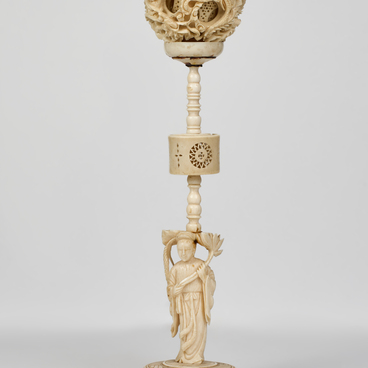
The figurine presented in the Collection of Foreign Art is a small sculpture of a standing man. Most likely, he is a hero of a Buddhist fairy tale.