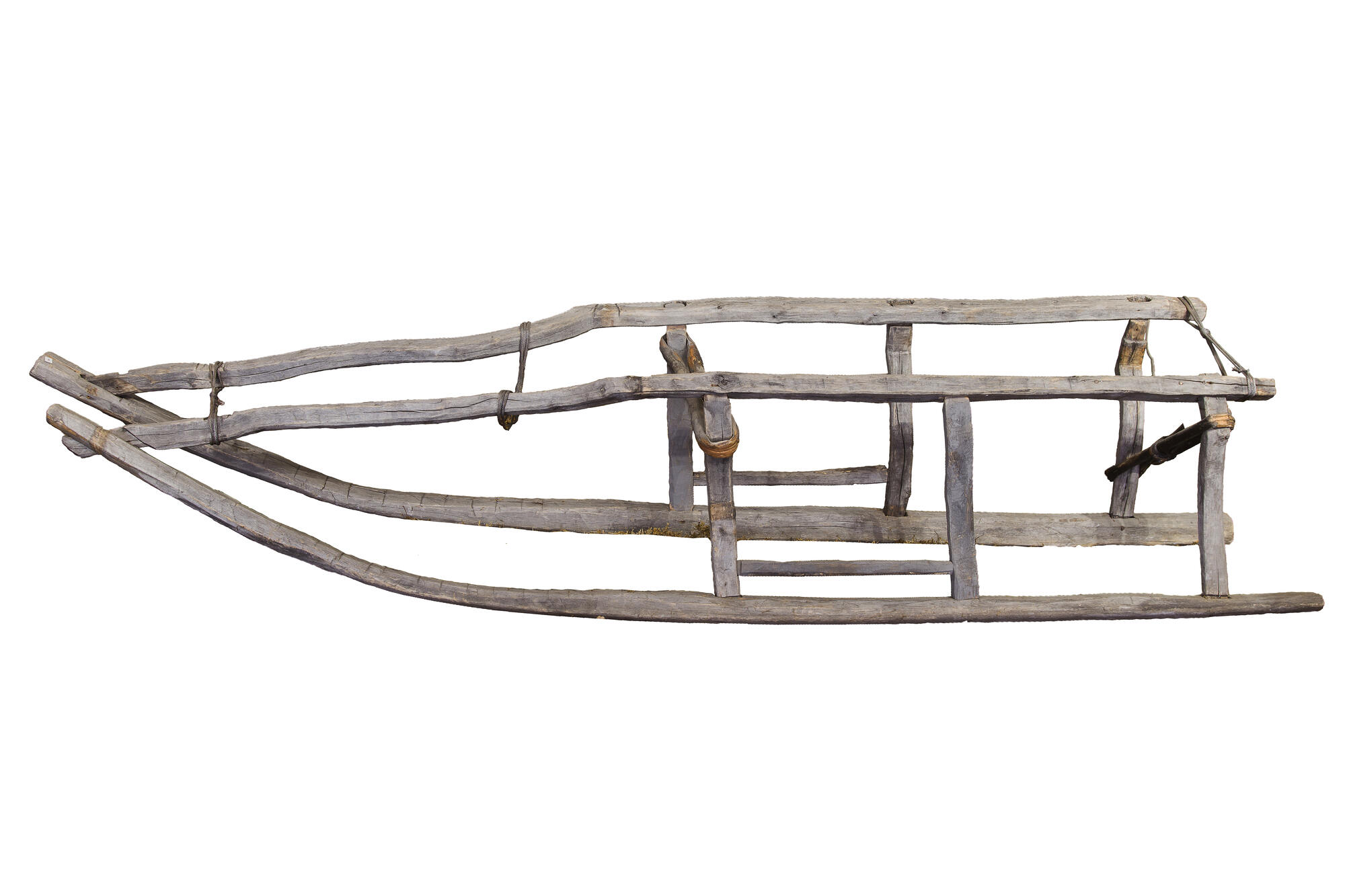


A “narta” (“narty”), or a sled, is a narrow long sledge used by the indigenous peoples of Siberia and northern regions of modern Russia. The Transbaikal Regional Museum of Local Lore displays wooden Evenk sleds.
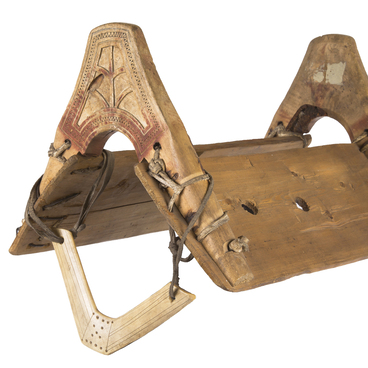
In summer, the Evenks used reindeer to travel. Special saddles were attached on the shoulders of the animal to reduce the load. The Evenks used domestic reindeer to transport goods and to milk them. They ate only the meat of wild animals.
Winters in Transbaikal were cold and long. It was inconvenient to walk over deep snow or ride on the reindeer’ back, as legs were constantly falling through and animals and nomads quickly got tired. Therefore, the Evenks moved across the taiga on wide skis, and for long distances they used nartas.
In summer, Evenk men made nartas from two curved wooden runners. Bars — poles of about 50 centimeters in height — were firmly fixed on each runner. They mostly used strong and flexible wood, like birch, pine or larch. The top parts of the nartas was covered with reindeer skins.
The Evenks who lived in the tundra were introduced to nartas by the Russian and Turkic populations of Transbaikal. However, not all tribes used these sledges — only the tribes that lived to the north of the Nizhnyaya Tunguska River, on the coast of the Yenisey and near the village of Antsiferovskoye. Some of them harnessed dogs to pull the sleds.
The Evenks borrowed nartas and adapted them to the conditions of the taiga. They changed the harness in order to use reindeer to pull the sleds instead of dogs. They also added a “baran” — a horizontal arch — that connected the ends of the runners. Thus, the sledge became stronger and more stable.
Beside sleds, there were cargo nartas on which the Evenks transported sacks with goods and prey from the hunt. They were longer and wider. Three pairs of straight bars were attached to the runners of these sleds to support heavy luggage. In addition, it was tied to the nartas with ropes.
Presently, one can see both kinds of nartas in museums as well as at folk festivals in the region. Jumping over the sleds is one of the popular contests at traditional Evenk festivals.
In summer, the Evenks used reindeer to travel. Special saddles were attached on the shoulders of the animal to reduce the load. The Evenks used domestic reindeer to transport goods and to milk them. They ate only the meat of wild animals.
Winters in Transbaikal were cold and long. It was inconvenient to walk over deep snow or ride on the reindeer’ back, as legs were constantly falling through and animals and nomads quickly got tired. Therefore, the Evenks moved across the taiga on wide skis, and for long distances they used nartas.
In summer, Evenk men made nartas from two curved wooden runners. Bars — poles of about 50 centimeters in height — were firmly fixed on each runner. They mostly used strong and flexible wood, like birch, pine or larch. The top parts of the nartas was covered with reindeer skins.
The Evenks who lived in the tundra were introduced to nartas by the Russian and Turkic populations of Transbaikal. However, not all tribes used these sledges — only the tribes that lived to the north of the Nizhnyaya Tunguska River, on the coast of the Yenisey and near the village of Antsiferovskoye. Some of them harnessed dogs to pull the sleds.
The Evenks borrowed nartas and adapted them to the conditions of the taiga. They changed the harness in order to use reindeer to pull the sleds instead of dogs. They also added a “baran” — a horizontal arch — that connected the ends of the runners. Thus, the sledge became stronger and more stable.
Beside sleds, there were cargo nartas on which the Evenks transported sacks with goods and prey from the hunt. They were longer and wider. Three pairs of straight bars were attached to the runners of these sleds to support heavy luggage. In addition, it was tied to the nartas with ropes.
Presently, one can see both kinds of nartas in museums as well as at folk festivals in the region. Jumping over the sleds is one of the popular contests at traditional Evenk festivals.