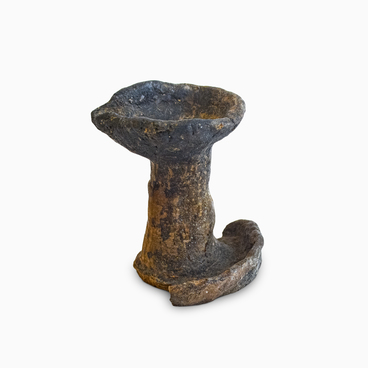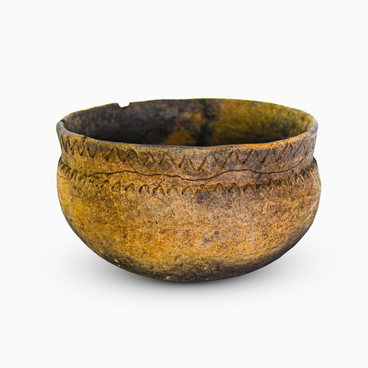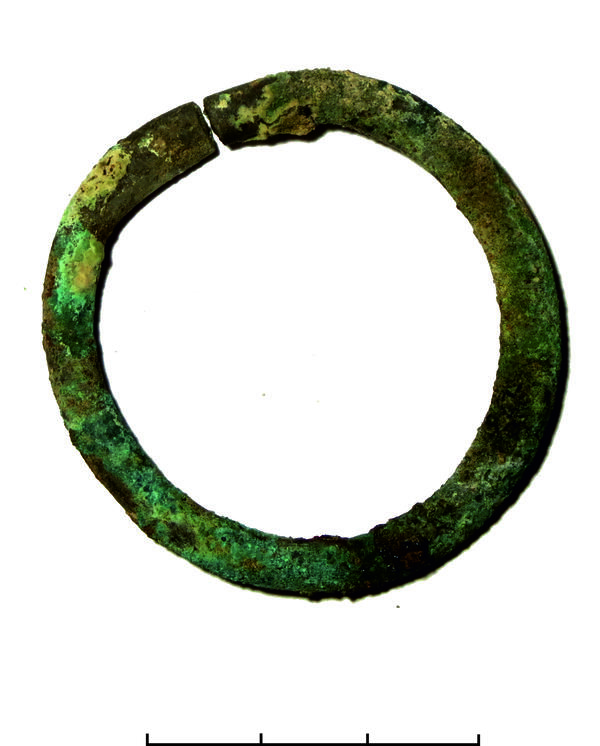
The object was obtained during the archaeological study of a single mound Bolsherechye-I, which is located next to the worker’s settlement of Bolsherechye on the bedrock terrace of the left bank of the Irtysh river. This place includes aburial ground, which also has 14 other mounds. They were left by representatives of the Sargat archaeological culture.
In many of the Sargat burials researchers have found a variety of grave goods: knives, spindle whorls, arrow tips, remnants of horse harness and other items.
In almost all cases the horse harnesses include bits (a device for bridling a horse, a bridle detail), bit shanks (a part of the bridle connecting the bit to the reins and headband, ensuring the fixation of the bit and animal control), bridle plaques, girth buckles and rings (a horse harness detail designed to fasten a belt that covers the horse’s body from below and from both sides and keeps the saddle fastened on it). This may indicate the custom of putting the whole horse harness in the grave, not just bridles.
The main occupation of the Sargats was nomadic animal husbandry — breeding of large and small cattle, horses. Horse breeding occupied a leading place in the animal husbandry of the Sargat people. The share of horses in the herd of the Sargat culture was about 50% of the total livestock.
One of the inventions of the cultures of the Scythian world, to which the Sargat people also belonged, were bits and bit shanks, which greatly simplified the control of a horse. The main component of the harness of a riding horse among the Sargats was a bridle set, which included a bit and a pair of bit shanks, interconnected in a certain way. When pulling the rein, the bit presses on the toothless part of the horse’s mouth, allowing the rider to control it more easily. The appearance of such a control system caused a revolution in military affairs. The horsemen of the cultures of the Scythian world were considered the strongest in the world for several centuries; in particular, they did not allow the troops of Alexander the Great to conquer the Caspian steppes.
The Sargats fought a lot and often. Their main
weapon was a spear, which the warrior held with two hands when attacking. Stirrups
had not yet been invented, so the riders stayed on the horse using the strength
of their legs and skillful body balancing.