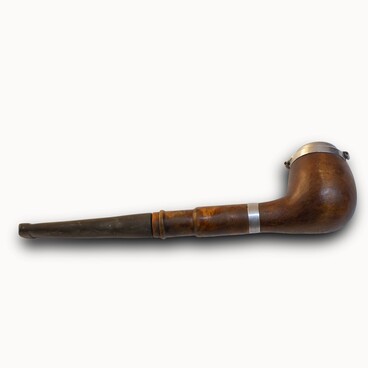
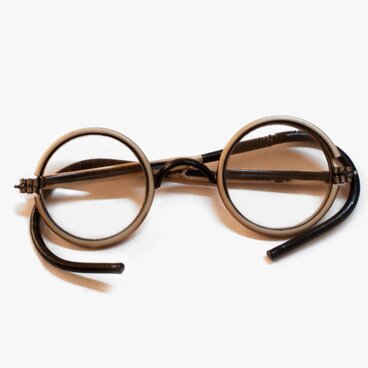
For his 70th anniversary, the writer and publicist Pavel Petrovich Bazhov was presented with many memorable gifts related to his life, work and interests. Among other gifts, there was a sculpture “Lezgin Trick Riding” (literary, “Lezgin Jigitovka”; jigitovka is a term derived from “jigit” meaning “a skillful equestrian”) with a dedicatory inscription created by the Kasli masters of artistic casting. It was presented to the writer by the staff of the Sverdlovsk Pedagogical Institute in January 1949.
Kasli cast iron sculpture is one of several types of art that have made the Urals famous far beyond the borders of Russia. Bazhov, as a true admirer and promoter of the Ural theme, was sincerely interested in the history and spirit of this craft.
The “Kasli Cast Iron Works” (at various times it was also called the “Machine-Building” plant and “Plant No. 71 of the All-Union State Shell Trust”) was the oldest metallurgical plant in the Southern Urals. It was founded in the 1740s by the Yekaterinburg merchant Yakov Korobkov. In 1751, Nikita Demidov acquired the plant, and rebuilt and expanded the buildings. In the early 19th century, another change of leadership happened when Lev Rastorguev bought the plant, and Kasli became part of the Kyshtym district.
The plant’s workers began to master artistic casting in 1843–1845: they started with making small sculptures, and later created interior items and furniture, the pinnacle and triumph of which was the Kasli Iron Pavilion, which received the Grand Prix and a Large Gold Medal at the 1900 Paris Exposition.
Initially, the Kasli foundries used models of European artists, as well as Russian artists working in a Western style. The sculpture “Lezgin Trick Riding” by Yevgeny Lanceray belongs to those works.
The transition to the local theme was made by local sculptors: Vasily Torokin, Dmitry Shirokov, Kuzma Tarasov and others. Bazhov wrote a tale about Vasily Torokin, “The Cast Iron Granny”. It focused on the talent and originality of the Ural masters, who had a flair for casting and artistic taste and were able to convey their vision at the same level with prominent and established artists.
Throughout the 20th century, the production of cast-iron artworks sometimes stopped and then resumed, but the plant prioritized meeting the domestic and military needs: if in the 1920s, it produced dishes and stove parts, in the 1940s — shells to send to the front. Currently, there are mainly private enterprises in the town of Kasli that continue the traditions of classic artistic casting.