

Pyotr Dmitriyevich Pavlov, the father of the academician Ivan Petrovich Pavlov, was a priest. For 18 years, he served as the rural dean overseeing 27 out of 42 churches in the city of Ryazan. Father Pyotr was responsible for the comprehensive supervision of the buildings and clergy of the district with the aim of “preserving order in the church and controlling its service for the benefit of Christians and the glory of God.”
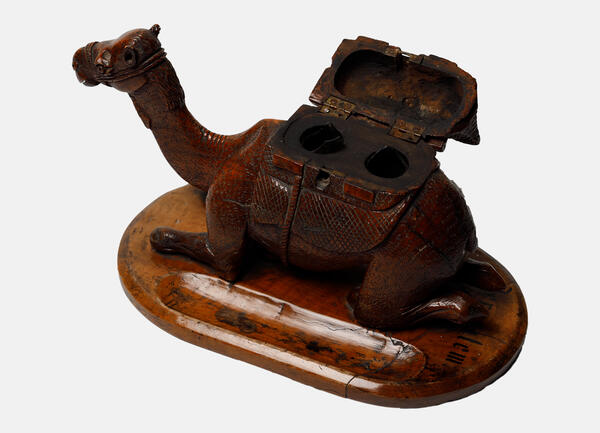
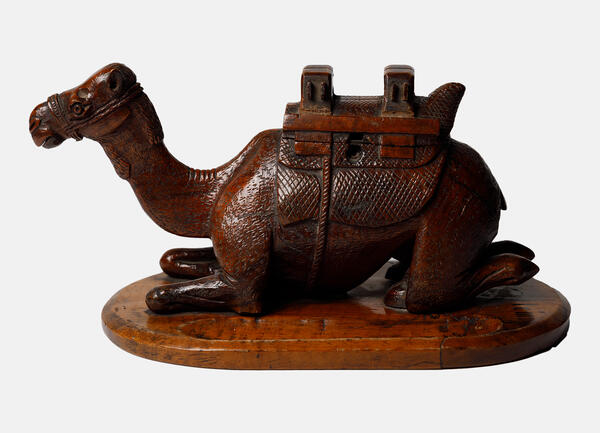
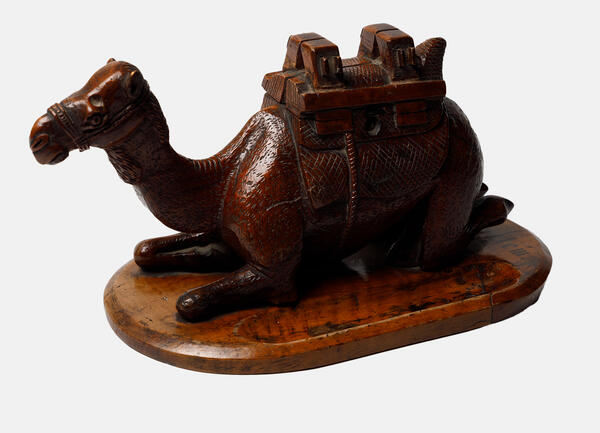
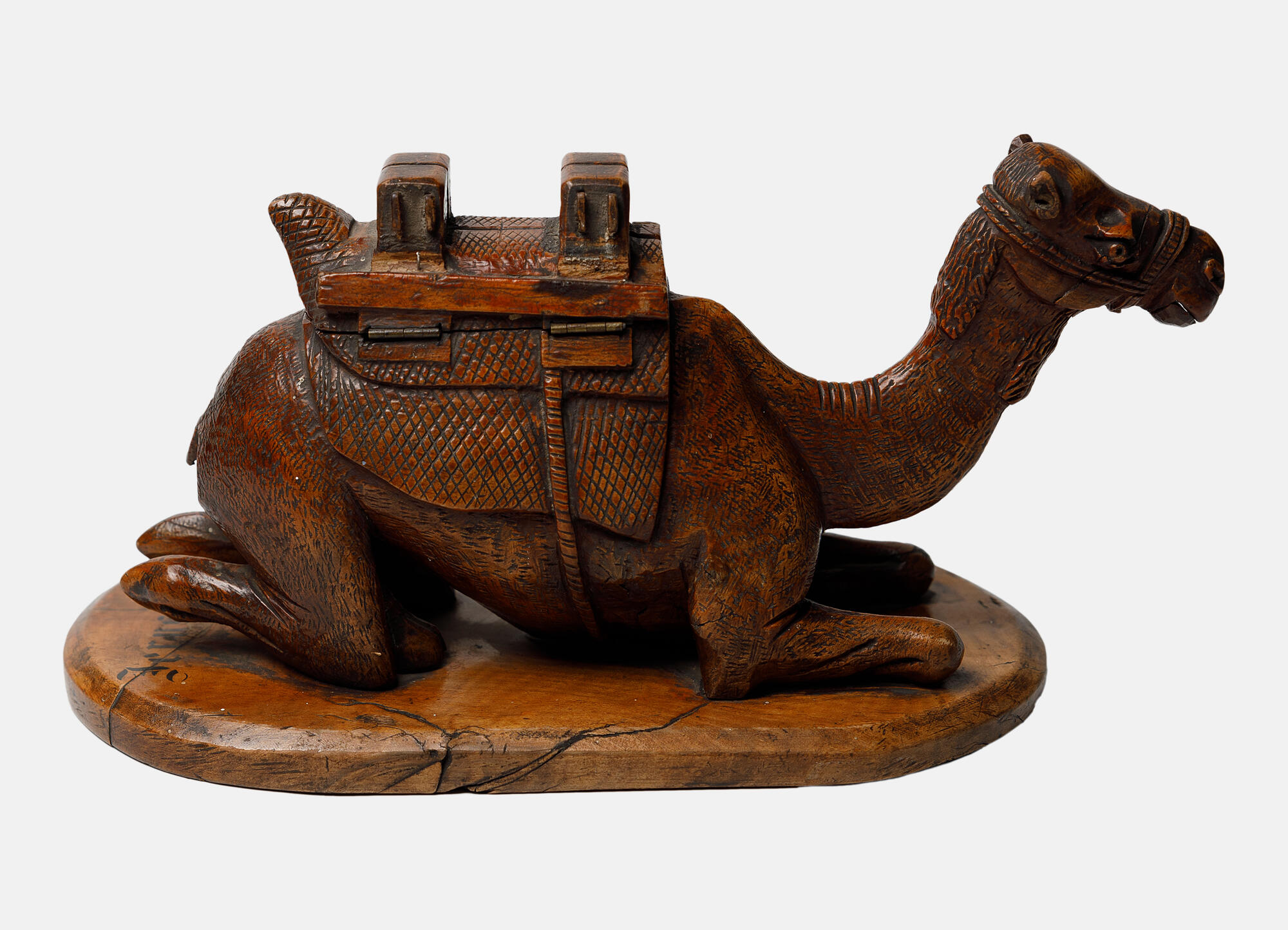
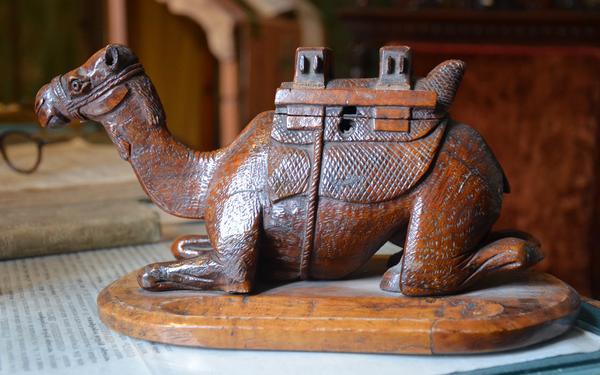
In the 19th century, churches were the center of faith and the spiritual life of society. In addition to parish churches, there were chapels at educational institutions, hospitals, and shelters. The parishioners often turned to Father Pyotr and expressed their gratitude to him with memorable gifts. One of them is a camel-shaped inkwell made of palm wood that was brought from Jerusalem. Pyotr Dmitriyevich cherished this treasured possession, and nowadays the inkwell occupies the main place on the desk in his office.
The Bactrian camel is a two-humped camel that was domesticated about 4,000 years ago. It can reach up to a ton in weight and up to three meters in overall height with humps. It is possible to remove and fasten the luggage on the back of a Bactrian camel only when it kneels down. In this calm and submissive pose, the Bactrian is depicted in an ink figurine, which is placed on an oval wooden stand.
The camel is mentioned in the Gospel of Matthew when Christ says,
In the 19th century, churches were the center of faith and the spiritual life of society. In addition to parish churches, there were chapels at educational institutions, hospitals, and shelters. The parishioners often turned to Father Pyotr and expressed their gratitude to him with memorable gifts. One of them is a camel-shaped inkwell made of palm wood that was brought from Jerusalem. Pyotr Dmitriyevich cherished this treasured possession, and nowadays the inkwell occupies the main place on the desk in his office.
The Bactrian camel is a two-humped camel that was domesticated about 4,000 years ago. It can reach up to a ton in weight and up to three meters in overall height with humps. It is possible to remove and fasten the luggage on the back of a Bactrian camel only when it kneels down. In this calm and submissive pose, the Bactrian is depicted in an ink figurine, which is placed on an oval wooden stand.
The camel is mentioned in the Gospel of Matthew when Christ says,