

The development of the state apparatus and, as a result, official correspondence, required an increased number of professional clerks who were able to clearly express thoughts on paper. They had to write down decrees and employment letters. The latter were documents with information about the conditions under which a landowner hired free people as peasants.
The development of a multi-level system of state administration took place in the 16th and 17th centuries and made it possible to create a massive structure. Extensive document flow was one of the most obvious consequences of these processes.
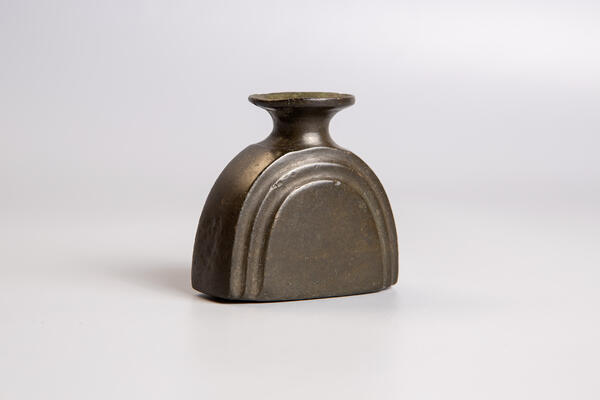
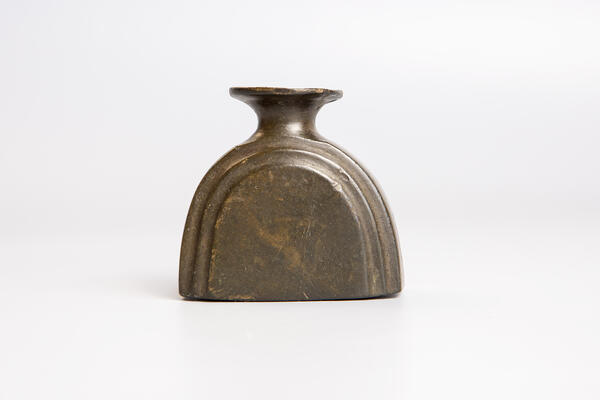
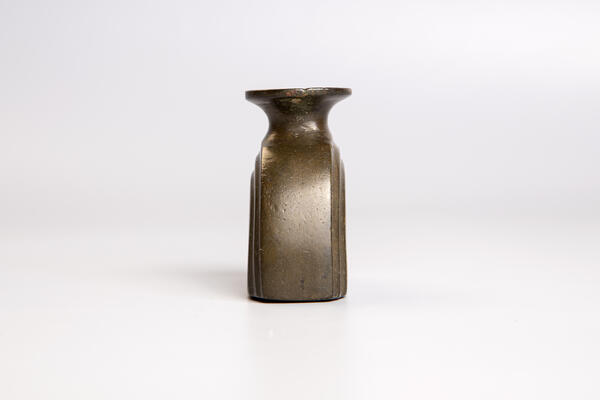
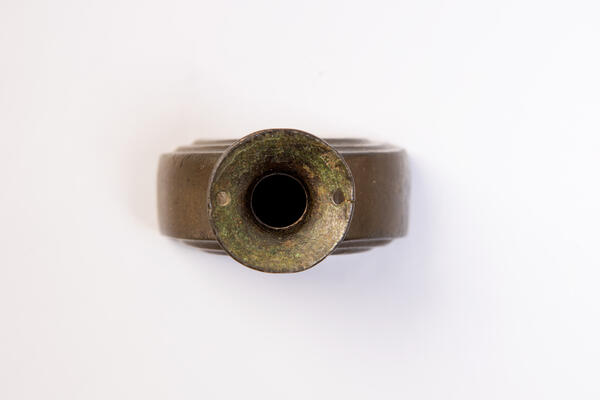
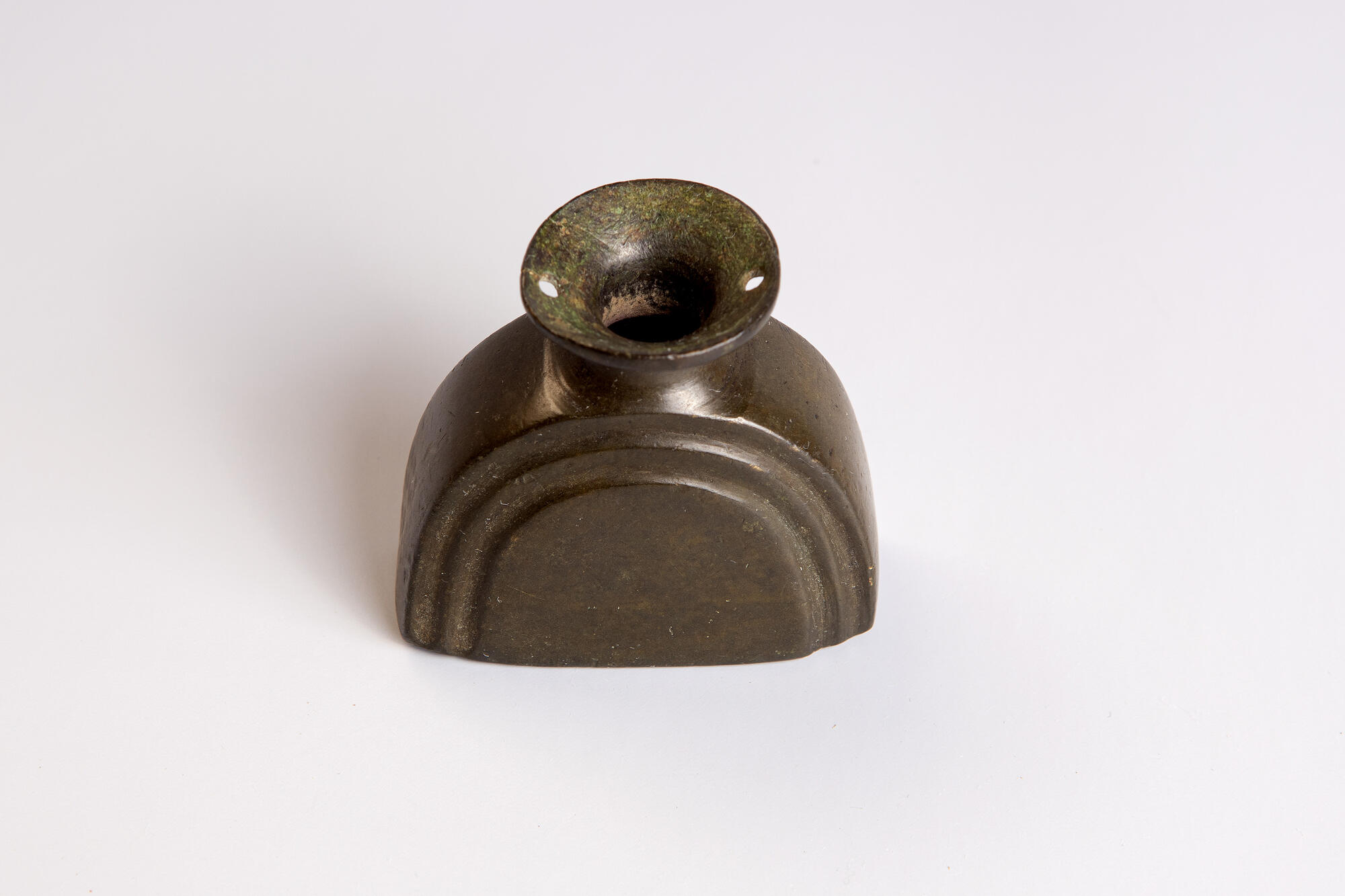
Clerks often used inkwells, like the one in the collection of the Museum “The Smolensk Fortress”. These objects were usually made quite massive for stability reasons. Significant weight made it possible to prevent the inkwell from accidentally tipping over. Since artisans made the rim of the neck wide, it was convenient for scribes to remove excess drops of ink from the tip of a sharpened quill.
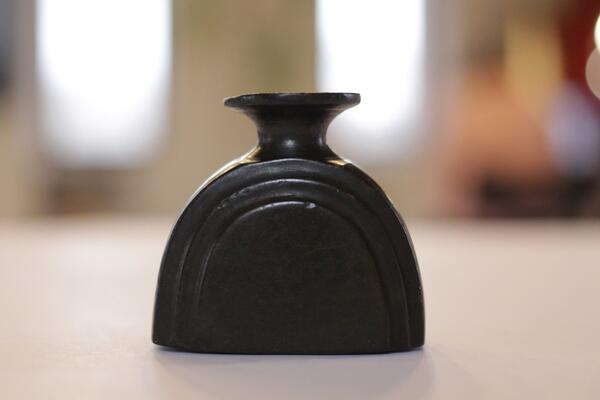
The inkwell from the exhibition was cast in bronze. During the time that has passed since its manufacture, the metal has been covered with a patina, so the inkwell looks too dark on the outside.
The shade of this exhibit is close to black polished ceramics. The preservation of the item is close to the standard. There are no deep scratches, cracks or dents on the body of the inkwell, which may indicate that the item was carefully passed down from generation to generation.
The modest design emphasizes the practical purpose of the inkwell. Its smooth bronze surface is devoid of any decorative elements. The proportions of the exhibit are close to a square. In addition, the inkwell has a well-defined shape. All this makes the object fit comfortably in the hand.
Inkwells were produced en masse in workshops, but there are no records of such production in Smolensk. It is possible that such goods were supplied to this region from the capital or provided for public needs.
The development of a multi-level system of state administration took place in the 16th and 17th centuries and made it possible to create a massive structure. Extensive document flow was one of the most obvious consequences of these processes.
Clerks often used inkwells, like the one in the collection of the Museum “The Smolensk Fortress”. These objects were usually made quite massive for stability reasons. Significant weight made it possible to prevent the inkwell from accidentally tipping over. Since artisans made the rim of the neck wide, it was convenient for scribes to remove excess drops of ink from the tip of a sharpened quill.
The inkwell from the exhibition was cast in bronze. During the time that has passed since its manufacture, the metal has been covered with a patina, so the inkwell looks too dark on the outside.
The shade of this exhibit is close to black polished ceramics. The preservation of the item is close to the standard. There are no deep scratches, cracks or dents on the body of the inkwell, which may indicate that the item was carefully passed down from generation to generation.
The modest design emphasizes the practical purpose of the inkwell. Its smooth bronze surface is devoid of any decorative elements. The proportions of the exhibit are close to a square. In addition, the inkwell has a well-defined shape. All this makes the object fit comfortably in the hand.
Inkwells were produced en masse in workshops, but there are no records of such production in Smolensk. It is possible that such goods were supplied to this region from the capital or provided for public needs.