Font
Color
Graphics
Изображение точки

To see AR mode in action:

1. Install ARTEFACT app for iOS or Android;

2. Find the exhibition «Sochi: From Prehistoric Times to This Day»

3. Push the «Augmented reality» button and point your phone's camera at the exhibit;

Скрыть точки интересаПоказать точки интереса
Показать в высоком качестве

Adyghe women’s costume

Creation period
the late 19th — early 20th centuries
Place of сreation
the Caucasian Riviera
Dimensions
119x31x10 cm
Technique
velvet, wool, galloon, thread; sewing
5
Open in app
#2

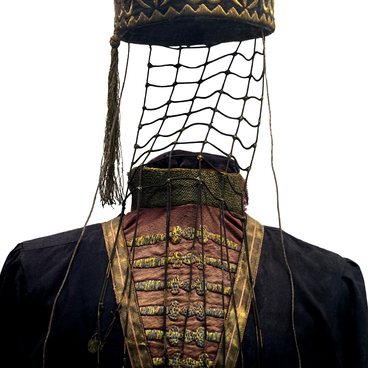
The Museum of the History of the Resort City of Sochi presents an embroidered Adyghe women’s costume. It comes with an apron, embroidered with gold threads, and a cap.

The traditional festive attire of the Adyghe was exceptionally beautiful. Circassian women crafted their garments from silk and red velvet, intricately embroidering patterns with gold and silver threads. They wore a long, straight shirt made of cotton or silk, typically in shades of red or orange, which was visible through slits in the dress. Underneath the shirt, they donned pants that gathered at the bottom and a corset, which was worn from childhood until marriage. Teenage girls wore a short caftan, similar in cut to a beshmet, fastened at the chest with numerous (up to 20) pairs of large silver clasps. The colors of the caftan included dark red, black, and occasionally blue. It was adorned with galloon trim, and the sleeves, particularly the hems, were embellished with gold embroidery. Over time, the caftan evolved into a sort of apron. A long dress (known as a sai) was worn over the caftan, traditionally embroidered with gold and decorated with silver elements, resembling the cut of a cherkeska coat. This dress featured a front slit, revealing the silver fasteners of the caftan and its hems, often richly decorated with embroidery.

The elegant dress was made of dark-colored velvet or silk and adorned with galloon and gold embroidery. In the late 18th and early 19th centuries, the sleeves of the dress were long and featured slits, while later designs included sleeves that extended to the elbow, revealing the sleeves of the caftan and shirt underneath. Decorative ornaments were sewn onto the sleeves, enhancing their beauty. A belt with a silver buckle complemented the refined costume of a princess or noblewoman, with the design of the belt reflecting the woman’s status. Upon reaching marriageable age and until the birth of their first child, women wore a golden maiden cap. Initially quite tall, the cap later became shorter or even slanted, often worn to the side. It was richly decorated with embroidery, galloons, and trimmings, with a scarf draped over it. After giving birth, women covered their heads with a dark scarf or shawl.

#3
View in the State Catalogue
read morehide
00:00
00:00
1x

Adyghe women’s costume

Creation period
the late 19th — early 20th centuries
Place of сreation
the Caucasian Riviera
Dimensions
119x31x10 cm
Technique
velvet, wool, galloon, thread; sewing
5
Point your smartphone camera to open in the app
Share
VkontakteOdnoklassnikiTelegram
Share on my website
Copy linkCopied
Copy
Open in app
To see AR mode in action:
  1. Install ARTEFACT app for 
  2. iOS or Android;
  3. Find and download the «Paintings in Details» exhibition
  4. Push the «Augmented reality» button and point your phone's camera at the painting;
  5. Watch what happens on your phone screen whilst you flip through the pictures.
 
We use Cookies
Cookies on the Artefact Website. We use cookies to ensure that we give you the best experience on our website. If you continue without changing your settings, we'll assume that you are happy to receive all cookies on the Artefact website. However, if you would like to, you can change your cookie settings at any time.
Learn more about useHide
Content is available only in Russian

X

Нашли опечатку?...

%title%%type%