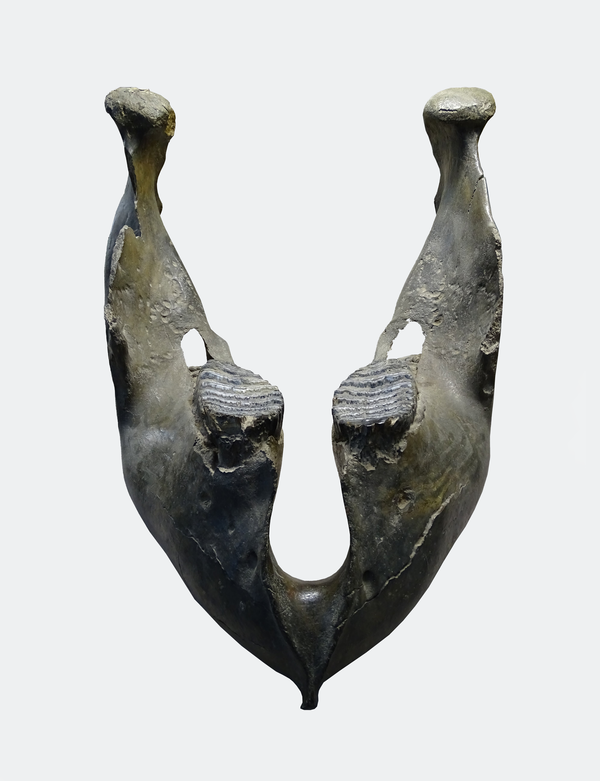
Mammoths are an extinct genus of elephants that lived in Asia, North America, Europe and Africa during the Pliocene and Holocene eras. They were once one of the largest mammals of the Ice Age. Mammoths ate a variety of plant foods. The lower jaw of a mammoth is a huge V-shaped bone, most of which is made up of only two teeth.
The mammoth had four teeth — two in the upper jaw and another two in the lower one. The mammoth is an herbivorous animal and has no need for fangs, which are common in many species including humans, as these animals do not eat complex food. It also had no incisors for biting off chunks of meat and molars for grinding food because all of these processes could easily be dealt with by using a trunk and cemented dentin teeth plates.
Throughout the history of proboscis, the coronal structures of their teeth were becoming more complex. The mammoth, like modern herbivores, ate grass and leaves, which it grabbed, with its trunk not unlike modern elephants.
Mammoth teeth are the basis and crown jewel of any paleontological collection. These strange, heavy, unlike unique objects tell us not only about the huge size of their extinct owners, but also about the food they consume. Each tooth could reach over 30 centimeters in length, and weight several kilograms.
Mammoths have a more massive body, shorter legs, longer hair, smaller ears compared to modern elephants and long curved tusks; mammoths used the later to obtain food in winter by digging it from under the snow. Mammoth dentine-enamel plates were well suited for chewing coarse plant food.