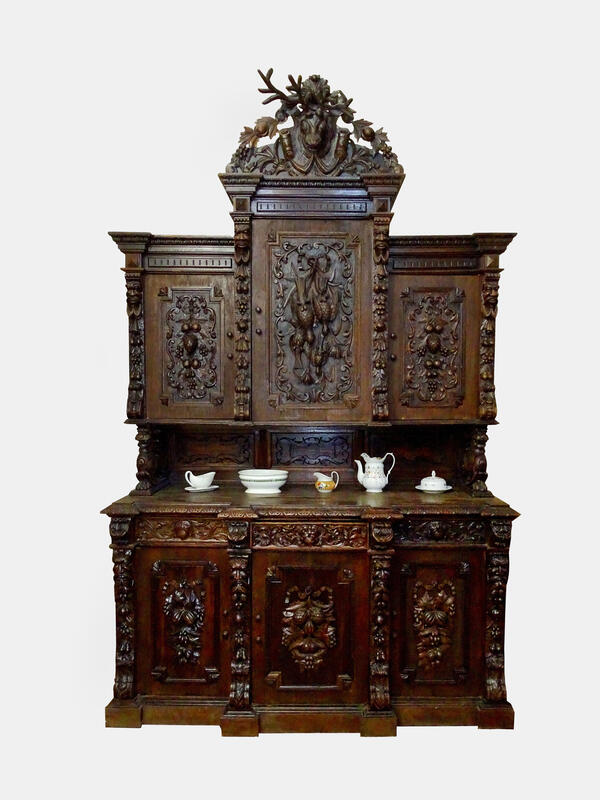
Sideboards were first used in the 15th and 16th century. They were, of course, quite different compared to the modern ones. The presence of furniture spoke of the wealth and taste of the homeowner. Moreover, sideboard helped the owners of the house to make the room more comfortable. Over time, wood craftsmen began to make real masterpieces out of sideboards. They decorated them with carvings, unique shelves, intricate handles. Each era has its own characteristics. Now such a sideboard is an antique piece. They go for a lot of money.
The name, as well as the type of furniture itself, comes from France. It was here that they first thought about the need for a special box to store expensive tableware made of gold, silver and porcelain.
As a result, they invented a sideboard. It came with compartments. Each section was intended for storing a certain type of tableware. Every sideboard had locks so the owners of valuable tableware ensured their safety.
In Russian, the name of this furniture remained as it were in French. The literal translation means “elegant, sparkful, festive table”. However, there is another translation that means “short, low”.
The standard sideboard is made of four zones:
1. Underframe. Located under the drawers or under the serving table. Large items were stored here, such as cooking pots, teapots, clay pots or boxes with packed cutlery. In addition, it was used to store food supplies in unpacked bags.
2. Drawers. All sideboards were equipped with them. Housekeepers used them for small utensils: spoons, forks, knives. Modern owners often store all sorts of small items here, thereby freeing up space.
3. The tabletop. The top of the buffet. An area divided by sections or shelves. Beautiful dishes, bottles of elite alcohol and other beautiful items were stored here, because the top was equipped with glass doors. Sometimes, there were no doors. But the top always remained open, transparent, so that the owners could demonstrate their wealth to guests.
4. Side tables. The zones were located to the right and left of the serving table. Tea supplies were often stored here: candies, sugar, jars of jam.