

Shamanism — one of the oldest religions. With different distinctive features, but the same in essence, this religion existed among most people in the world. The main idea of shamanism was that the link between the world of spirits and the world of people is a shaman. The Evenks consider the shaman’s tambourine a raft or boat — on it the shaman (his soul) ‘floats’ along rivers and lakes in search of lost souls or in pursuit of stolen souls.
The shaman was traditionally approached on various issues: to cure a deer, to find a strayed deer from the herd, to ward off evil spirits, to protect against human diseases and failures, to send the soul of the deceased to the world of souls of dead people.
The shaman always had spirit helpers — often in the form of birds or animals. He was also helped by the spirits of his ancestors — mugda. They gave advice during the ritual. The shaman made a fire and slowly hitting on the tambourine, going round the fire. The dance would grow faster and faster until the shaman was in ecstasy. After that, he would fall into a long silence. While his body was in the middle world, his soul was in other worlds — he would meet with good spirits, asked them for health, well — being, protection and patronage. After saying goodbye to the spirits, he returned to his body, slowly opened his eyes and announced the will of the spirits to the people.
In addition, shamans were engaged in healing. To find out the cause of the disease, it was necessary to conduct a special rite — the source could be an evil eye or the tricks of evil spirits, which were unleashed by shamans of hostile clans. Based on the reason, the person was treated with a ritual or medication.
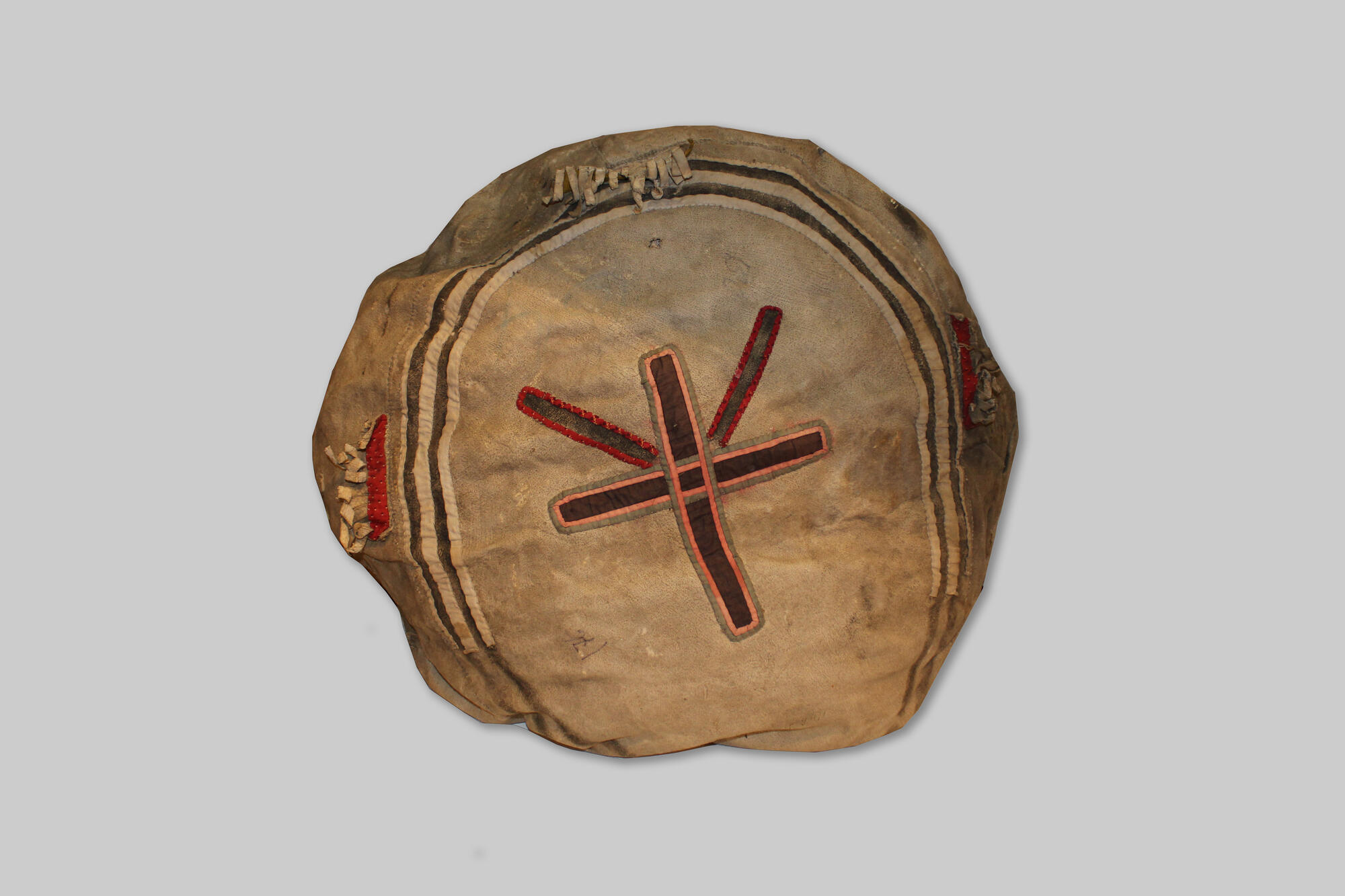
The Museum displays a bag made of deer skin, rounded shape and with a tie at the top. This case served as a protection for the tambourine from mechanical damage and moisture. On normal days, tools, costumes, and other ritual paraphernalia were placed in this bag and stored in the shaman’s plague. They were removed immediately before starting the rituals. This cover for the tambourine was made in the middle of the XIX century by handy craftsmen who lived in the North of the Yeniseysk district, in the Turukhansk region.
The shaman was traditionally approached on various issues: to cure a deer, to find a strayed deer from the herd, to ward off evil spirits, to protect against human diseases and failures, to send the soul of the deceased to the world of souls of dead people.
The shaman always had spirit helpers — often in the form of birds or animals. He was also helped by the spirits of his ancestors — mugda. They gave advice during the ritual. The shaman made a fire and slowly hitting on the tambourine, going round the fire. The dance would grow faster and faster until the shaman was in ecstasy. After that, he would fall into a long silence. While his body was in the middle world, his soul was in other worlds — he would meet with good spirits, asked them for health, well — being, protection and patronage. After saying goodbye to the spirits, he returned to his body, slowly opened his eyes and announced the will of the spirits to the people.
In addition, shamans were engaged in healing. To find out the cause of the disease, it was necessary to conduct a special rite — the source could be an evil eye or the tricks of evil spirits, which were unleashed by shamans of hostile clans. Based on the reason, the person was treated with a ritual or medication.
The Museum displays a bag made of deer skin, rounded shape and with a tie at the top. This case served as a protection for the tambourine from mechanical damage and moisture. On normal days, tools, costumes, and other ritual paraphernalia were placed in this bag and stored in the shaman’s plague. They were removed immediately before starting the rituals. This cover for the tambourine was made in the middle of the XIX century by handy craftsmen who lived in the North of the Yeniseysk district, in the Turukhansk region.