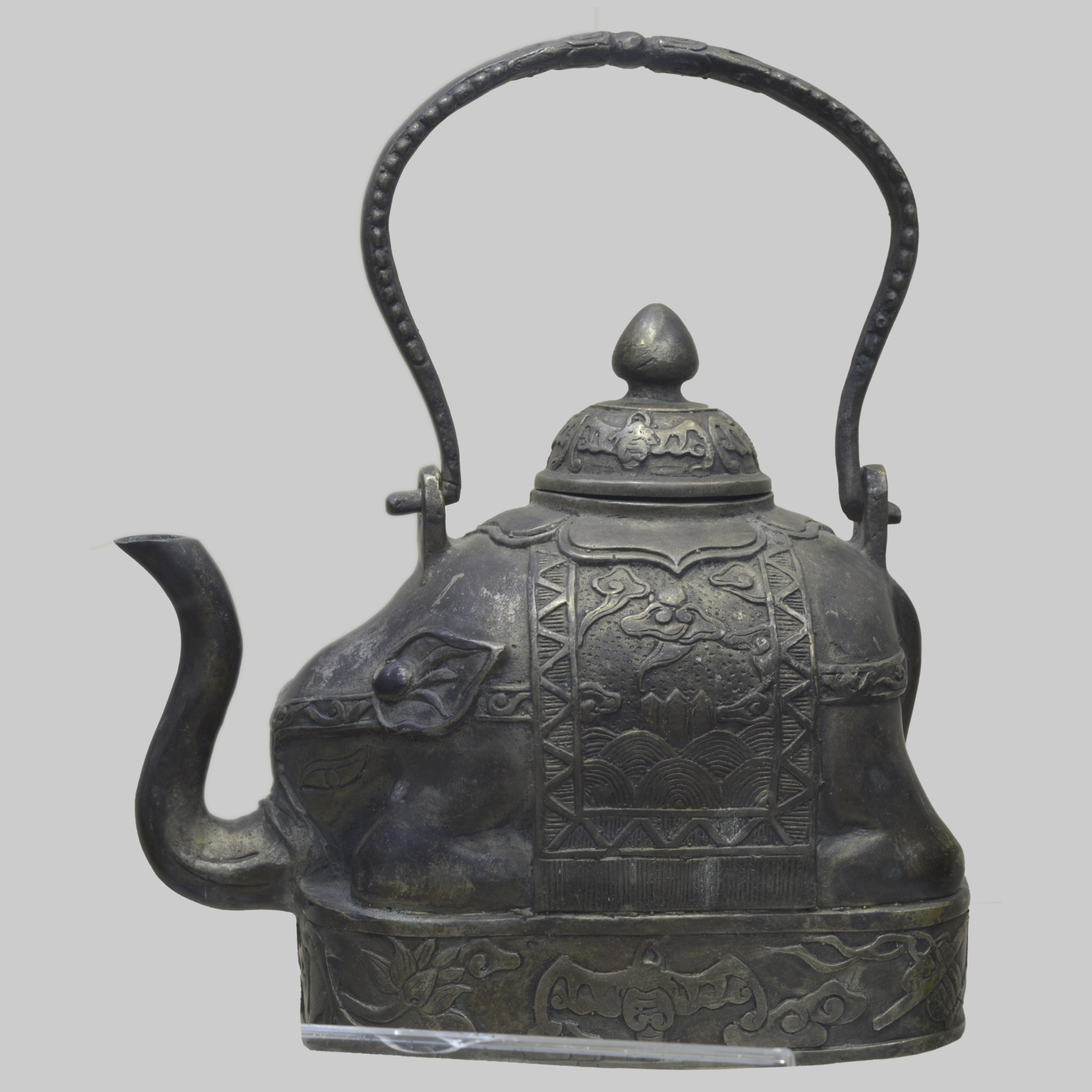


The teapot was donated to the Amur Regional Museum of Local Lore in 2014 by Nina Grigorievna Plakhotina, a resident Varvarovka village, Amur Region. It was bought by her in China in 2008. Presumably, the teapot is a copy made by Chinese craftsmen from an original made for the Manchu Emperor Qianlong of the Qing Dynasty in the 18th century.
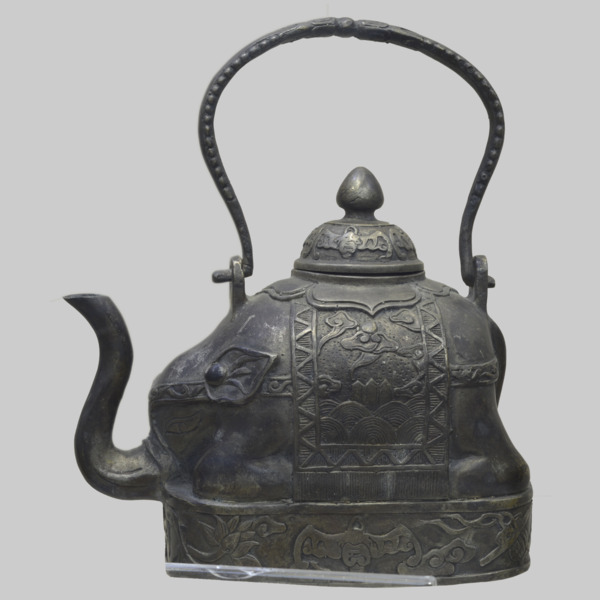
The teapot is made in the shape of an elephant lying on a pedestal with bent legs. The trunk is the spout of the teapot. The eyes and ears are leaf-shaped. The handle of the teapot is curved and is threaded into the holes of the ears. On a spherical lid, monkeys and bats are depicted in a circle. The elephant is wearing a carpet cape with an embossed floral and geometric pattern. The pedestal features relief figures of animals, flowers and other symbols. The kettle was intended to be used as kitchen utensils, but due to a through-hole in the bottom it was not used for its intended purpose.
The traditional artistic and aesthetic culture of the Chinese was based on the principle of copying. Numerous workshops were engaged in imitation of works recognized as canon and became classics. Copies were raised to the rank of the original and lived on a par with it. Replicas of a metal teapot, made in the shape of an elephant, are widely represented in the Chinese market and in antique shops around the world.
The teapot is one of the most important elements of tea tasting not only in Asian but also in European countries. The brewing method familiar to modern people came from China, where it became popular during the reign of the Ming dynasty. The tea leaves were poured over with boiling water and left to brew. Cookware with a lid was used for brewing. Teapots appeared, which later were decorated and shaped in more comfortable forms.
It is no coincidence that teapots in the form of an elephant are so popular. According to Chinese legend, three giant elephants held the firmament, and Buddha chose a white elephant for his further reincarnations. The elephant was the emblem of the highest power and personified the qualities necessary for a good ruler: wisdom, strength and prudence, patience and kindness. The teapot in the shape of an elephant was ideal for the tea-drinking ceremony and the reverent attitude towards tea as a drink that allows a person to maintain longevity, vigor and intelligence, conducive to prosperity and happiness.
The teapot is made in the shape of an elephant lying on a pedestal with bent legs. The trunk is the spout of the teapot. The eyes and ears are leaf-shaped. The handle of the teapot is curved and is threaded into the holes of the ears. On a spherical lid, monkeys and bats are depicted in a circle. The elephant is wearing a carpet cape with an embossed floral and geometric pattern. The pedestal features relief figures of animals, flowers and other symbols. The kettle was intended to be used as kitchen utensils, but due to a through-hole in the bottom it was not used for its intended purpose.
The traditional artistic and aesthetic culture of the Chinese was based on the principle of copying. Numerous workshops were engaged in imitation of works recognized as canon and became classics. Copies were raised to the rank of the original and lived on a par with it. Replicas of a metal teapot, made in the shape of an elephant, are widely represented in the Chinese market and in antique shops around the world.
The teapot is one of the most important elements of tea tasting not only in Asian but also in European countries. The brewing method familiar to modern people came from China, where it became popular during the reign of the Ming dynasty. The tea leaves were poured over with boiling water and left to brew. Cookware with a lid was used for brewing. Teapots appeared, which later were decorated and shaped in more comfortable forms.
It is no coincidence that teapots in the form of an elephant are so popular. According to Chinese legend, three giant elephants held the firmament, and Buddha chose a white elephant for his further reincarnations. The elephant was the emblem of the highest power and personified the qualities necessary for a good ruler: wisdom, strength and prudence, patience and kindness. The teapot in the shape of an elephant was ideal for the tea-drinking ceremony and the reverent attitude towards tea as a drink that allows a person to maintain longevity, vigor and intelligence, conducive to prosperity and happiness.