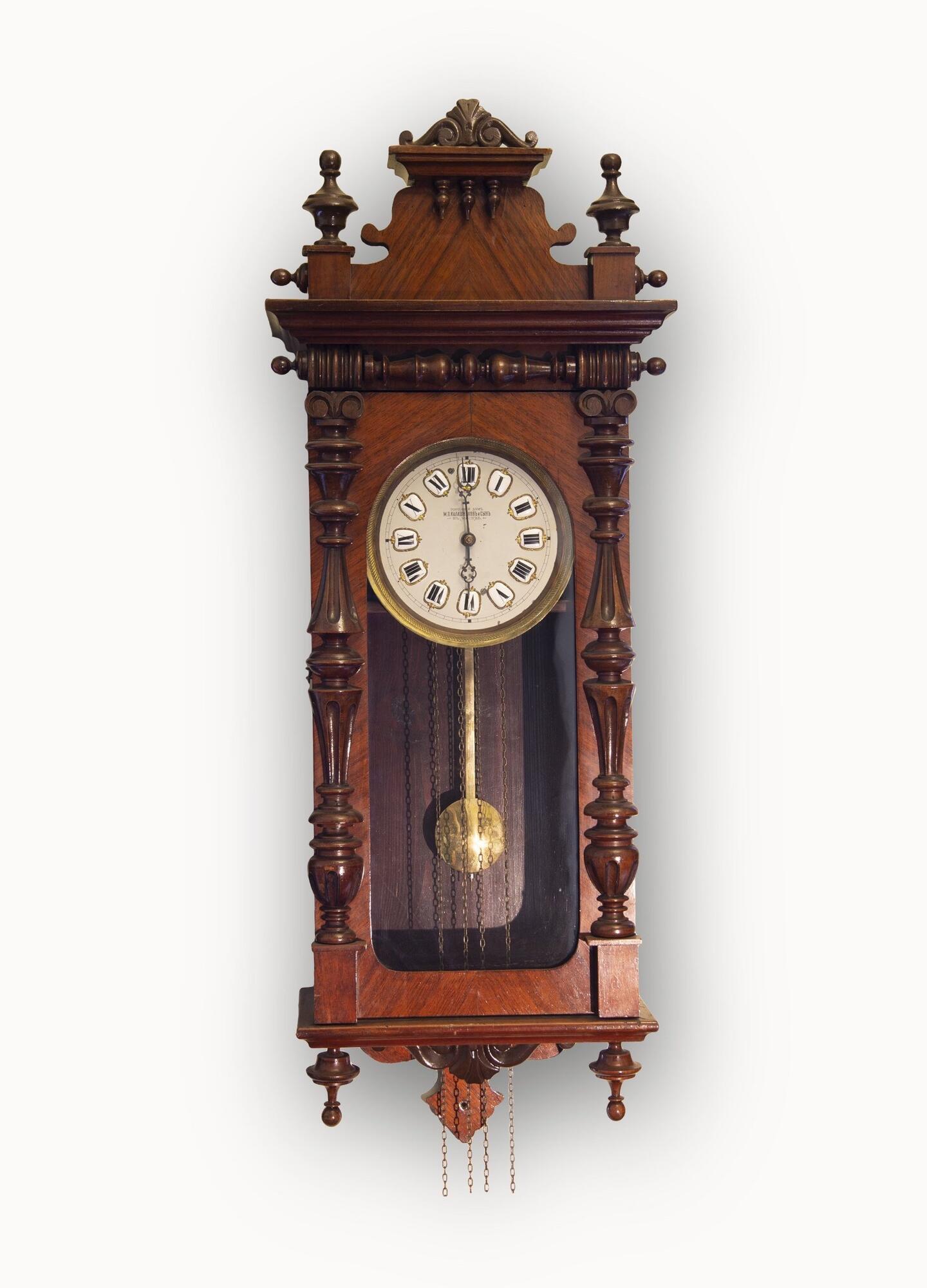


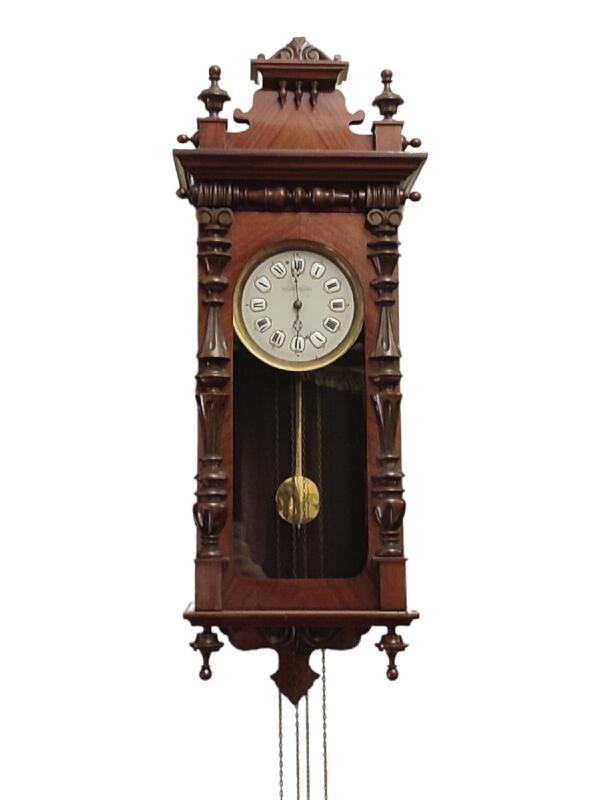
The clock from the museum collection was made by the trading house “M.P. Kalashnikov and Son” in Moscow in the late 19th — early 20th century. Descending from an old merchant family, Mikhail Petrovich Kalashnikov (1809–1892) was a Moscow merchant of the 2nd guild and an honorary citizen. He owned a clock enterprise that had been operating since 1832, and in 1875, when his son joined the family business, the organization was renamed “M.P. Kalashnikov and Son”.
In addition to entrepreneurship, Pyotr Mikhailovich was involved in charity and was a member of several charitable societies, and a deputy of the Moscow City Duma during five times. Kalashnikov also was a member of the City Duma, elected by the Moscow merchants, director of the board for the reconstruction of the Upper Trading Rows (the GUM building), and also the church warden of the Church of the Resurrection of Christ in Kadashi.
The Kalashnikov clock workshop itself was located in an apartment building next to the church, rented by the hereditary honorary citizen Elizaveta Kalashnikova, the mother of Pyotr Mikhailovich. In the workshop, clockmakers repaired old clocks, assembled new models and modified foreign ones. For example, if an English clock had the melody of Jingle bells or another popular English song, then it was replaced with a popular Russian melody, for example, “In the garden, in the vegetable garden.”
The Kalashnikovs themselves lived near the workshop in Kadashi. The store was located first at 14 Tretyakovskiy Proezd in Kitay-gorod, and then on the new Upper Trading Rows, on the first line in the middle row, place 176, near the fountain.
The Kalashnikovs were very influential people, on a par with the Tretyakovs. They sold watches made in Germany, America, and Switzerland. Kalashnikov personally traveled to Geneva to the “Audemars Piguet and Badollet” factories, to Boston to buy Waltham watches, and to Berlin to visit “A. Lange & Söhne”. Kalashnikov was an authorized retailer of “Patek Philippe” and promoted their products in Russia. It is possible that the great Russian writer Leo Tolstoy and composer Pyotr Ilyich Tchaikovsky bought their clocks in Kalashnikov’s stores.
In addition to entrepreneurship, Pyotr Mikhailovich was involved in charity and was a member of several charitable societies, and a deputy of the Moscow City Duma during five times. Kalashnikov also was a member of the City Duma, elected by the Moscow merchants, director of the board for the reconstruction of the Upper Trading Rows (the GUM building), and also the church warden of the Church of the Resurrection of Christ in Kadashi.
The Kalashnikov clock workshop itself was located in an apartment building next to the church, rented by the hereditary honorary citizen Elizaveta Kalashnikova, the mother of Pyotr Mikhailovich. In the workshop, clockmakers repaired old clocks, assembled new models and modified foreign ones. For example, if an English clock had the melody of Jingle bells or another popular English song, then it was replaced with a popular Russian melody, for example, “In the garden, in the vegetable garden.”
The Kalashnikovs themselves lived near the workshop in Kadashi. The store was located first at 14 Tretyakovskiy Proezd in Kitay-gorod, and then on the new Upper Trading Rows, on the first line in the middle row, place 176, near the fountain.
The Kalashnikovs were very influential people, on a par with the Tretyakovs. They sold watches made in Germany, America, and Switzerland. Kalashnikov personally traveled to Geneva to the “Audemars Piguet and Badollet” factories, to Boston to buy Waltham watches, and to Berlin to visit “A. Lange & Söhne”. Kalashnikov was an authorized retailer of “Patek Philippe” and promoted their products in Russia. It is possible that the great Russian writer Leo Tolstoy and composer Pyotr Ilyich Tchaikovsky bought their clocks in Kalashnikov’s stores.