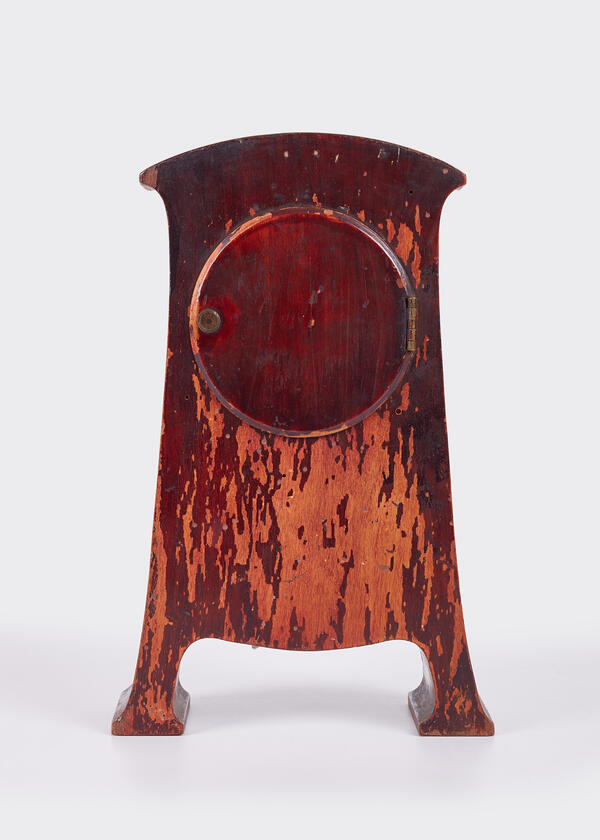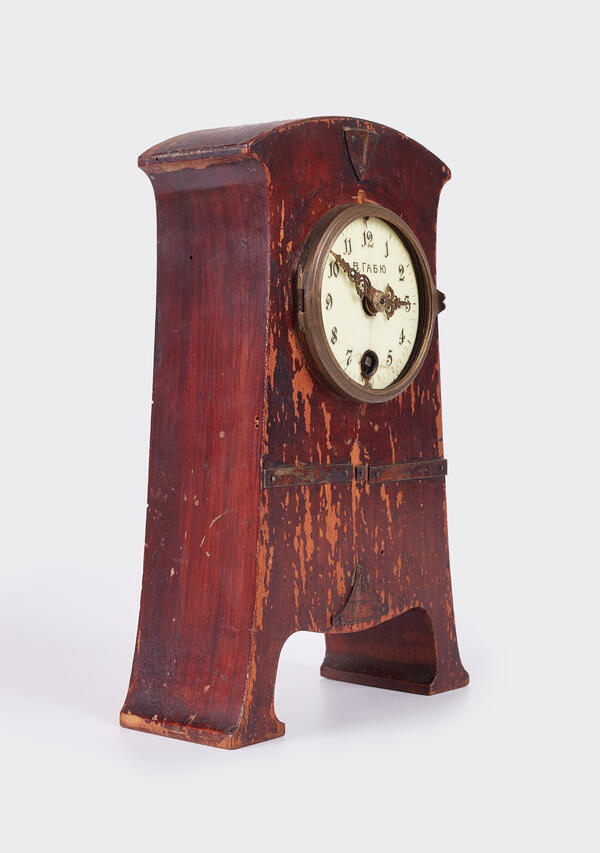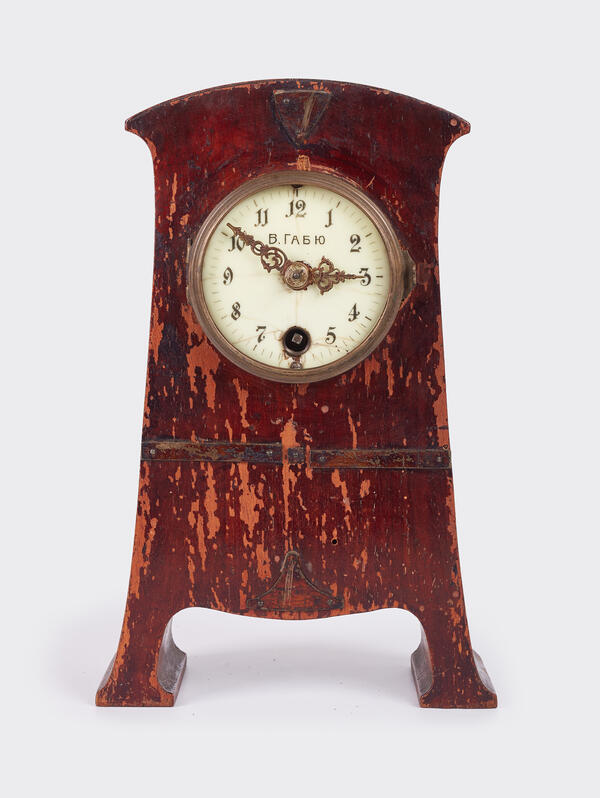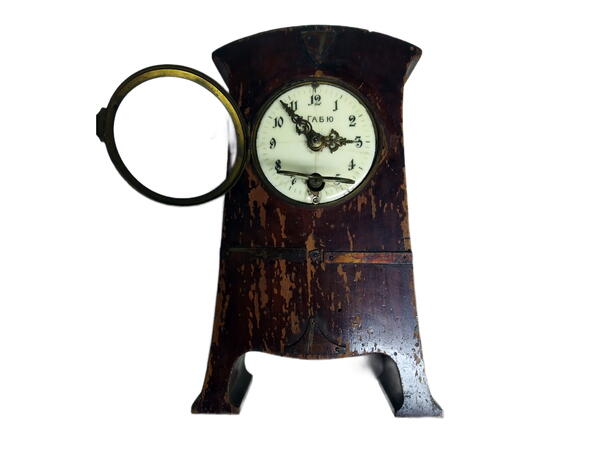
The exhibition of the Zheleznodorozhny Local Lore Museum presents a desk alarm clock of the Russian brand Louis William Gabus.
Louis William Gabus, the founder of the eponymous watch company, was born in the Swiss village of Le Locle in 1847. His parents Louis Gabus and Louise Jeanneret Grise were watchmakers. At the age of 20, William came to Russia and began his watchmaking business in Moscow by establishing the William Gabus Trading House in 1868. In addition to the clock store, the trading house successfully distributed products through small trading companies in other cities and also maintained the “Clock Depot” — a workshop where it was possible to select clock elements from a catalog and place an order for a specific product with the chosen face, case, and monograms. Other special requirements could also be met. The William Gabus Trading House was one of the three largest manufacturers and sellers of watches and jewelry in Russia, along with the houses of Pavel Bure and Henry Moser. After the death of William Gabus in 1901, the business was continued by his son Maurice and his wife Hellen Frantsevna, née Plaut. In 1917, the William Gabus Trading House was closed.
The case of the clock from the museum’s collection
is made of wood. Wooden clocks first appeared in the 16th century in
England and have since been present in homes around the world. The shade of
wood can vary from light beige to almost black, depending on the material.
Light-colored materials include white or ordinary oak, pine, maple, chestnut,
larch or rosewood; dark ones — mahogany, redwood, plum, ebony and other
species. The clock from the museum’s collection has a yellowish face with small
cracks and chips. It can be assumed that it is made of ivory. Watch faces were
made from various materials — gold, silver, quartz, porcelain, bone or brass.
Some faces were hand-painted. However, watch mechanisms with a painted face did
not become widespread in the 19th century and were forgotten. The
mark on the clock mechanism belongs to the Lenzkirch manufactory.