In ancient times, Yakut people produced necessary household items using their own resources. The shape of wooden and birch bark products corresponded primarily to utilitarian functions. The craftsmen took into account the natural properties of the material, its strength and durability. This is probably the reason why the products were both practical and durable, and many of them have survived to the present day.
The shapes of Yakut wooden vessels have not changed since ancient times. Kitchen utensils were made using chiseling and carving techniques, similar to those which can be found in the cattle-breeding cultures of the Altai and South Siberian peoples.
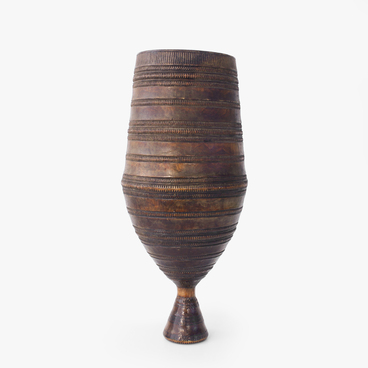
The collection of the Churapchinsky museum includes the following utensils for koumiss: “choroon” vessels, “konkoloy” funnels, “khamnatar” whorls, “kerien ymyja” cups, “yhaaiakh” ladles, and “siri ihit” leather containers.
Items of everyday use are represented by large and small “kytakh” and “kytiya” cups, “et khotoror uhum” meat platters, wooden calendars, snuff boxes, “mallaakh tuchut” boxes for sewing accessories, as well as furniture.
The symbolic meaning of koumiss utensils is closely connected with the cult of the horse and the culture of the summer festival “ysyakh”.
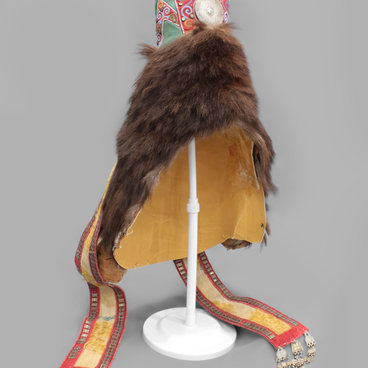
The Sakha people prepared for this celebration in advance: craftsmen made koumiss ware sets, silver jewelry, saddles, and forged bridles. Craftswomen wove birch bark utensils, embroidered caparisons and kychyms, and created festive costumes. Women churned koumiss, while young people prepared for competitions. Everyone was expecting the arrival of summer, and the choron with koumiss was the most important item at this national holiday. People treated koumiss utensils like precious things and passed them down the generations.
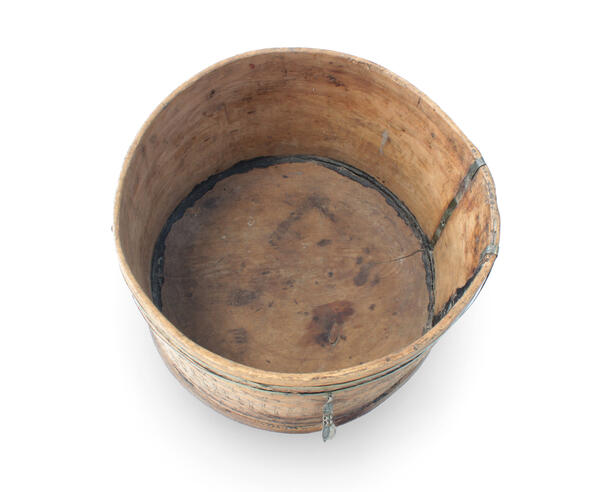
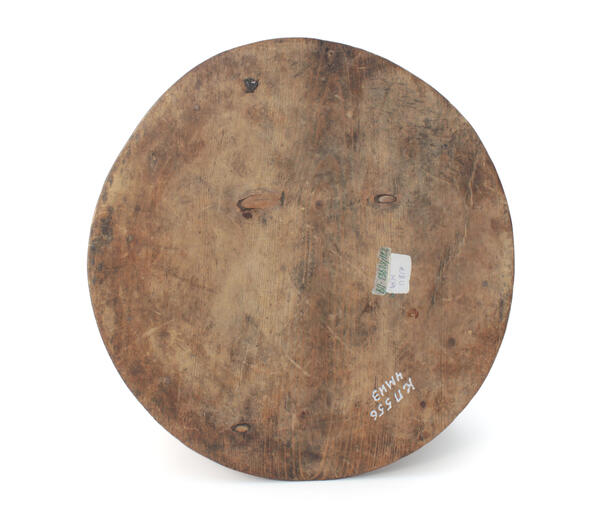
The koumiss cup, which is presented in the exhibition of the Churapchinsky Museum, is a composite vessel. It has cylindrical walls made of curved thin birch boards, which are sewn on the side with cords of young larch root. The exhibit has an inset bottom.
Such manufacturing technology was characteristic of the koumiss vessel “Kerien ymyja”, which was passed around for shared drinking of koumiss during the Ysyakh festival in ancient times. The walls of the cup were decorated with patterns, and metal rims with pendants were added to the decor. In the 18th–19th centuries, individual cups appeared, and the shared cup was used less often during festivities.
Apparently, due to the loss of its original ritual
function, the “Kerien ymyja” cup began to be used in everyday life and
eventually became erroneously called “Mataarchah”, which is often observed in
the collection inventories of museums.