


#1

Bouillotte, Nut cracker with a screw
#2
#3
#4
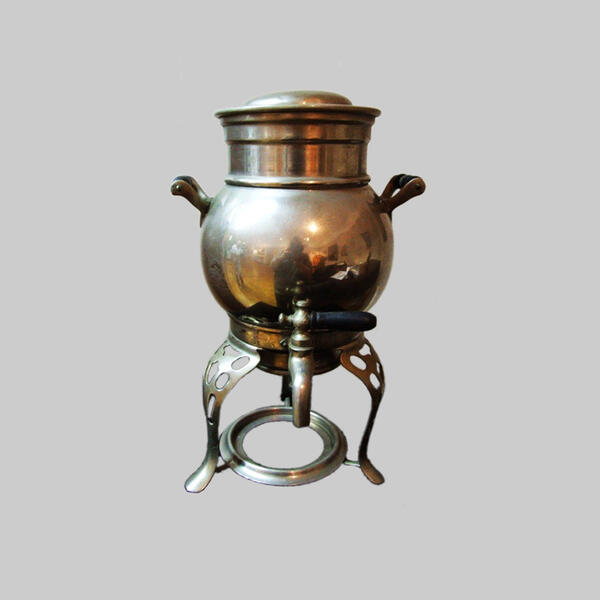
A bouillotte is a set of a water pot and a spirit lamp, which is used to heat or maintain the temperature. It is believed that the prototype of the device was the Chinese kettle huǒ guō. However, the ‘fiery pot"—this is how it translates—did not have a drain tap, and the water was taken out with a special scoop.
First kettles on a spirit lamp appeared in the early 18th century. They were larger than teapots and were installed on a high stand to protect furniture from damage. Often, the kettle and spirit lamp were made at different times, and one item could be supplemented with the other as needed.
Bouillottes were used mainly to maintain the temperature of hot water; tea was brewed in them very rarely. Prior to spirit lamps, the desired temperature was achieved with special metal cylinders. They were first heated over a fire and then put into the kettle. Bouillottes were mainly made of metal, but there are also examples of earthenware and porcelain.
In the late 18th century, a more progressive device for water heating was invested: the samovar. Not only does the samovar heat the water fast to the desired temperature, but it also softens it, making it more suitable for tea-brewing. The samovar became especially popular in 19th-century Russia. In Europe, it has not received proper recognition and popularity.
After the invention of the samovAr, the bouillotte received an ironic nickname ‘the Egoist Samovar.’ However, people did not stop using the bouillotte: they often took it along on trips. The Egoist Samovar was most often used for two: for a ‘tête-à-tête.’ Special two-person tea sets were produced with this in mind.
A family invitation to tea was a special occasion. The hostess was the key figure at a tea party: she prepared and poured the tea for the guests. The tradition was born when men started gathered in coffee houses and clubs. Women, meanwhile, organized tea parties for the ladies at their homes.
Tea was served on a special table with high sides or on a tea table (which is 10-15 centimeters lower than the dinner table). A bouillotte, one or more teapots, a strainer, a sugar bowl with sugar and tongs, and cups with dishes were placed on the table. The tea reception implied certain freedom and independence of the invitees, which is why there were no servants and no change of dishes.
#5
Author: unknown author
Date: late 19th–early 20th century
Technique: nickel plating
Dimensions: 27,5×16×16 cm
Collection: Household items
Copyright: Ramenskoye History and Art Museum
Date: late 19th–early 20th century
Technique: nickel plating
Dimensions: 27,5×16×16 cm
Collection: Household items
Copyright: Ramenskoye History and Art Museum
#6
Nut cracker with a screw
#7
#8
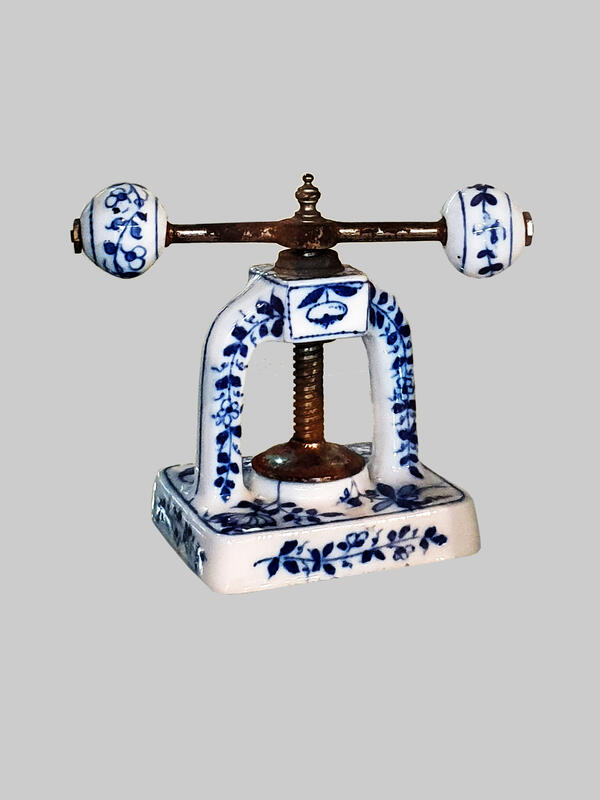
The nut cracker with a screw is a unique item from a Blue Onion tableware set. Such a combination of porcelain and metal is rarely found in kitchen equipment. The device was designed for cracking nuts.
The Meissen Manufactory experimented with different pigments for a long time to find the perfect blue paint color. Bright blue was considered to most fitting for the snow-white Meissen porcelain.
After numerous experiments, the artists got what they wanted. It turned out that cobalt produced a lasting bright blue color when oxidized by the firing process. After cobalt deposits had been discovered in nickel ores in the mountainous regions of Saxony, cobalt production increased many times over.
Cobalt-based paint was applied under the glaze, and the pattern became really bright only after the final firing. The Meissen Manufactory mastered this technique in 1717.
The pattern in question was invented by Johann David Kretschmar, one of the artists at the Meissen Manufactory. Kretschmar created the new pattern in 1729, inspired by the repetitions and variations in East Asian cobalt blue patterns. It was originally called ‘blueordinaire’, or ‘regular blue’. The pattern consisted of images of peaches, pomegranates (symbols of fertility), lemons, bamboo sticks, leaves, and blooming lotuses and chrysanthemums. It was perfected by 1739, and we know it in that form to this day.
The ‘Blue Onion’ name appeared by accident. Since the artists did not know what the exotic fruits and flowers they were trying to depict really looked like, Johann Kretschmar’s colleagues jokingly compared the pomegranates in the new pattern to onions. The name came into use in 1850 and stuck, even though the pattern’s main motif is the central image of peonies entwining bamboo stems.
The pattern itself and the paint manufacturing technology quickly became popular. Seeing the success of Meissen porcelain, many factories began to copy the most successful samples. Since the manufactory did not patent its pattern, this process only intensified over time. Well-known manufacturers who also used Meissen’s porcelain pattern included Villeroy & Boch (Germany) and Wedgwood (Great Britain).
The Meissen Manufactory was able to return the exclusive rights to its pattern only in 1886. To protect itself against further counterfeits and imitations, it started marking the Blue Onion porcelain with a stamp depicting crossed swords at the base of a bamboo stem.
Today Meissen is one of the few manufacturers who follow the 270 year old traditions when using the underglaze painting technique.
#9
Author: Made by the Meissen Manufactory
Date: mid-19th century
Technique: porcelain, cobalt oxide, metal
Dimensions: 13×14,5×6 cm
Collection: Porcelain, ceramics
Copyright: Ramenskoye History and Art Museum
Date: mid-19th century
Technique: porcelain, cobalt oxide, metal
Dimensions: 13×14,5×6 cm
Collection: Porcelain, ceramics
Copyright: Ramenskoye History and Art Museum
read morehide
00:00
00:00
1x
Bouillotte, Nut cracker with a screw
Collection
0
 Point your smartphone camera to open in the app
Open in app
Share
