Font
Color
Graphics
Изображение точки

To see AR mode in action:

1. Install ARTEFACT app for iOS or Android;

2. Find the exhibition «Rus and Horde: 14th Century Warfare»

3. Push the «Augmented reality» button and point your phone's camera at the exhibit;

Скрыть точки интересаПоказать точки интереса
Показать в высоком качестве

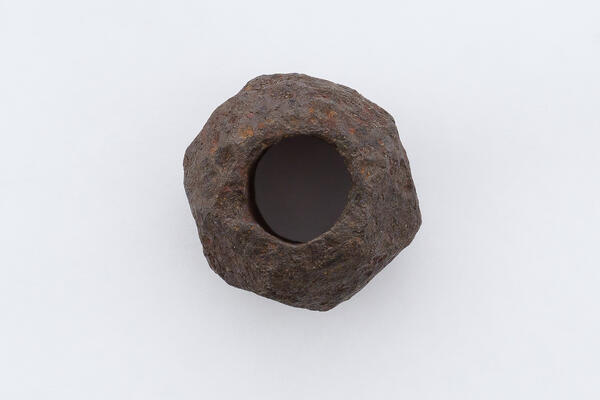
Mace head

Creation period
the 12th–14th centuries
Dimensions
3x4x4 cm
Technique
iron, forging
0
Open in app
#2
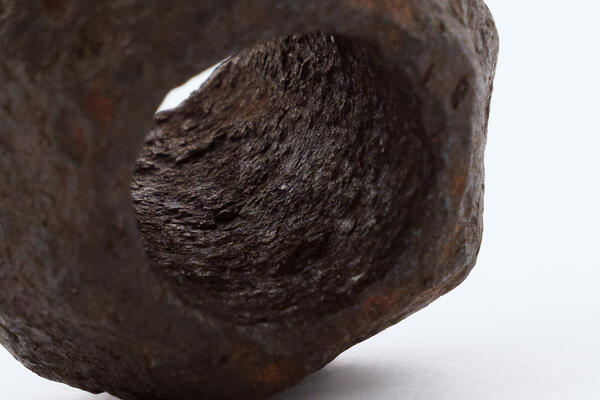
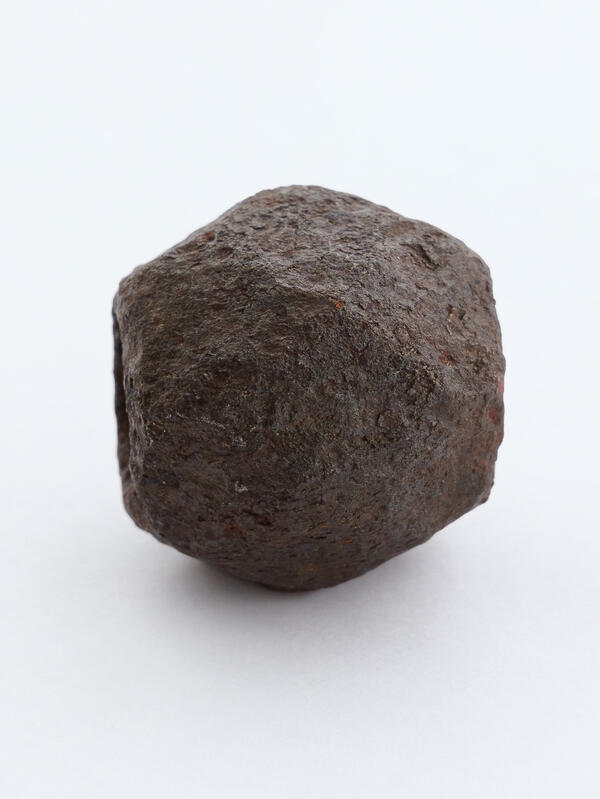
The mace on display in the museum’s main hall, “Rus and Horde: 14th Century Warfare”, is part of the set of offensive arms used by warriors in the 14th and 15th centuries. It is made of iron and has a cuboid shape.


The mace was a blunt, hand-held cold weapon with a round head that weighed up to 500 grams and was mounted on a wooden or metal handle measuring up to 80 centimeters in length. In battle, its purpose was to either stun the enemy by striking their helmet or cause internal injuries.


Structurally, the mace consisted of a head and a wooden handle, which could be equipped with a lanyard at the bottom to prevent it from flying out of the user’s hand during combat. This was necessary because when hitting an opponent wearing armor there was a strong recoil.
#5
Mace head
#6
The head of the mace was its striking part, so it was made of solid material. Among the archaeological findings, there are heads made of stone, non-ferrous metals (usually copper-containing alloys), and iron, and some are made of cast iron. Simple heads had a rounded or oval shape and sometimes featured spikes. More complex specimens were made in polygonal shapes studded with spikes or had a cubic shape (in the latter case, such a mace was referred to in Russian as “brus”). Another type of mace is the flanged mace, which has a cylindrical sleeve, to which vertical ribs are welded or soldered using copper solder.


Often, maces did not only serve a combat function but also played the role of a status symbol. In such cases, they were decorated with inlays of non-ferrous or precious metals, silver or gold plating, or even overall gilding. If the mace had a dual purpose, inscriptions could be applied, typically in the form of mottos or biblical quotes.


The presented specimen of a mace is iron-based and has a cubical shape, suggesting it could be made in the second half of the 14th century. Such maces began to appear around the same time as the development of heavier armor, and arms experts consider those two trends related.

#3

Mace head

#7
View in the State Catalogue
read morehide
00:00
00:00
1x

Mace head

Creation period
the 12th–14th centuries
Dimensions
3x4x4 cm
Technique
iron, forging
0
Point your smartphone camera to open in the app
Share
VkontakteOdnoklassnikiTelegram
Share on my website
Copy linkCopied
Copy
Open in app
To see AR mode in action:
  1. Install ARTEFACT app for 
  2. iOS or Android;
  3. Find and download the «Paintings in Details» exhibition
  4. Push the «Augmented reality» button and point your phone's camera at the painting;
  5. Watch what happens on your phone screen whilst you flip through the pictures.
 
We use Cookies
Cookies on the Artefact Website. We use cookies to ensure that we give you the best experience on our website. If you continue without changing your settings, we'll assume that you are happy to receive all cookies on the Artefact website. However, if you would like to, you can change your cookie settings at any time.
Learn more about useHide
Content is available only in Russian

X

Нашли опечатку?...

%title%%type%