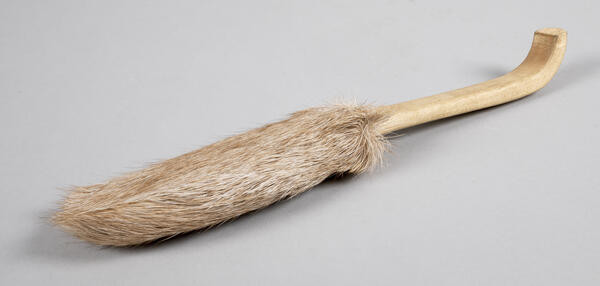
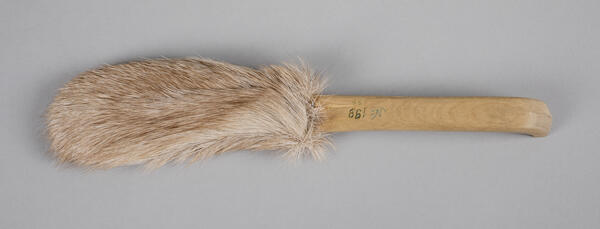
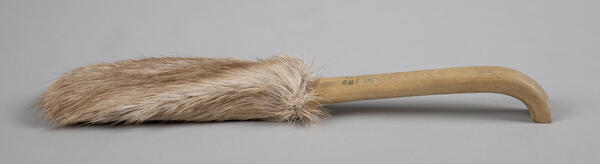
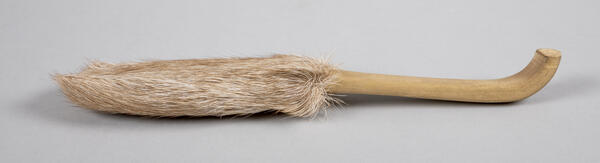
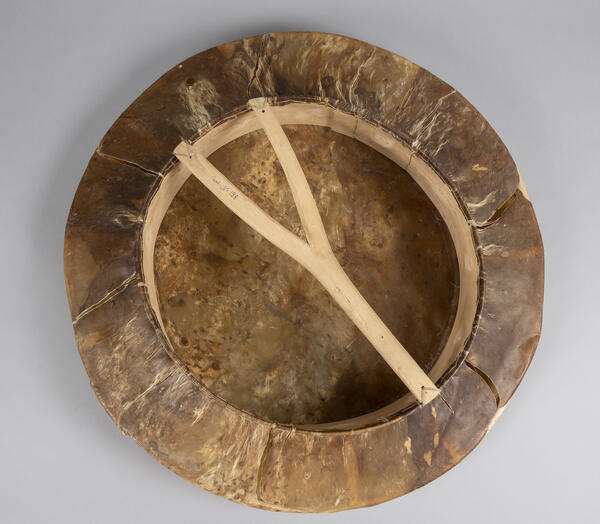
Tambourine beaters of the Khanty people are made of wood, have a curved shape with the tip wrapped in deer skin. They are not decorated in any way. Sometimes a belt loop made of deer skin is tied to the handle to make the beater easier to hold.
By hitting the tambourine with such a beater, a shaman unleashes the mystical power contained within it. This power is at the root of the “sonic magic” which — since time immemorial — guided the shaman into a trance-like state.
This sonic magic opened the gate for spiritual search to the first shamans the world over. The shaman used the beat of the tambourine or sometimes accompanied it with a dance, which further increased the effect it created. At the basis of this effect are two complementary components — sound and rhythm.
In the early days, sound was enough to get a person ecstatic. This is why for a long time shamans used string instruments, the first of which was, most likely, the bow. One could hear its sounds during rituals of not only primitive tribes but of cultures with developed shamanic traditions. Ugrian Shamans (generalized term for the Khanty, Mansi, Magyar Hungarians ethnic groups) also used string instruments.
However, this sound soon became insufficient, and the importance of rhythm became all the more evident. The first reason why this happened lies in the fact that rhythm is the element that music and dance have in common. The second reason is the gradual desensitization of the human psyche, which manifested itself in the people’s craving for more aggressive stimulation of the senses. And the third reason can be attributed to the growing ceremonial function of the shamanic ritual, which led the shamans to the idea that they have to find new ways of influencing the masses that were far more responsive to the aggressive beat of a drum, than to the melodic plucking of the strings. Thus the tambourine became the main instrument of shamans all over the world.
The tambourines of the legendary shamans of the Yugan River, who once performed their miracles there, could be heard from tens of kilometers away. Even today, one can find a craftsman, near the Yugan River, who would be able to make a tambourine in accordance with all the required rules and rituals. This land keeps the tambourines beating to this day.