In Ancient Russia, a grace cup (bratina) was a name for a round bowl with alcoholic beverages which was traditionally used at so-called community feasts, i.e. jointly organised community-wide parties. Such feasts were most often held on holy days, such as Christmas, the Mantle of the Mother of God, St. Nicolas Day, etc. They could also be arranged to bring together all grown-ups of the village to solve pending community issues.
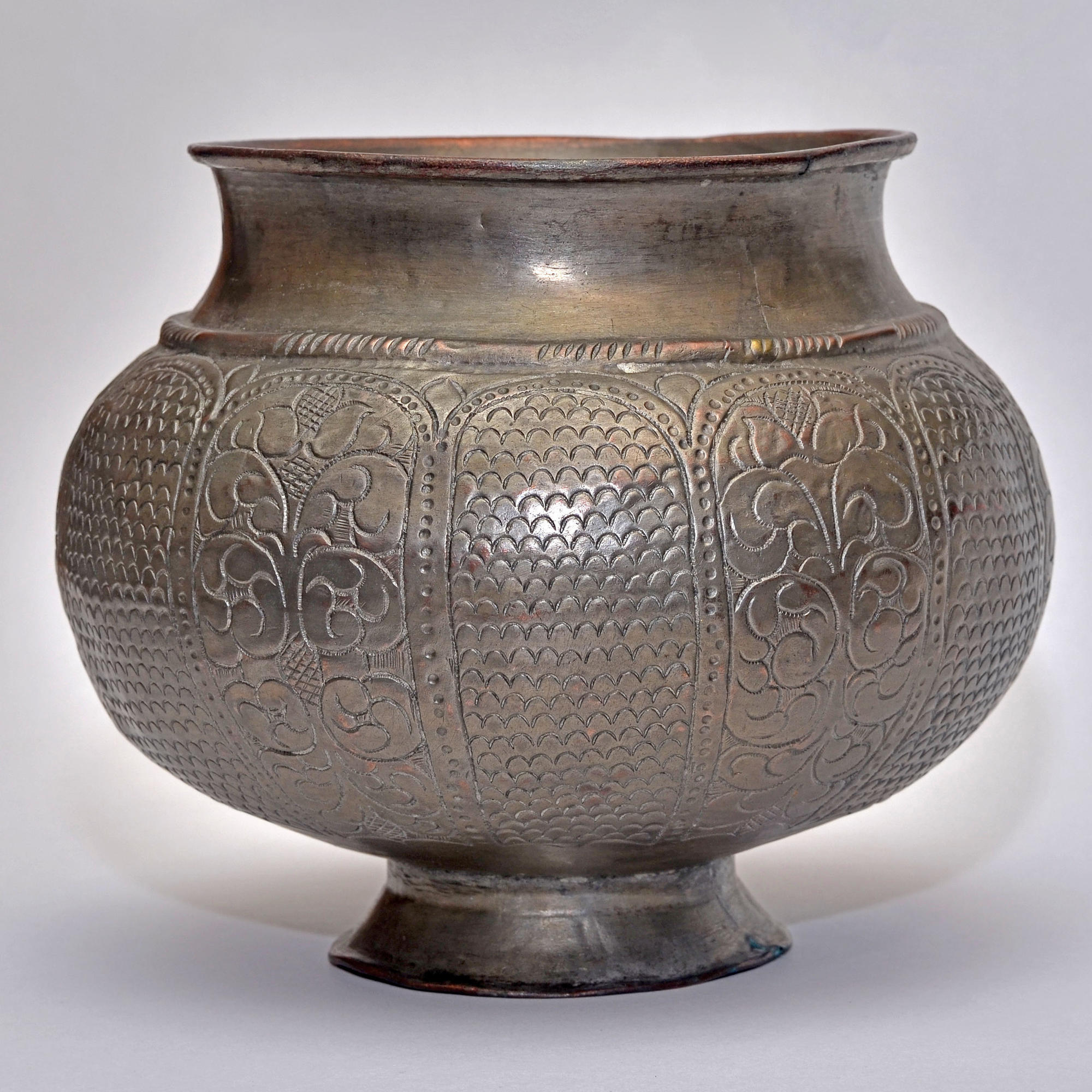


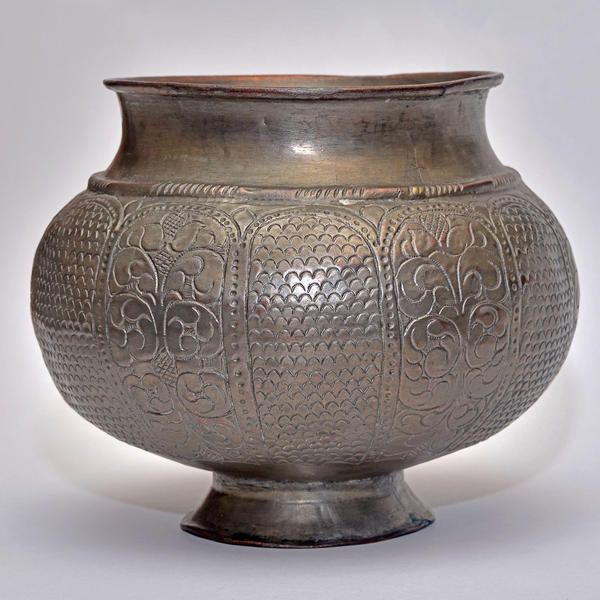
Grace Cup
Creation period
16th - 17th centuries
Dimensions
16,5x20 cm
Height — 16.5 cm, neck diameter — 14.2 cm, body diameter — 20 cm, bottom diameter — 9.3 cm
Height — 16.5 cm, neck diameter — 14.2 cm, body diameter — 20 cm, bottom diameter — 9.3 cm
Technique
Red copper, forging, embossing, tin coating
Collection
Exhibition
0
Open in app#1
Grace Cup
#2
#4
Once a wassail toast was said, the grace cup was passed from guest to guest, but they rarely drank beverage straight from it: the common practice was dipping honey mead, bread drink (kvass) or beer with a small scoop. Women were usually offered small grace cups, known as ‘bratinkas’, and it was allowed to drink straight from such cups in turn, without scoops or cups.
#5
Sometimes such bowls were used at funeral meetings. They were filled with hydromel (syta) — water sweetened with honey. It was an ancient Slavonic tradition to offer such ‘treat’ to ancestral spirits. A cup filled with hydromel was left at the tomb.
#6
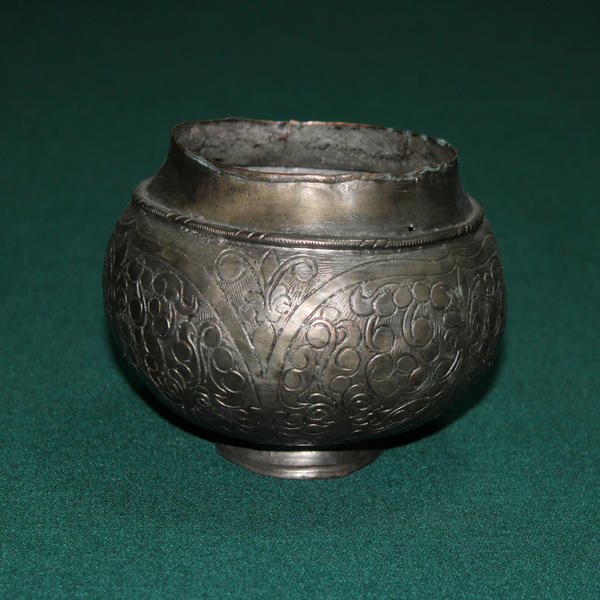
In terms of shape, grace cups fell into two types: ball-shaped bowls on a small leg and bowls in the shape of boats or waterfowl such as geese, swans and ducks. In villages, they were made of wood or copper; while the czar family and rich town houses had golden and silver cups. Sometimes, grace cups were covered with a cone-shaped lid. Such containers kept beverages cool for a long time.
#3
Grace Cup
#7
Grace cups were considered valuable and festive dinnerware. Therefore, they were always abundantly decorated: wooden cups had painted or carved ornaments, while metal ones had embossed ornaments and inscriptions.
The grace cup from the Bryansk Antiquities collection was made of red copper in the 16th-17th centuries. To make such bowls, smiths first forged a ball-shaped work piece, and then used a special hammer to give the final shape to the cup. This technique was called soft hammering.
#8
Grace cup sides were round and arched. They were notably narrowed to the neck section so that beverages would not spill over when a bowl was carried to the table or when drink was dipped with a scoop. For stability, a small bottom leg was attached, which was slightly broadened downwards.
#9
When a bowl was ready, it was tin-coated, i.e. covered with a thin layer of molten tin both inside and outside. Then the bowl became solid and durable, and beverages did not get any metallic off-flavour, even if kept for a long time.
Forging and tin coating were followed by the grace cup decoration with embossed ornaments. Its sides have alternating decorative patterns: a floral ornament and a drawing resembling fish skin.
#10
State Budgetary Institution of Culture — Bryansk State Museum of Regional Ethnography
read morehide
00:00
00:00
1x
Grace Cup
Creation period
16th - 17th centuries
Dimensions
16,5x20 cm
Height — 16.5 cm, neck diameter — 14.2 cm, body diameter — 20 cm, bottom diameter — 9.3 cm
Height — 16.5 cm, neck diameter — 14.2 cm, body diameter — 20 cm, bottom diameter — 9.3 cm
Technique
Red copper, forging, embossing, tin coating
Collection
Exhibition
0
 Point your smartphone camera to open in the app
Open in app
Share