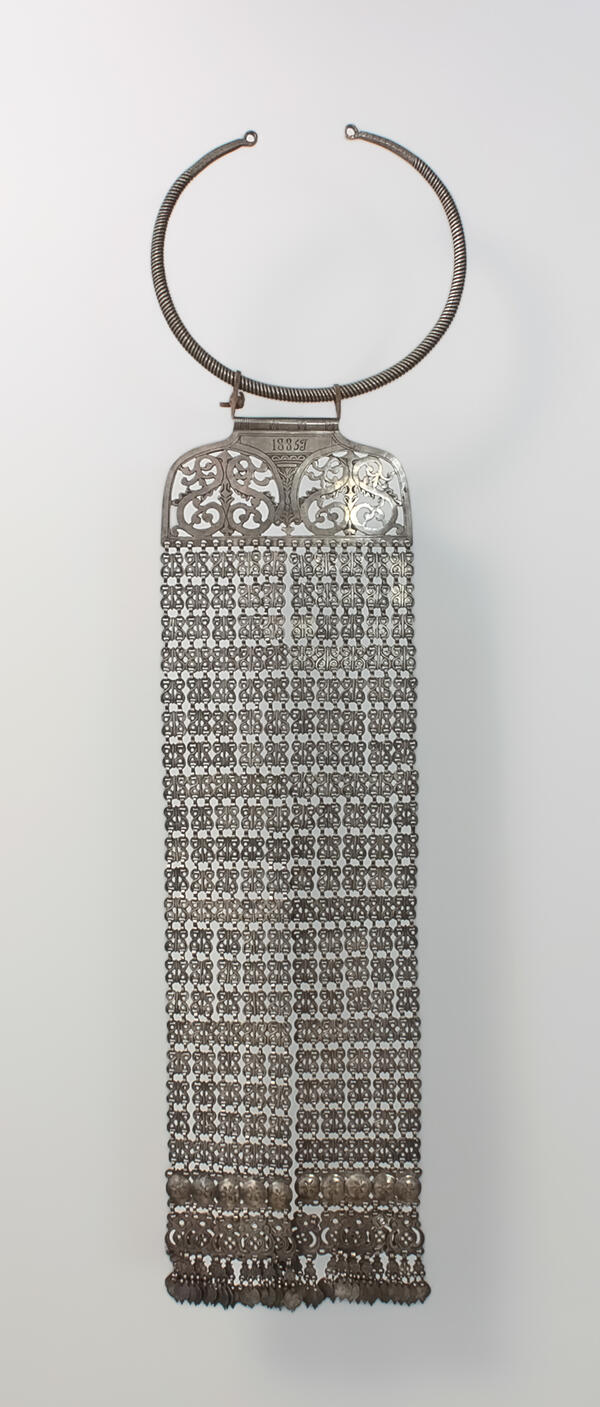
The jewelry traditions of the Sakha people were formed through centuries of artisans’ work and passed down from generation to generation, which determined the national identity and distinctive artistic style of Yakut jewelry.
The museum collections mostly contain items that date from the 19th to early 20th century. This is evidenced by the dates the artisans put on their artworks.
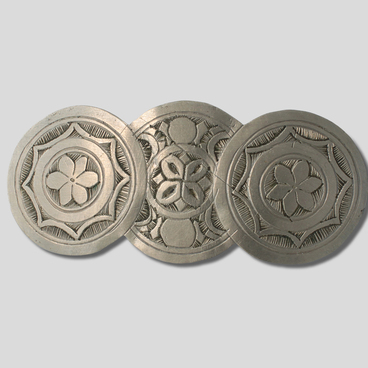
Among the rare specimens that have survived are niello bracelets, pectoral ornaments, plait ornaments, hip pendants, belts, saddle bow plates, bridles and other items. Carvings, rich in decorative patterns, which often cover metal plates, as well as skillful engraving techniques are characteristic features of the Yakut style.
Silversmiths used openwork casting extensively; they knew the secrets of nielloing, gilding and сhamplevé technique with enamel filling the hollows in the metal base.
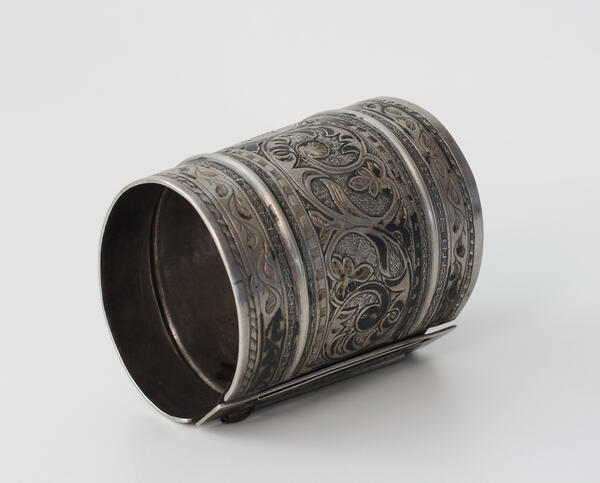
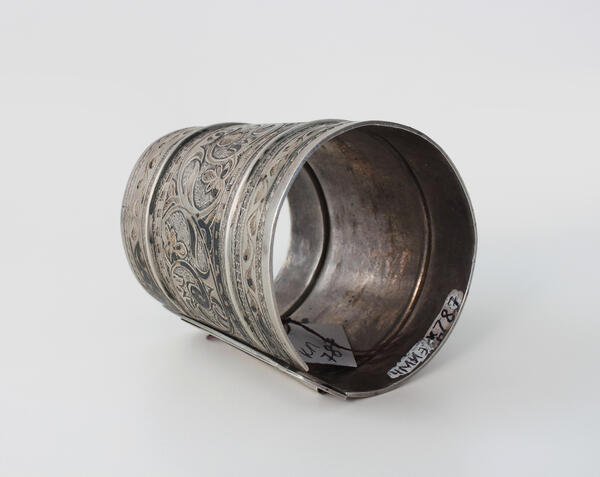
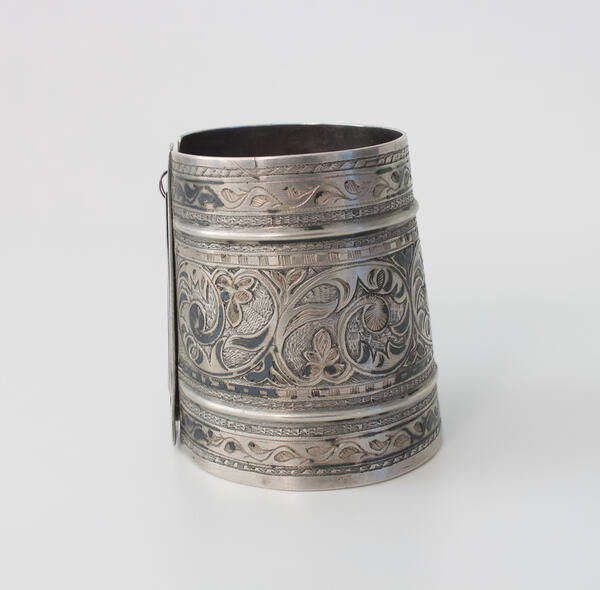
Silver plate bracelets, or “bоqоh” in the Yakut language, in the old days were part of a set of women’s jewelry. They were worn in pairs on each hand. These accessories protected the wrist and at the same time served as a cuff, gathering the end of the sleeve, which had a straight cut.
Since ancient times, the form of bracelets was unchanged — a truncated cone made of a wide solid plate, which was closed with a clasp on hinges. The decor was always accompanied by characteristic convex repeat patterned belts, between which various patterns were applied. Such bracelets were fastened with the help of edges bent in different directions. Wide bracelets had special plate clasps, which were attached on hinges.