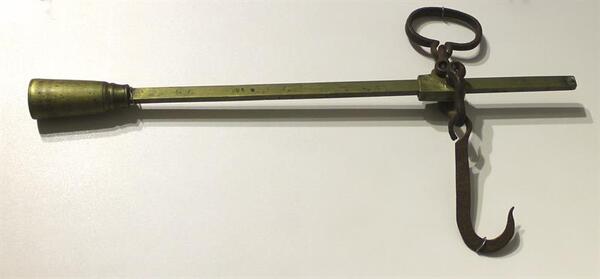
There is a famous Russian saying that metaphorically describes a steelyard — an apparatus for weighing. The simplest steelyard balances appeared at least 2,500 years ago and were mentioned by Aristotle.
In Russia such mechanisms first appeared in the 12th and 13th centuries. In the 14th century, steelyards came into general use, along with equal arm balances. Cooks used steelyards to weigh ingredients, and hunters — to measure their trophies. Steelyards were used in agriculture and, of course, in commerce.
Russian peasants treated steelyards with great respect and invented numerous sayings praising their qualities, for example “Who was neither baptized, nor born, but tells the truth?” or “The iron soul does not cheat.” In fact, steelyards were far from being accurate, and there were serious errors in weighing large loads.
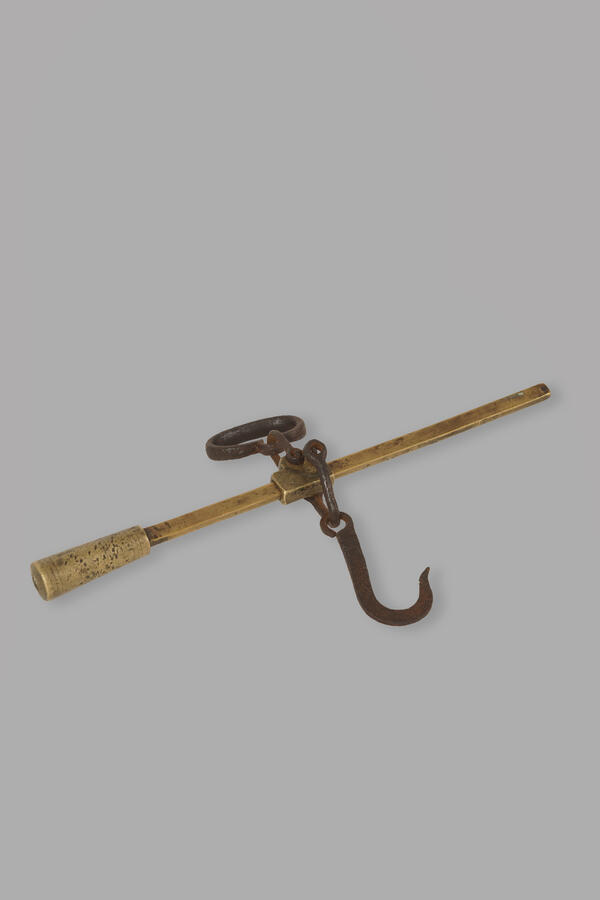
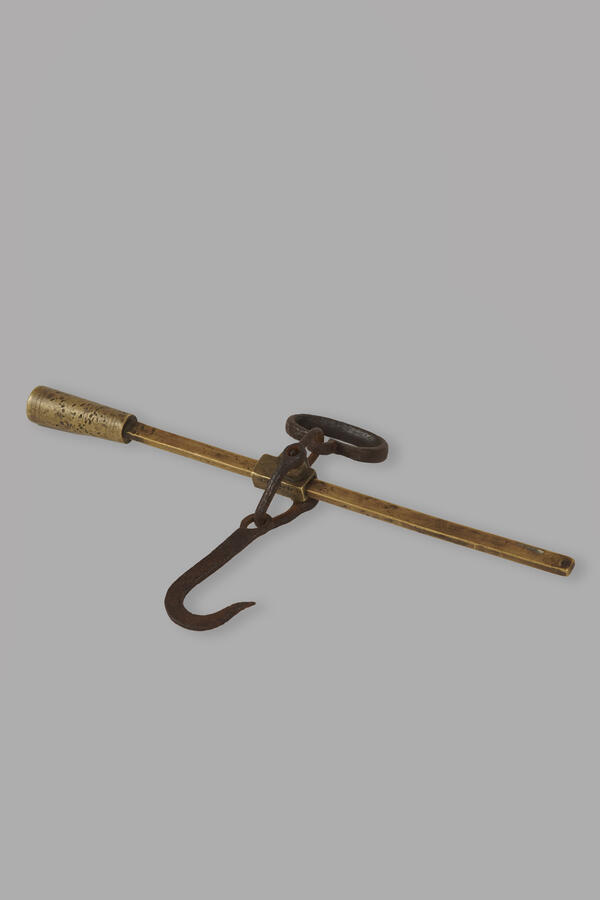
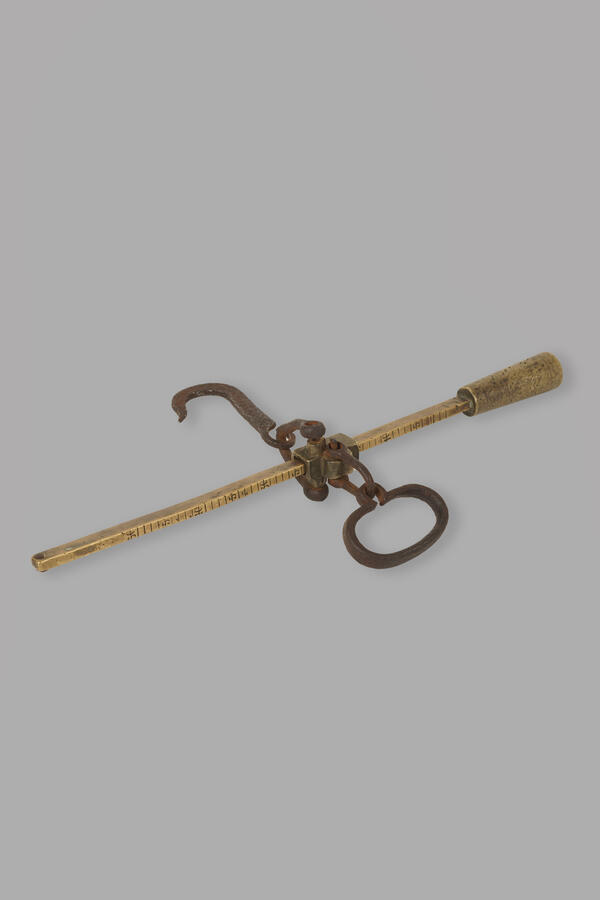
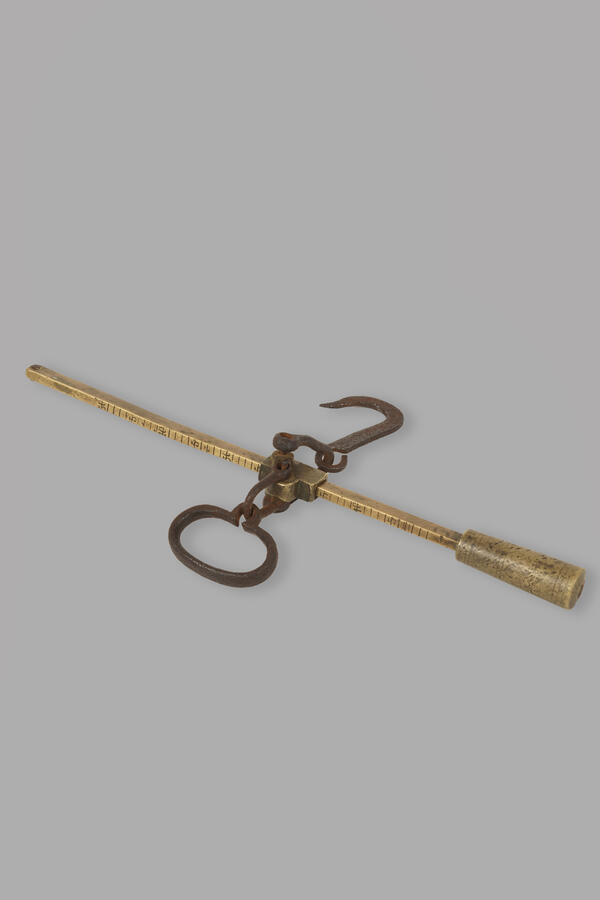
There are two main types of steelyards: Roman iron steelyards with a counterweight, which slides along the longer arm, and Russian wooden steelyards with a movable pivot point. Russian blacksmiths made these balances galore. These items have no date or place stamps, so archaeologists have to use the shape of the steelyards and counterweights to determine the approximate age of the artifacts. There was a particularly high demand for blacksmithing products from Kaluga that were famous both for their accuracy and beautiful metalwork.
The shape of a steelyard resembles that of a mace. Historians believe that steelyards could be used not only for weighing, but also as improvised weapons. The dents left on ancient steelyards confirm this claim.
These devices were popular not only in Russia, but also in many other countries, including Turkey, Scandinavia, Denmark and France. In the middle of the 19th century, Courland steelyards with a double ruler (also known as Polish or Livonian ones depending on the place of manufacture) became widespread. One of the rulers had a scale with divisions and a counterweight at the end; the other ruler had a handle and a hook. To weigh an item, the ruler with the divisions was inserted inside the ruler with the load until the equilibrium was reached.
Despite their huge popularity, steelyards were banned in the middle of the 20th century “due to imperfection and possible misuse.” The ban was based on the reform in metrology that was carried out by Dmitry Ivanovich Mendeleev.
In Russia such mechanisms first appeared in the 12th and 13th centuries. In the 14th century, steelyards came into general use, along with equal arm balances. Cooks used steelyards to weigh ingredients, and hunters — to measure their trophies. Steelyards were used in agriculture and, of course, in commerce.
Russian peasants treated steelyards with great respect and invented numerous sayings praising their qualities, for example “Who was neither baptized, nor born, but tells the truth?” or “The iron soul does not cheat.” In fact, steelyards were far from being accurate, and there were serious errors in weighing large loads.
There are two main types of steelyards: Roman iron steelyards with a counterweight, which slides along the longer arm, and Russian wooden steelyards with a movable pivot point. Russian blacksmiths made these balances galore. These items have no date or place stamps, so archaeologists have to use the shape of the steelyards and counterweights to determine the approximate age of the artifacts. There was a particularly high demand for blacksmithing products from Kaluga that were famous both for their accuracy and beautiful metalwork.
The shape of a steelyard resembles that of a mace. Historians believe that steelyards could be used not only for weighing, but also as improvised weapons. The dents left on ancient steelyards confirm this claim.
These devices were popular not only in Russia, but also in many other countries, including Turkey, Scandinavia, Denmark and France. In the middle of the 19th century, Courland steelyards with a double ruler (also known as Polish or Livonian ones depending on the place of manufacture) became widespread. One of the rulers had a scale with divisions and a counterweight at the end; the other ruler had a handle and a hook. To weigh an item, the ruler with the divisions was inserted inside the ruler with the load until the equilibrium was reached.
Despite their huge popularity, steelyards were banned in the middle of the 20th century “due to imperfection and possible misuse.” The ban was based on the reform in metrology that was carried out by Dmitry Ivanovich Mendeleev.