#1
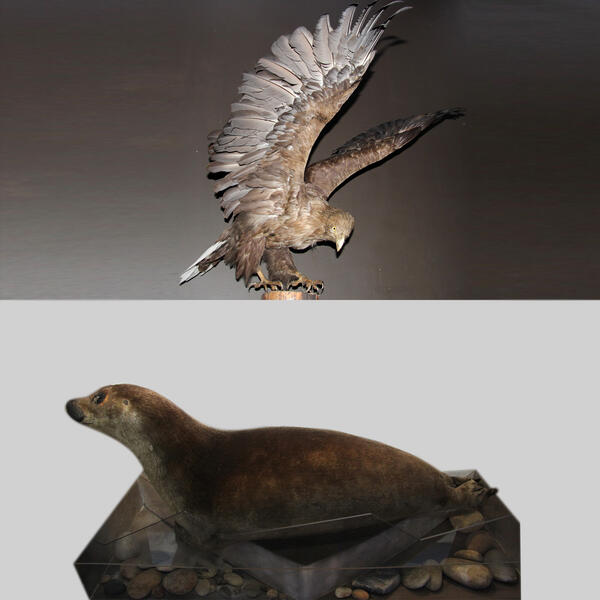
Baikal seal, White-tailed eagle
#2
#3
#4
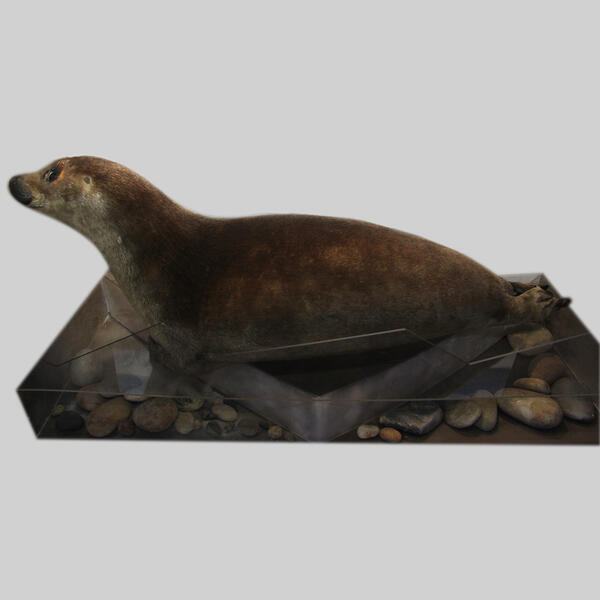
The Baikal seal is one of three species of freshwater seals in the world and the only mammal of Lake Baikal. Scientists suggest that seals came to Lake Baikal from the Arctic Ocean during the Ice Age. According to one version, through the Yenisei and Angara. Relying on the other version, through the system of rivers and lakes associated with the Lena River.
The Baikal seal is found mainly in the North of the lake. There are especially many of them on the Ushkan Islands. This large animal averages 160 centimeters in length and 130 kilograms in weight. Representatives of this species live up to about 55 years.
The Baikal seal is an unsurpassed swimmer. It can dive to a depth of 200 meters and go without air for 20 minutes. Under water, the seal can accelerate up to 25 kilometers per hour and can easily get away from danger at this speed.
Under unfavorable conditions, the seal can suspend pregnancy. In some cases, the embryo stops developing. It does not die, but simply falls into suspended animation, which lasts until the next mating period. Then two cubs are born at once.
Baby seals are usually born in the first half of March. For their white fur, they are called ‘bel’ki’. This color allows them to remain almost invisible in the snow in the first weeks of life. For about three months, baby seals feed on their mother’s milk. The fat content of the Baikal seal’s milk is 60%, which helps the cubs gain weight quickly. With the transition to independent feeding on fish, baby seals are molting. At first, the fur gradually becomes ocean-gray, and then it becomes grey-brown. In Evenki, a seal that molted in the first year is called “kumutkan”.
The seal’s favorite and main food source is small Baikal oilfishes and yellow-winged gobies. The average daily diet of an adult is up to 4 kilograms. Thus, during the year, one seal eats more than a ton of fish. The common version that the seal destroys the stocks of omul is not true. Hunting for omul requires too much energy, so it prefers more accessible and sedentary food.
The Baikal seal is found mainly in the North of the lake. There are especially many of them on the Ushkan Islands. This large animal averages 160 centimeters in length and 130 kilograms in weight. Representatives of this species live up to about 55 years.
The Baikal seal is an unsurpassed swimmer. It can dive to a depth of 200 meters and go without air for 20 minutes. Under water, the seal can accelerate up to 25 kilometers per hour and can easily get away from danger at this speed.
Under unfavorable conditions, the seal can suspend pregnancy. In some cases, the embryo stops developing. It does not die, but simply falls into suspended animation, which lasts until the next mating period. Then two cubs are born at once.
Baby seals are usually born in the first half of March. For their white fur, they are called ‘bel’ki’. This color allows them to remain almost invisible in the snow in the first weeks of life. For about three months, baby seals feed on their mother’s milk. The fat content of the Baikal seal’s milk is 60%, which helps the cubs gain weight quickly. With the transition to independent feeding on fish, baby seals are molting. At first, the fur gradually becomes ocean-gray, and then it becomes grey-brown. In Evenki, a seal that molted in the first year is called “kumutkan”.
The seal’s favorite and main food source is small Baikal oilfishes and yellow-winged gobies. The average daily diet of an adult is up to 4 kilograms. Thus, during the year, one seal eats more than a ton of fish. The common version that the seal destroys the stocks of omul is not true. Hunting for omul requires too much energy, so it prefers more accessible and sedentary food.
#5
Место создания: Ulan-Ude
Коллекция: Natural science
Полное наименование: Baikal seal or seal Pusa sibirica L.
Размеры: 122×40×50 cm
Дата создания: 1940
Техника: Combined method
Коллекция: Natural science
Полное наименование: Baikal seal or seal Pusa sibirica L.
Размеры: 122×40×50 cm
Дата создания: 1940
Техника: Combined method
#6
White-tailed eagle
#7
#8
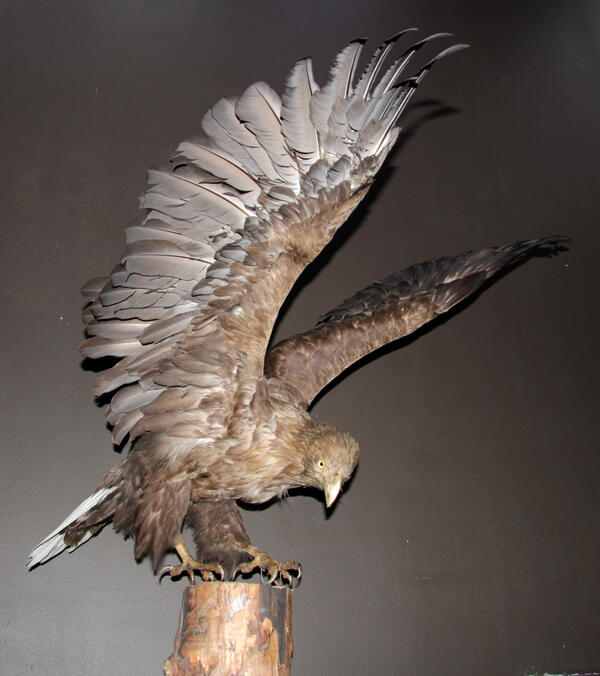
In Buryatia, the white-tailed eagle is a rare migratory, occasionally wintering species. It is one of the largest nesting birds in Buryatia with a wingspan of more than 2 meters. It can weigh from 4 to 7 kilograms. The bird’s beak is powerful and very large relative to the head. The main difference between white-tailed eagles and common eagles is the naked cap without a feather cover.
The coloring of young animals is much darker than that of adults. It is only when birds become sexually mature that they begin to look the same as adult eagles. This does not happen before the age of five, or even later.
The nest is often built on the tops of large trees near the coasts of large bodies of water away from populated areas. In the absence of disturbing factors, the bird can use the nest for up to 40 years in a row.
Couples settle at a distance of up to 10 kilometers from each other. In the second half of April - early May, the female usually lays no more than three large white eggs.
The territory of the white-tailed eagle can reach 70 square kilometers, and it is almost always located next to a reservoir. Not for nothing in translation from ancient Greek the word “orlan” means “sea eagle”. The white-tailed eagle feeds mainly on fish, which it catches near the surface of the water and in shallow waters. It often attacks entire colonies of small birds. That is why they leave their nests with eggs and chicks, which is what the eagle uses. In addition, this bird of prey feeds on waterfowl, sandpipers, gulls, and muskrats. In winter, it often switches to carrion. Due to its large size and powerful beak, the white-tailed eagle is almost devoid of natural enemies. In our country, most birds are observed in the expanses of Lake Baikal, the Azov Sea, and the Caspian Sea.
In Buryatia, flyout begins from mid-September to mid-October, but in some years the eagle remains to winter on Lake Baikal.
The Baikal region has long been a stronghold of traditional shamanism, and Olkhon Island has always been a sacred place for shamans. One of the most widespread cults in Siberia is considered to be the cult of the sacred eagle. According to mythology, shamanism appeared simultaneously with the creation of the world, and the first shaman was the son of the heavenly God who descended to Earth in the form of an eagle. All other shamans subsequently originated from this bird.
The coloring of young animals is much darker than that of adults. It is only when birds become sexually mature that they begin to look the same as adult eagles. This does not happen before the age of five, or even later.
The nest is often built on the tops of large trees near the coasts of large bodies of water away from populated areas. In the absence of disturbing factors, the bird can use the nest for up to 40 years in a row.
Couples settle at a distance of up to 10 kilometers from each other. In the second half of April - early May, the female usually lays no more than three large white eggs.
The territory of the white-tailed eagle can reach 70 square kilometers, and it is almost always located next to a reservoir. Not for nothing in translation from ancient Greek the word “orlan” means “sea eagle”. The white-tailed eagle feeds mainly on fish, which it catches near the surface of the water and in shallow waters. It often attacks entire colonies of small birds. That is why they leave their nests with eggs and chicks, which is what the eagle uses. In addition, this bird of prey feeds on waterfowl, sandpipers, gulls, and muskrats. In winter, it often switches to carrion. Due to its large size and powerful beak, the white-tailed eagle is almost devoid of natural enemies. In our country, most birds are observed in the expanses of Lake Baikal, the Azov Sea, and the Caspian Sea.
In Buryatia, flyout begins from mid-September to mid-October, but in some years the eagle remains to winter on Lake Baikal.
The Baikal region has long been a stronghold of traditional shamanism, and Olkhon Island has always been a sacred place for shamans. One of the most widespread cults in Siberia is considered to be the cult of the sacred eagle. According to mythology, shamanism appeared simultaneously with the creation of the world, and the first shaman was the son of the heavenly God who descended to Earth in the form of an eagle. All other shamans subsequently originated from this bird.
#9
Место создания: Ulan-Ude
Коллекция: Natural science
Полное наименование: White-tailed eagle (Haliaeetus albicilla L.)
Дата создания: 20th century
Техника: Combined method
Размеры: 120×66×96 cm
Коллекция: Natural science
Полное наименование: White-tailed eagle (Haliaeetus albicilla L.)
Дата создания: 20th century
Техника: Combined method
Размеры: 120×66×96 cm
#10
National Museum of the Republic of Buryatia
read morehide
00:00
00:00
1x
Baikal seal, White-tailed eagle
Exhibition
0
 Point your smartphone camera to open in the app
Open in app
Share