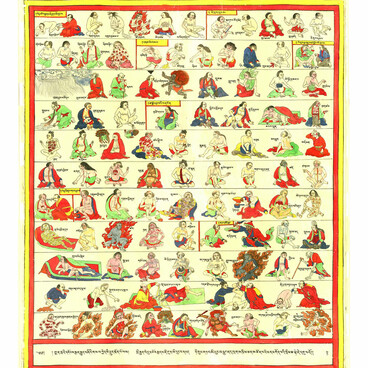
The sheet is divided into 11 graphs and illustrates the 2nd – 13th chapters of the ‘Subsequent Tantra’.
The second chapter of the ‘Subsequent Tantra’ is about the diagnostics of diseases based on the tongue’s look. The first series of images features the defining characteristics of the tongue in case of “wind”, “bile” and “mucus” diseases. For instance, red, dry and rough tongue indicates the “wind” misbalance; thick light-yellow layer on the tongue’s surface signifies the ‘bile’ misbalance; whitish, soft and damp tongue may tell about the ‘mucus’ misbalance. In the beginning of the second line a healthy man’s and a dying man’s tongues are depicted. The black, dry and cracked tongue unable to perform articulated speech is called the ‘tongue of death’ and foreshows the passing of a sick person.
The illustrations for the nine general treatment methods from sheet 35 are repeated at the second series of images (from the second line till the middle of the fifth upper line).
The 3rd – 11th chapters have description of different medications, so called ‘diseases’ enemies’. They are divided into medications and procedures. Illustrations depict preparing the restorative drinks, powders, pills, degu-mash, oily medicaments, concentrated extracts, ashy medicaments, medicinal wines, medicaments made of jewels. In total there are 23 kinds of “diseases” enemies’ (10 kinds of bland medicine, 6 kinds of evacuating medicine, 7 kinds of procedures). The best medicaments are the ones made of jewels. They cure all diseases of fever and cold, all diseases initiated by the malicious spirits and the wounds. Such medicaments are also good for the healthy people and are the best medicine used for ‘gathering the juices’ procedure.
The 12th chapter of the ‘Subsequent Tantra’ is dedicated to the rules of gathering the medical herbs and is illustrated by the images with the landscape on the background and scenes of peasant works during different seasons. Children gather the herbs following the healer’s directions.
The 13th chapter has the description of the indications and counter-indications for the oily procedures. The diseases are illustrated by the sick people’s figures.
The last line contains the text in Tibetan explaining the contents of the sheet.
The second chapter of the ‘Subsequent Tantra’ is about the diagnostics of diseases based on the tongue’s look. The first series of images features the defining characteristics of the tongue in case of “wind”, “bile” and “mucus” diseases. For instance, red, dry and rough tongue indicates the “wind” misbalance; thick light-yellow layer on the tongue’s surface signifies the ‘bile’ misbalance; whitish, soft and damp tongue may tell about the ‘mucus’ misbalance. In the beginning of the second line a healthy man’s and a dying man’s tongues are depicted. The black, dry and cracked tongue unable to perform articulated speech is called the ‘tongue of death’ and foreshows the passing of a sick person.
The illustrations for the nine general treatment methods from sheet 35 are repeated at the second series of images (from the second line till the middle of the fifth upper line).
The 3rd – 11th chapters have description of different medications, so called ‘diseases’ enemies’. They are divided into medications and procedures. Illustrations depict preparing the restorative drinks, powders, pills, degu-mash, oily medicaments, concentrated extracts, ashy medicaments, medicinal wines, medicaments made of jewels. In total there are 23 kinds of “diseases” enemies’ (10 kinds of bland medicine, 6 kinds of evacuating medicine, 7 kinds of procedures). The best medicaments are the ones made of jewels. They cure all diseases of fever and cold, all diseases initiated by the malicious spirits and the wounds. Such medicaments are also good for the healthy people and are the best medicine used for ‘gathering the juices’ procedure.
The 12th chapter of the ‘Subsequent Tantra’ is dedicated to the rules of gathering the medical herbs and is illustrated by the images with the landscape on the background and scenes of peasant works during different seasons. Children gather the herbs following the healer’s directions.
The 13th chapter has the description of the indications and counter-indications for the oily procedures. The diseases are illustrated by the sick people’s figures.
The last line contains the text in Tibetan explaining the contents of the sheet.