

An antimins is a rectangular piece of cloth of either linen or silk (similar to a corporal), into which a small relic of an Orthodox martyr is sewn. The name comes from the ancient Greek ἀντί (‘instead of’) and the Latin mensa (‘table, meal’) — ‘instead of the table’. The antimins is placed in the altar on the throne and symbolizes the burial shroud of Christ on his tomb. It is a necessary attribute for the celebration of the full liturgy, as well as a document authorizing its completion.
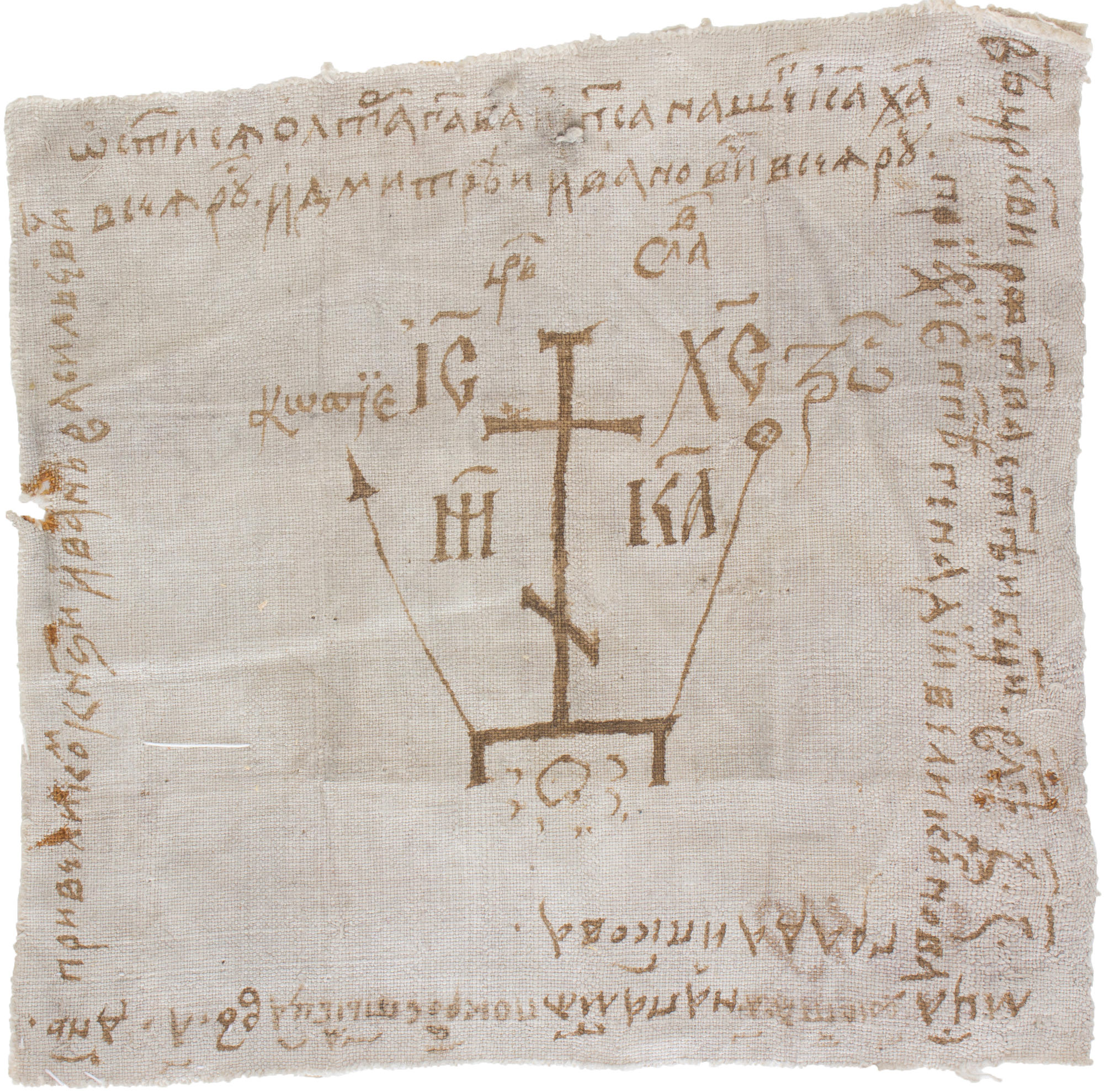
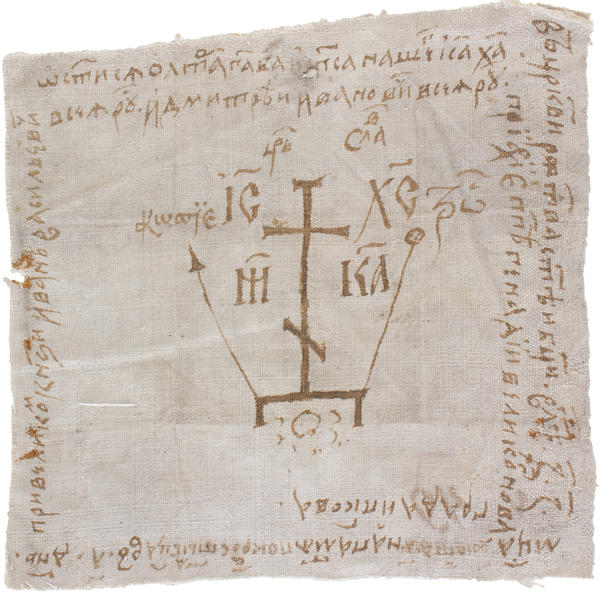
This antimins comes from the Church of the Nativity of Our Lady, as evidenced by the writing along the edge of the fabric. Also on the back of the antimins there is an entry — ‘№ 49’. This is probably the registry number of the Holy Trinity Cathedral of the city of Arkhangelsk, where the antimins was stored. Around 1907, this piece was transferred to the Arkhangelsk eparchial antiquarium. And in 1925-27, as part of the antiquarium collection, it entered the Northern Regional Museum (now the Arkhangelsk regional museum).
In the centre of the front side of the cloth, there is a seven-pointed cross on a low rectangular foot. On its sides are depicted the Instruments of the Passion — a spear and a cane. On the flip side, the corners are lined with canvas for reinforcement. In the middle, there was a ‘pocket’ for relics. This detail, unfortunately, has not been preserved.
An antimins is used only for the liturgy. Non-ordained individuals are not permitted to touch it, much like the throne. The ruling bishop of the eparchy consecrates the antimins. The tradition of using antimins in worship goes back to the first centuries of Christianity.
Over time, the older antimins were replaced by new ones. Old antimins were to be destroyed, most often burned, after the relics were extracted. Sometimes, with the blessing of the bishop, old antimins were kept in church parishes and kept between the robes of the throne.
In Russia, by the end of the 17th century, printed antimins almost completely replaced the old hand-written ones. In 1735, a resolution of the Synod was issued, according to which it was prescribed to send obsolete liturgical cloths to the sacristies of cathedrals or churches of bishops' houses. Since 1842, the Synodal Decree also prescribed to make lists of old antimins kept in storage.