

#1

#2
#3
#4
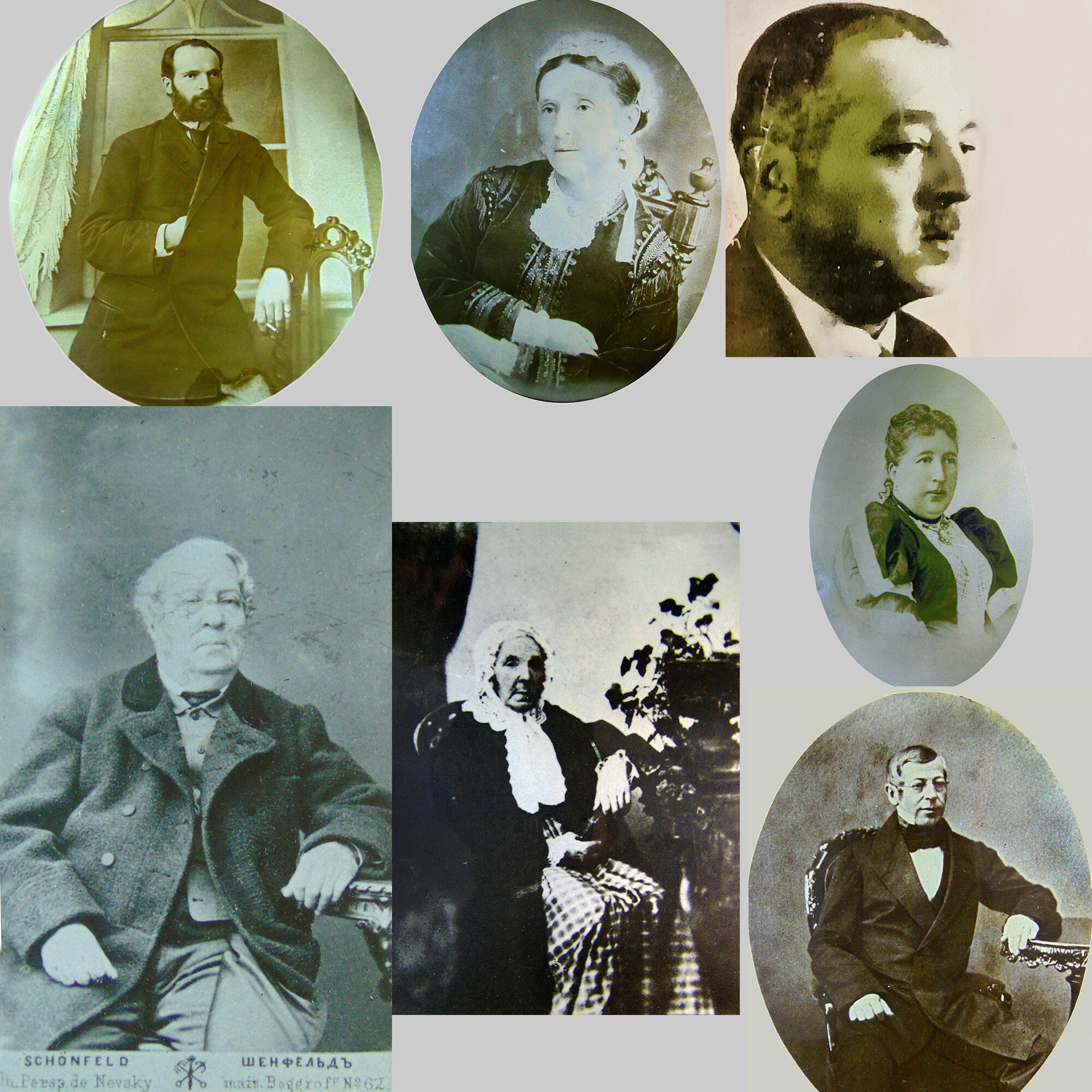
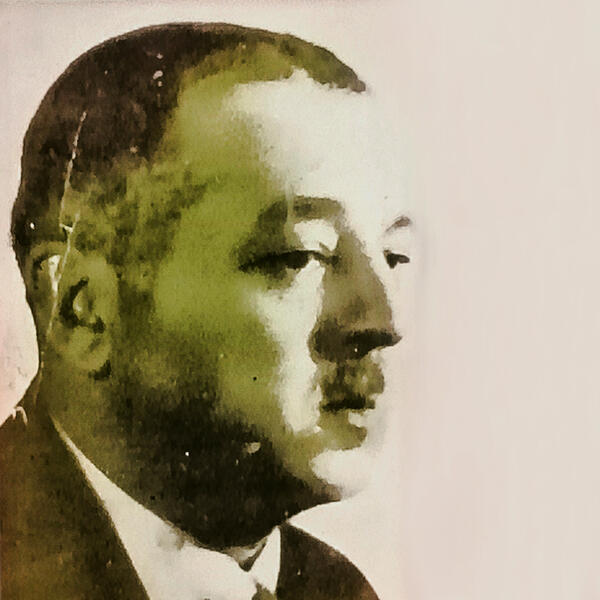
The Aksakov family is famous for its many well educated and talented people. One of them is the famous composer Sergey Sergeevich Aksakov, a great-grandson of the writer Sergey Timofeevich Aksakov. Sergey Sergeevich was born on January 5, 1891 in the family of Collegiate Secretary Sergey Grigorievich Aksakov and daughter of Rear Admiral Ivan Sveshnikov, Serafima Ivanovna Aksakova. By that time, two children were already born to the family: the younger Konstantin was 3 years old and the elder Maria was 5.
Sergey Aksakov first studied at private men’s Polivanov Gymnasium, and after enrolled in the Moscow Conservatory, where by 1911 he had already mastered the full scope of the conservatory program. At his father’s insistence, he continued his education at the Imperial Lyceum in St. Petersburg, as was the tradition within the Aksakov family. At the same time, he continued to practice music with the famous Russian composer Sergey Lyapunov.
After graduating from the Lyceum, Sergey went to serve in the State Chancellery in the Department of the Code of Laws. He combined his work as an official with the piano concerts he gave in Moscow, Minsk and Kiev. At around the same time in St. Petersburg and Kiev his first musical compositions were launched into print. In February 1915, he interrupted his civil service and started studying in the prestigious Page Corps, where after graduation he was awarded an officer’s title.
In 1918, Aksakov and his family moved to Harbin. Before long, he was invited to work as a piano class professor at the Shanghai State Conservatory. In 1930 he established his own music studio in Shanghai and bought a house there. In 1946, the Aksakov family received Soviet citizenship and in 1952 left for the USSR, where he received permission to work on developing the musical education system.
Aksakov’s first Soviet workplace was a music school in the town of Tara near Omsk, where he taught piano and music theory classes. Later he managed to leave for Minsk, and in the early 1960s he was admitted to the Union of Soviet Composers. Until his death in 1968, he played solo concerts and wrote compositions in various genres.
#5
Date: early 20th century
Technique: photography
Dimensions: 13×9 cm
Copyright: Museum of the Aksakov family
Collection: Photographs
Technique: photography
Dimensions: 13×9 cm
Copyright: Museum of the Aksakov family
Collection: Photographs
#6
Sofia Alexandrovna Shishkova
#7
#8
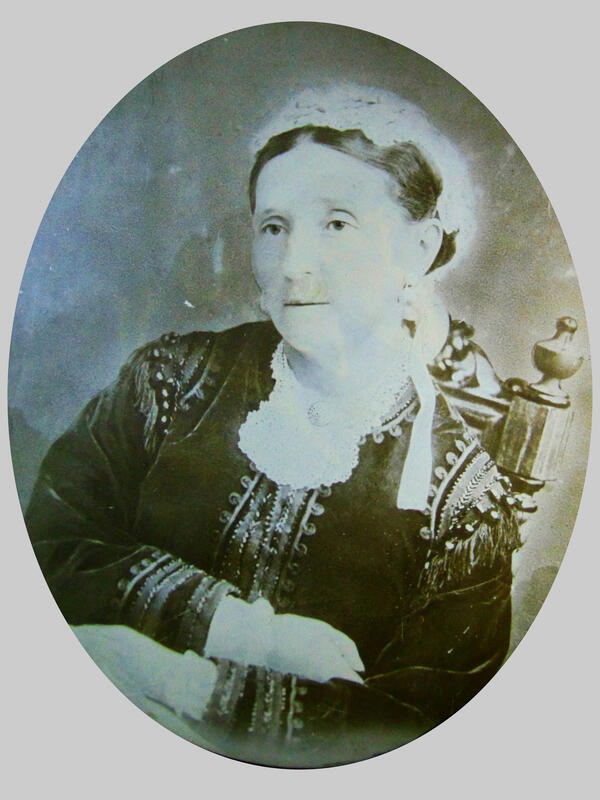
This exhibit is a copy of a photograph of Sophia Alexandrovna Aksakova, the wife of the first Ufa governor Grigory Sergeevich Aksakov. Before marriage, she bore the family name of the Shishkovs, the ancient Russian noble family, closely associated with the Aksakovs.
In the book of noble bloodlines, where all the different privileges of Russian nobility were documented, the Shishkovs were described in the sixth part, which meant that they belonged to one of ancient noble lineages. Many members of the Shishkov family were in fact of the ‘noble ranks’, and in older times, as boyars, they often had the court ranks of stolniks and striapchis, responsible for serving the royal table.
Among the famous descendants of this family were the Admiral, Minister of Education and famous literary figure Alexander Semenovich Shishkov, as well as poet, writer and translator Alexander Ardalionovich Shishkov, who had close friendly relations with Alexander Sergeevich Pushkin. The writer Sergei Timofeevich Aksakov was friends with both the poet Shishkov and the Admiral Shishkov. He got to know the former in 1808, when he was on service in St. Petersburg. Since then, and up until his departure in 1811, Sergey Aksakov and his brother Nikolai were regular guests in his house.
Sophia Alexandrovna’s father, Alexander Fedorovich, was the Admiral’s cousin. He was born in 1788, and already at the age of seventeen, in 1805, he joined the Department of the Ministry of Internal Affairs. Afterwards he was appointed to the office of the Orenburg military governor and by the end of 1808 he had reached the rank of Provincial Secretary. During this time, he had an unsuccessful affair with Sergey Aksakov’s sister, Nadezhda Timofeevna. At the end of 1818 he married Maria Bulgakova, who was eighteen years of age at that time, and together with her had six children.
Born in 1830, Sophia Alexandrovna married Grigory Aksakov on January 1, 1848 in Simbirsk. Their marriage was supported by both the Aksakovs and the Shishkovs. Shortly before the wedding, Sergey Timofeevich Aksakov gave his future daughter-in-law an album, which had a handwritten note on the first page: “Every shred of paper will last longer than any, even the most precious, human life. Should you save these sheets of paper, dear Sophia, they in turn will save for you the vibrant memories of the past. S. Aksakov, December 27, 1847, Moscow”. Presently, this album is kept in the Abramtsevo Museum Reserve near Moscow.
#9
Date: early 20th century
Technique: photography
Dimensions: 25×21 cm
Collection: Photographs
Copyright: Museum of the Aksakov family
Technique: photography
Dimensions: 25×21 cm
Collection: Photographs
Copyright: Museum of the Aksakov family
#10
Sergey Grigorievich Aksakov
#11
#12
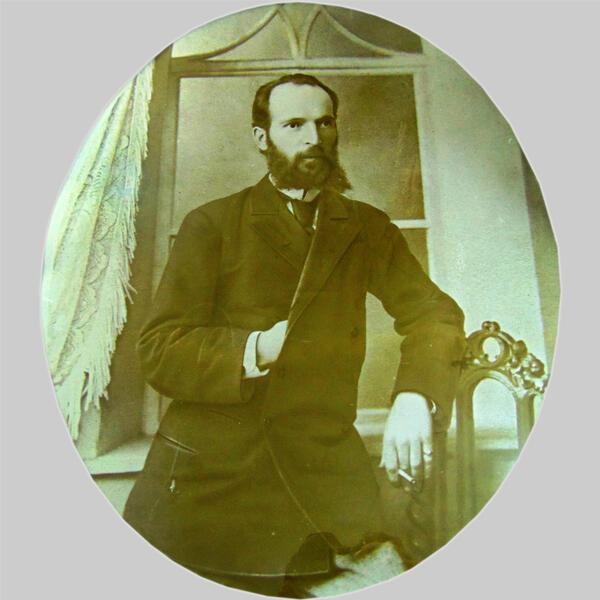
This is a copy of a photograph of Sergey Grigorievich Aksakov, son of Samara governor Grigory Sergeevich Aksakov and grandson of the famous Russian writer Sergey Timofeevich Aksakov. He was born on August 28, 1861 in Ufa, and was baptized in the local Grado-Ufa Trinity Church. Like his father, Sergey served in the Ministry of Internal Affairs, having started working in 1887 in one of its most important subdivisions - Land Department. Later he was transferred to Warsaw Province, where he was appointed Commissioner for Peasant Affairs of Wroclaw County. Then he returned to Russia and became the land sheriff of Buzuluk district in Samara province, where he owned the village of Strakhovo.
Sergey Aksakov got married to Serafima Ivanovna Sveshnikova on April 19, 1884 in St. Petersburg. She was the daughter of 1st Rank Captain and later Rear Admiral Ivan Ivanovich Sveshnikov. Together, they had five children: sons Nikolai, Sergei and Konstantin and daughters Maria and Elizaveta; Nikolai and Elizaveta both passed away in early childhood. It was Sergey Grigorievich who inherited the mansion in Nadezhdino, where the museum of the Aksakov family is now built. He hardly ever lived in there.
According to family members, Sergey suffered from epilepsy and was a brilliant violin player. His musical abilities were likely inherited by his son, Sergey Sergeevich, born in 1891. Sergey was the third child in the family. He studied at the Moscow Conservatory and by 1911 had already mastered the entire program of higher music education. Nevertheless, at his father’s insistence, he continued his education at the Imperial Lyceum in St. Petersburg, where nearly every Aksakov had studied in the past.
Later in his life, Sergey Aksakov joined civil service, leaving it soon after to pursue military education. He also performed at concerts in Moscow, Minsk and Kiev, and his works were printed in the musical publishing houses of St. Petersburg and Kiev. In 1918, he and his family moved to Harbin, where he was soon invited to work as a piano class professor at the Shanghai State Conservatory. In 1950s he returned to the USSR. By the end of his life, his music had gained a wide acclaim. In 1961 the Belarusian branch of the Union of Composers of the USSR celebrated his 70th anniversary, while the composer himself took part in radio programs and his music was regularly performed at concerts throughout the country.
#13
Date: late 19th century
Technique: photography
Dimensions: 48×38 cm
Collection: Photographs
Copyright: Museum of the Aksakov family
Goskatalog Number: 16515520
Technique: photography
Dimensions: 48×38 cm
Collection: Photographs
Copyright: Museum of the Aksakov family
Goskatalog Number: 16515520
#14
Nikolai Timofeevich Aksakov
#15

#16
The writer Sergey Timofeevich Aksakov had four sisters and two brothers. He developed particularly close relations with his brothers, in particular — with his younger brother Nikolai Timofeevich, who was born in Ufa in 1797. Sergey Timofeevich wrote about his birth in the second part of the autobiographical trilogy ‘Childhood years of Bagrov’s grandson’: “They went to get my dad… And, having heard my sobs from afar, he came to me and shouted: “What are you doing, Seryozha! You should be laughing, not crying. Thank God. Your mother is going to be all right, your brother was born…””.
As was the custom in the early 19th century, Nikolai Timofeevich devoted his youth to military service. He was a member of the Izmailovsky regiment and later became an adjutant to the outstanding general Ivan Paskevich. In the period between 1850 and 1858 he was appointed State Counselor and served as the provincial marshal of nobility in Simbirsk province. He owned estates in Ufa County, and in Samara, Simbir and Penza provinces. He spent many years in his Penza estate. For the estate in Simbirsk Province, he gathered a large library, which included many natural science books, as well as art writings.
In the “Notes on Fishing” and “Notes on Gun Hunting in Orenburg Province” Sergey Aksakov left the dedication: “To my brothers and friends Nikolai Timofeevich and Arkady Timofeevich Aksakovs”. It demonstrates the strong bond between the brothers, particularly their shared passion for nature and hunting. However, their political opinions were different: unlike the Slavophile Sergey Timofeevich, Nikolai was a committed Statist.
Nikolai Timofeevich died on March 13, 1882, being the last of the Aksakov brothers. Among his children, Alexander Nikolaevich, who combined civil service and occult studies, became particularly famous. His mystical ideas were shared among Vladimir Dahl and the famous chemist Alexander Butlerov, with whom he organized psychic sessions. It is known that his research in the occult field interested the great Russian writers Fyodor Dostoevsky and Nikolai Leskov. In addition, Alexander Nikolaevich is considered the originator of the term “telekinesis”.
#17
Date: mid 19th century
Technique: photography
Dimensions: 17×9 cm
Collection: Photographs
Copyright: Museum of the Aksakov family
Technique: photography
Dimensions: 17×9 cm
Collection: Photographs
Copyright: Museum of the Aksakov family
#18
Sophia Timofeevna Aksakova
#19
#20
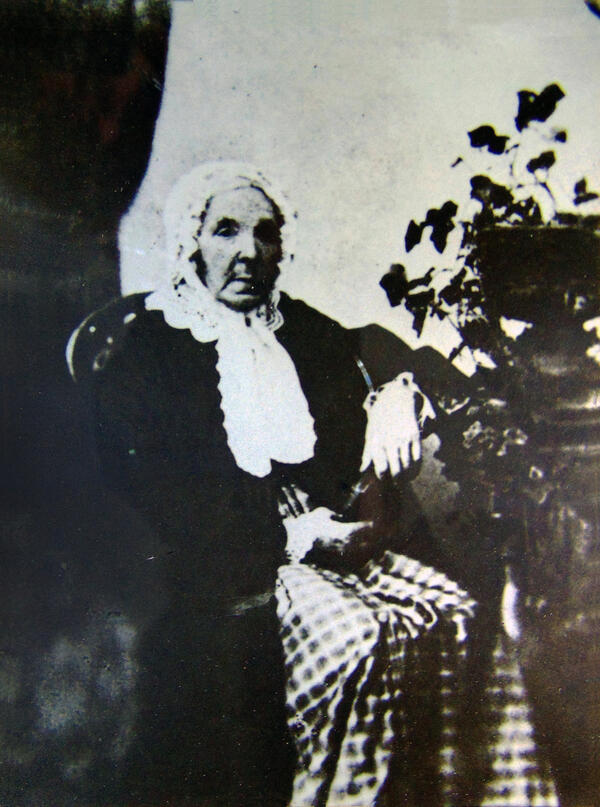
Sophia Timofeevna Aksakova was born in 1806. She was the younger sister of the writer Sergey Timofeevich Aksakov. Mikhail Vasilyevich Glumilin, a representative of one of Ufa’s oldest noble families who reached the civilian rank of a Court Counselor, became her husband in 1824. As a dowry from her father, she received the village of Podlesnaya, 633 peasants big, which was located 7 versts (just over 7 km) from Nadezhdino, the Aksakovs’ ancestral village. The village of Podlesnoe still exists today; it belongs to Belebeevsky district, Republic of Bashkortostan.
Two sons and four daughters were born in the family of Sophia Timofeevna and Mikhail Vasilyevich. One of them, Nadezhda, became a close friend of the great Russian scientist and founder of organic chemistry Alexander Mikhailovich Butlerov when he, after graduating from university, lived with his aunts in the house owned by Sophia Timofeevna. Soon after, in 1851, she married Butlerov.
Nadezhda Mikhailovna is often described as an energetic, unusually lively and attractive woman. She had maintained a very close and trusting relationship with her husband throughout her entire life. Her affection was of a very active nature: she had a good understanding of Butlerov’s interests and personality, which allowed her to both encourage him to study science and support his love for nature, people, children and family. Through Nadezhda Mikhailovna, the scientist got much more closely acquainted with the whole Aksakov family. In particular, he developed a strong friendship with Alexander Nikolaevich Aksakov, a mystic and the author of the term “telekinesis”.
It is also known that Butlerov was a close friend of Sergey Timofeevich Aksakov. In the 1850s, the former had the idea of publishing “The Hunting Collection”, which was supposed to print artistic and literary works “related to all kinds of hunt, with no exceptions”. Butlerov, back then still a young scientist, reacted to his plans in a letter to Sergei Timofeevich: “I was very happy, dear uncle, to hear about your idea of the “Hunting Collection”. Perhaps, we can bring something to the public heritage’.
Two sons were born in the family of Aksakova and Butlerov. In 1912, Mikhail Butlerov reached the title of Active State Councillor and held land in the village of Aksakov-Sergievka, formerly owned by the Aksakov family. Vladimir Butlerov owned the village of Repyevka in Penza Province.
#21
Date: mid 19th century
Technique: photography
Dimensions: 12×9 cm
Collection: Photographs
Copyright: Museum of the Aksakov family
Technique: photography
Dimensions: 12×9 cm
Collection: Photographs
Copyright: Museum of the Aksakov family
#22
Arkady Timofeevich Aksakov
#23
#24
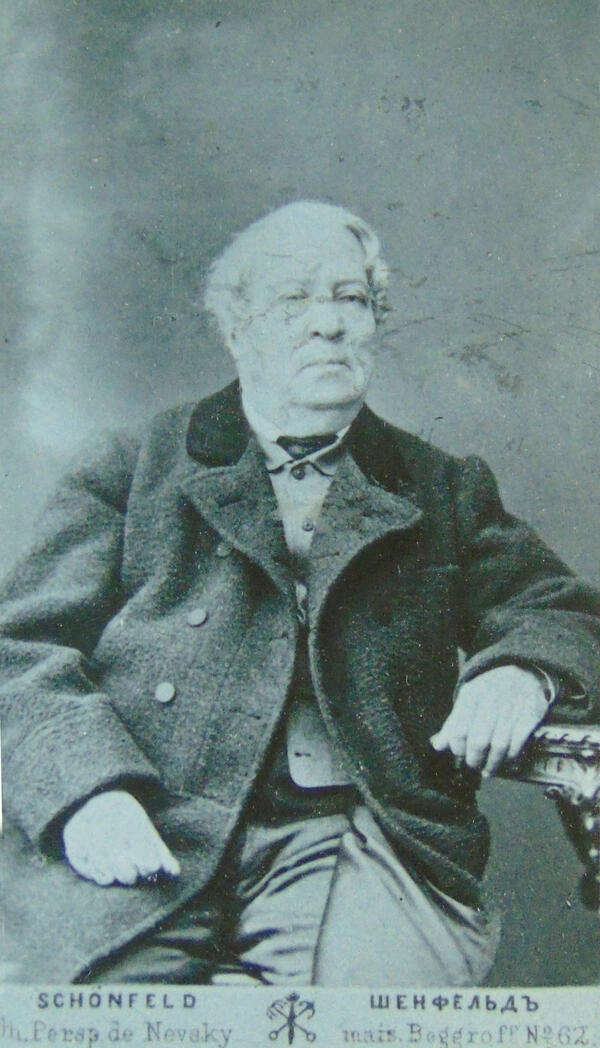
Arkady Timofeevich Aksakov, the younger brother of writer Sergey Timofeevich Aksakov, was born on January 23, 1803. Around 1820, he enrolled as a Warrant Officer in the St. Petersburg National Guard Forces Command and later earned the civil rank of a Collegiate Secretary. In 1835 he was elected district leader of nobility in Buguruslan County (today, a district in the Orenburg region), and on July 5, 1836 he married Anna Stepanovna Korotkova.
During these years, Arkady Timofeevich lived in the Buguruslan village of Novo-Aksakovo, but would often leave to visit his older brother in Abramtsevo near Moscow. This in particular was mentioned in the diary of Sergei Timofeevich’s daughter Vera, who wrote about it on September 13, 1855: “Uncle Arkady Timofeevich visited today and brought with him many stories about the elections in Simbirsk, about Samara, and about the upcoming militia movements in Samara and Orenburg”.
Three sons and a daughter were born in the family of Aksakov and Korotkova. Sergey Arkadievich was born in 1837; he graduated from the Imperial Lyceum and served as a Collegiate Advisor and in the second branch of His Imperial Majesty’s Own Chancellery. Nikolai Arkadievich was born in 1838, and also graduated from the Imperial Lyceum in St. Petersburg and served in the Ministry of Internal Affairs as a Court Counselor. Nadezhda Arkadievna was born in 1839 and married an Active Secret Advisor Alexei Bezobrazov. Their youngest son Alexander was born in 1842 and lived only for up to eight years. He was buried near the village of Novo-Aksakovo in Orenburg province.
The portrait of Arkady Aksakov, presented in the museum, is a copy of a photograph that was taken in St. Petersburg in the Schoenfeld salon in the mid-19th century. In August 1855, the St. Petersburg Vedomosti newspaper reported that Wilhelm Schoenfeld had opened a new photograph and daguerreotype salon on Nevsky Prospect. ‘The portraits stand out for their purity and accuracy. Schoenfeld guarantees to only give back portraits that fully and perfectly meet the expectations of visitors, ” — the advertisement stated. It also noted that prices for their services were widely affordable: a group photo would cost 1 rub. 59 cop. and an office portrait was valued at 4 rubles (about $5) for 6 copies. In reality though, only the wealthier citizens of the Russian Empire could afford to spend such a sum.
#25
Date: mid 19th century
Technique: photography
Dimensions: 9.5×6 cm
Copyright: Museum of the Aksakov family
Collection: Photographs
Technique: photography
Dimensions: 9.5×6 cm
Copyright: Museum of the Aksakov family
Collection: Photographs
#26
Olga Grigorievna Aksakova
#27
#28
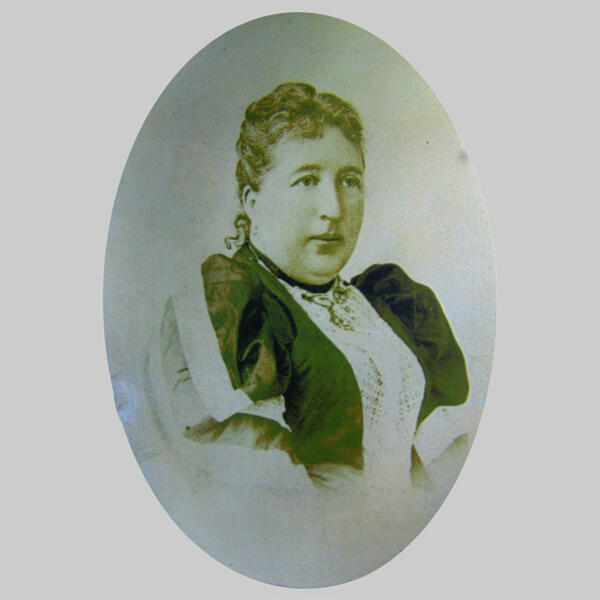
Olga Aksakova was born on December 26, 1848 (January 7, 1849 New Style) in Simbirsk to the family of the first governor of Ufa Grigory Sergeevich Aksakov and Sophia Alexandrovna Aksakova, in her maidenhood bearing the name of the old noble family of Shishkovs.
Olga Grigorievna spent her adolescence and youth in Ufa in her father’s house, where she was given an excellent home education. She often took part in charity evenings organized by her mother in Ufa. In 1890, she inherited the lands near the village of Nadezhdino and founded a koumissotherapy clinic there, which in a short time became one of the most famous of its kind in the Bashkir region. The products were supplied to the clinic from a small but well organized domestic farm.
The clinic was open for visitors from May 15 to August 16. During that period, Olga lived close to the clinic and would often visit the local Dmitrievsky church. Knowing that the “Mistress”, as she was frequently called by the locals, would arrive, many sick people, cripples, and beggars gathered there, who were then generously welcomed by Olga. She was also known for her fair and kind attitude towards peasants and her support to them during especially bad harvest years. It is not by chance that she was widely beloved in the entire Belebeevsky county, and the good memory of her was kept almost to this day.
For many years Olga was also the keeper of the most extensive archive of the Aksakov family. She independently prepared for publication and released the diary of her aunt Vera Sergeevna Aksakova - a remarkable document of the mid-19th century. She later donated most of the family archive to the Academy of Sciences. Olga Aksakova died in the harsh year of 1921, in the former estate of her mother, located in the Yazykovo village, in Samara province.
It is known that Olga Grigorievna was the favorite granddaughter of the writer Sergey Timofeevich Aksakov. The “Childhood Years of Bagrov”s Grandson” and “The Little Scarlet Flower” were in fact dedicated to her by her famous grandfather. There is a dedication on the title pages of these works: “To my granddaughter, Olga Grigorievna Aksakova”. On December 21, 1854, Sergey Timofeevich also wrote the poem “To Six-year-old Olya”, where he promised her an unusual gift.
#29
Date: early 20th century
Technique: photography
Place: 18×13 cm
Collection: Photographs
Copyright: Museum of the Aksakov family
Goskatalog Number: 16515551
Technique: photography
Place: 18×13 cm
Collection: Photographs
Copyright: Museum of the Aksakov family
Goskatalog Number: 16515551
read morehide
00:00
00:00
1x
The photographs of the Aksakovs and Shishkov
0
 Point your smartphone camera to open in the app
Open in app
Share