

#1
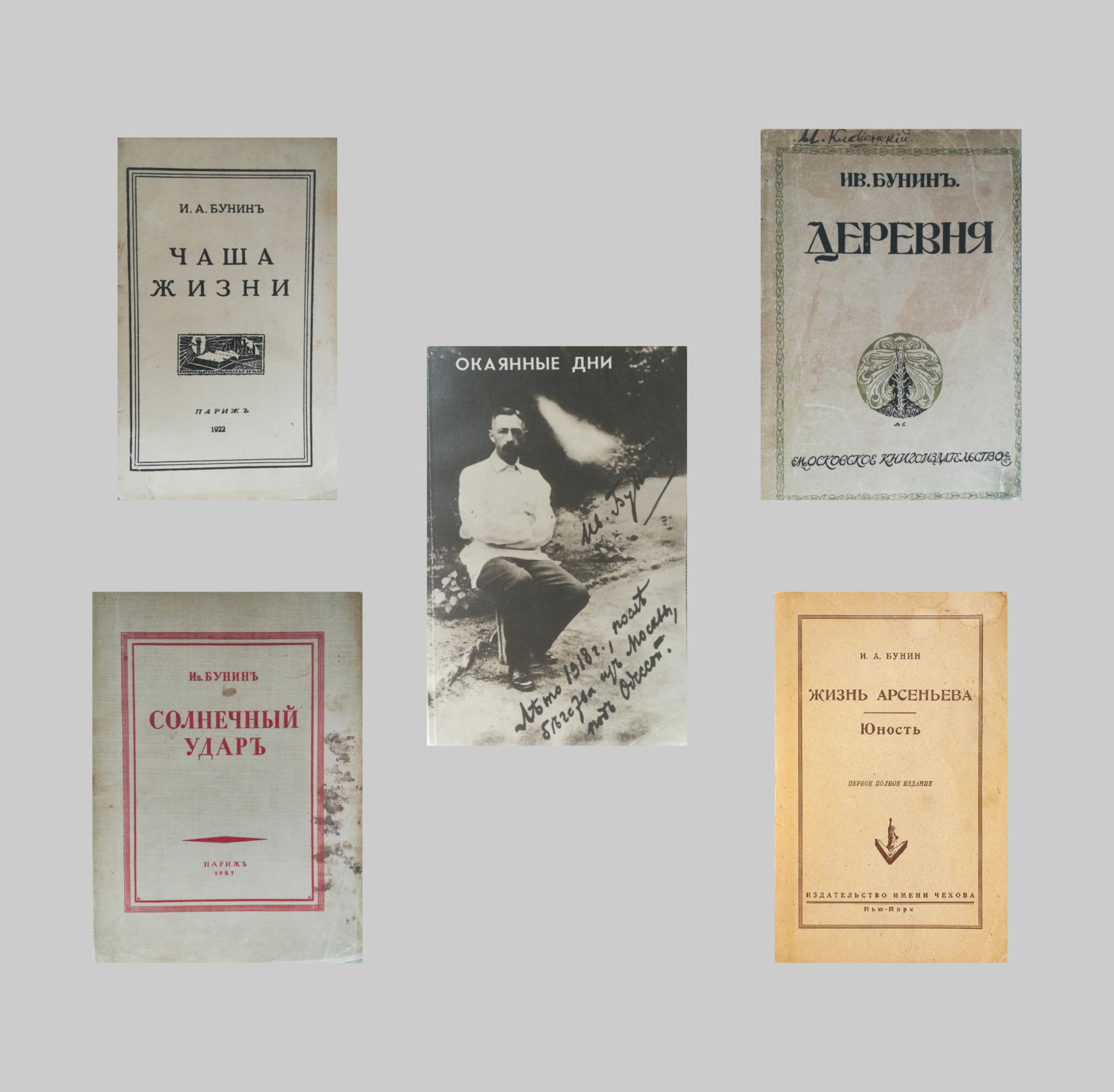
Books by Bunin I.A.
#37
#27
#3
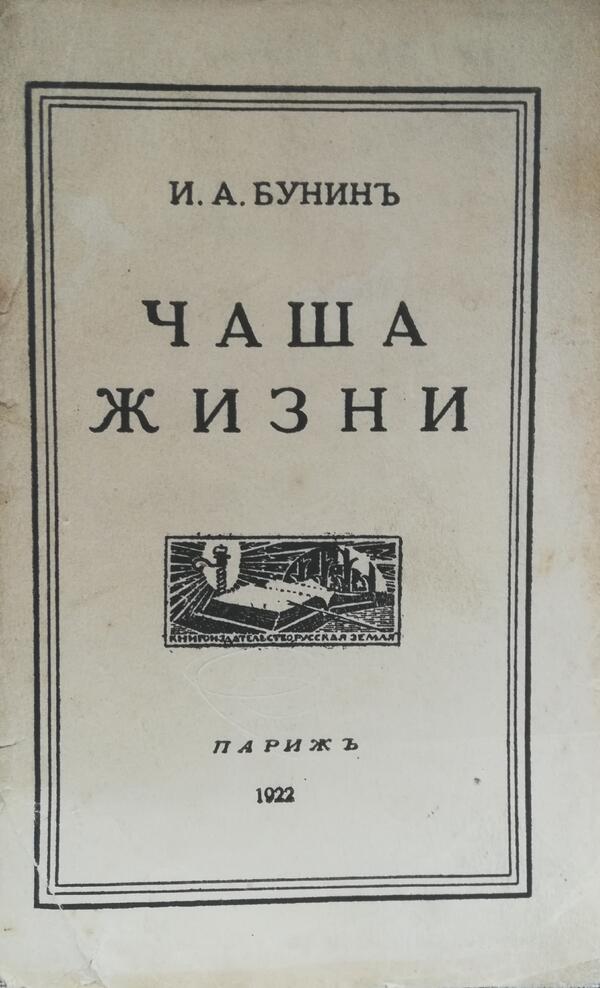
The first edition of the book was published in Moscow in 1915. The French writer and critic Rene Ghil wrote to Bunin about his ‘Bowl of life’ (Paris, 1921) in 1921: ‘Dear fellow writer, I am even embarrassed — so great is my gratitude for your book about the depths of life with its material foundations and the primordial secrets of the human being.’ The title of the book is the title of one of the stories, which Bunin began to write while being on Capri on September 2, 1913. Its original name is ‘House’ and then ‘In Streletsk’. The final title was adopted by Bunin from one of Lermontov’s poems. The prototype of Gorizontov in this story was, according to the writer SergEy Malashkin, a lecturer at theological college in Yefremov. Like the hero of the story, he had a canvas umbrella and wore rubber overshoes, bathed in summer and in winter in KrasIvaya MEcha, and sold his skeleton for anatomical studies. The village of Streltsy is located near Yefremov. This village probably gave the original name of the story in which YefrEmov was called Streletsk.
The Ivan Bunin’s last love, GalIna Kuznetsova, recalled one of the conversations with him in December 1931:
‘And what did you write your “Bowl of life” from? I asked him when I remembered some pieces from the book I’ve just read after the ‘Student’. — The fact that every girl has her happy summer is, by the way, about my sister Masha. Before she got married, she often strolled in the garden, with her velvet ribbon on, and was singing lezghInka. And after the marriage, when she spent a year without her husband, an assistant engineer, she also somehow cheered up, often went to the factories in the neighboring KolontAyevka estate, there was a pine alley, it had some special smell of jasmine that summer… I took this alley to ‘MItya’s love’ later, and it was all so pitiful and sad! And MordOvian costumes were worn by the young ladies TUbbe, and there was also Ariston and again this lezghInka… Father Cyrus? Father Cyrus… This comes from Leonid Andreev. … And some things in SElikhov - from brother EvgEny. He also bought a phonograph, and there was a palm tree in his living room. And the main source of inspiration for writing all these, was an impression I got from one of the streets in YefrEmov. Imagine a wide sandy street, going uphill, middle-class houses, heat, languor and hopelessness… this was that very feeling, it seems to me, which gave birth to the “Bowl of life”.
Kuznetsova G.N. “Grasse diary”
The Samara newspaper wrote about the characters of the story on December 11, 1913: “… people whose fate is predetermined from birth, who will not fight with fate, will not seek anything, will not strive anywhere, will not overcome anything. What can be interesting for the reader in the world of their emotions? But the power of talent makes the reader feel the interests of their unremarkable life, experience tragedies with them, the inconspicuous tragedies of this tragic, though unremarkable life, and just for a moment to feel sorry about their death…”
Newspaper “Volzhskoe Slovo”, No 271
This collection of stories included such stories as “Brothers”, “On the road”, “Saints”, “Spring evening”, “Christmas story”, “Dust” and selected poems.
The Ivan Bunin’s last love, GalIna Kuznetsova, recalled one of the conversations with him in December 1931:
‘And what did you write your “Bowl of life” from? I asked him when I remembered some pieces from the book I’ve just read after the ‘Student’. — The fact that every girl has her happy summer is, by the way, about my sister Masha. Before she got married, she often strolled in the garden, with her velvet ribbon on, and was singing lezghInka. And after the marriage, when she spent a year without her husband, an assistant engineer, she also somehow cheered up, often went to the factories in the neighboring KolontAyevka estate, there was a pine alley, it had some special smell of jasmine that summer… I took this alley to ‘MItya’s love’ later, and it was all so pitiful and sad! And MordOvian costumes were worn by the young ladies TUbbe, and there was also Ariston and again this lezghInka… Father Cyrus? Father Cyrus… This comes from Leonid Andreev. … And some things in SElikhov - from brother EvgEny. He also bought a phonograph, and there was a palm tree in his living room. And the main source of inspiration for writing all these, was an impression I got from one of the streets in YefrEmov. Imagine a wide sandy street, going uphill, middle-class houses, heat, languor and hopelessness… this was that very feeling, it seems to me, which gave birth to the “Bowl of life”.
Kuznetsova G.N. “Grasse diary”
The Samara newspaper wrote about the characters of the story on December 11, 1913: “… people whose fate is predetermined from birth, who will not fight with fate, will not seek anything, will not strive anywhere, will not overcome anything. What can be interesting for the reader in the world of their emotions? But the power of talent makes the reader feel the interests of their unremarkable life, experience tragedies with them, the inconspicuous tragedies of this tragic, though unremarkable life, and just for a moment to feel sorry about their death…”
Newspaper “Volzhskoe Slovo”, No 271
This collection of stories included such stories as “Brothers”, “On the road”, “Saints”, “Spring evening”, “Christmas story”, “Dust” and selected poems.
#28
Full name: Bowl of life. A book
Author: Bunin Ivan Alekseevich
Date: 1922 year
Technique: paper, offset printing
Dimensions: 18.5×12 cm, 280 pages
Collection: Yelets Local History Museum
Copyright: Yelets Local History Museum
Author: Bunin Ivan Alekseevich
Date: 1922 year
Technique: paper, offset printing
Dimensions: 18.5×12 cm, 280 pages
Collection: Yelets Local History Museum
Copyright: Yelets Local History Museum
#38
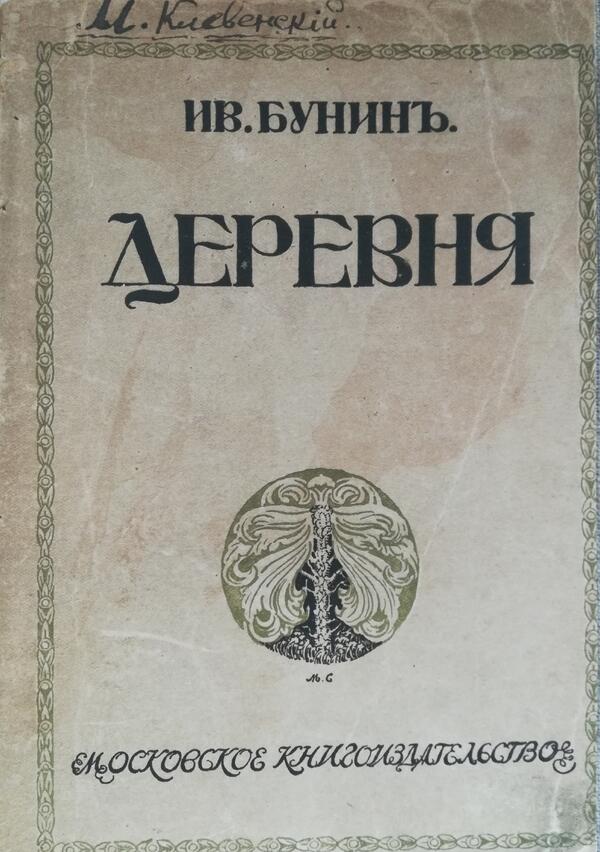
Village. A book
#8
#29
The story was first published in 1910 in the magazine ‘Modern world’ (№ 3, 10, 11). In the story Bunin reflected his thoughts about the people, about the fate of Russia. It is based on the author’s observations about the life of the peasants in the Yelets district. To create the character KuzmA KrAsov, Bunin used some features of EgOr IvAnovich NazArov, a self-taught poet from Yelets, he took some features from so-called “narOdniki” writers, and even took something from himself. In TIkhon KrAsov one can recognize the features of his brother EvgEny AleksEevich. The prototype of DurnOvka was the village of OgnYOvka, where the estate of his brother EvgEny was located. According to VEra NikolAevna, the first part of the story was written in Moscow within three days: “Sometimes he was leaving the room to come up to the mother, saying: “It”s awful, really awful.” Then he went back to his room again and continued writing.’ At this moment Bunin’s imagination was probably bringing to him the pictures of events happening in this story.
“In Moscow, I spent 15 hours a day writing this story, I was afraid to stop even for a minute, afraid that the electric light inside of me would suddenly go out and I would immediately be captured by the depression for which to overcome I found the only means - working. And then this stress led me to deadly fatigue and heart attacks to icy sweat, almost to loss of consciousness… I finished the story (I believe that I ruined it, because at first I started working with too tight deadlines, and recently it was too hard to work)”.
On August 20, 1910, Bunin I.A. wrote to Gorky M.
The “Village” gave a rise to many disputes and was the beginning of Bunin’s huge popularity. This first major writing was followed by other novels and stories, as Bunin wrote, ‘sharply outlining the Russian soul, its light and dark sides, and often tragic origins. Among the Russian critics and the Russian intellectuals who used to idealize the simple folks due to lack of awareness of the folk nature, or due to political considerations, my “unsparing” writings caused hot and hostile responses. During these years, I felt my literary power grew stronger every day’.
Maxim Gorky wrote to Maria KuprinA-IordAnskaya in 1910: ‘This narration is a historical work in its nature, nobody has ever written about the rural community like this’. The Russian rural community, as Bunin believed, had no chance to last, if no changes for the better occurred. Critics accused the writer of sharply negative description of rural life. In his interview for the ‘Odessa newspaper’ (No. 56, March 12, 1910) Bunin said that his TIkhon KrAsov in the ‘Village’ — ‘is not a merchant, but a peasant, and he built his prosperity on the poor villagers’. Thomas Mann read the ‘Village’ in French, but even in translation, as he said, this book ‘retained all its fascinating power’, ‘it is an unusually mournful novel from the peasant life’.
“In Moscow, I spent 15 hours a day writing this story, I was afraid to stop even for a minute, afraid that the electric light inside of me would suddenly go out and I would immediately be captured by the depression for which to overcome I found the only means - working. And then this stress led me to deadly fatigue and heart attacks to icy sweat, almost to loss of consciousness… I finished the story (I believe that I ruined it, because at first I started working with too tight deadlines, and recently it was too hard to work)”.
On August 20, 1910, Bunin I.A. wrote to Gorky M.
The “Village” gave a rise to many disputes and was the beginning of Bunin’s huge popularity. This first major writing was followed by other novels and stories, as Bunin wrote, ‘sharply outlining the Russian soul, its light and dark sides, and often tragic origins. Among the Russian critics and the Russian intellectuals who used to idealize the simple folks due to lack of awareness of the folk nature, or due to political considerations, my “unsparing” writings caused hot and hostile responses. During these years, I felt my literary power grew stronger every day’.
Maxim Gorky wrote to Maria KuprinA-IordAnskaya in 1910: ‘This narration is a historical work in its nature, nobody has ever written about the rural community like this’. The Russian rural community, as Bunin believed, had no chance to last, if no changes for the better occurred. Critics accused the writer of sharply negative description of rural life. In his interview for the ‘Odessa newspaper’ (No. 56, March 12, 1910) Bunin said that his TIkhon KrAsov in the ‘Village’ — ‘is not a merchant, but a peasant, and he built his prosperity on the poor villagers’. Thomas Mann read the ‘Village’ in French, but even in translation, as he said, this book ‘retained all its fascinating power’, ‘it is an unusually mournful novel from the peasant life’.
#30
Full name: Village. A book
Author: Bunin Ivan Alekseevich
Date: 1910 year
Technique: paper, typographic printing
Dimensions: 21,5×15 cm, 220 pages
Collection: Yelets Local History Museum
Copyright: Yelets Local History Museum
#39
Sunstroke. Book
#14
#31
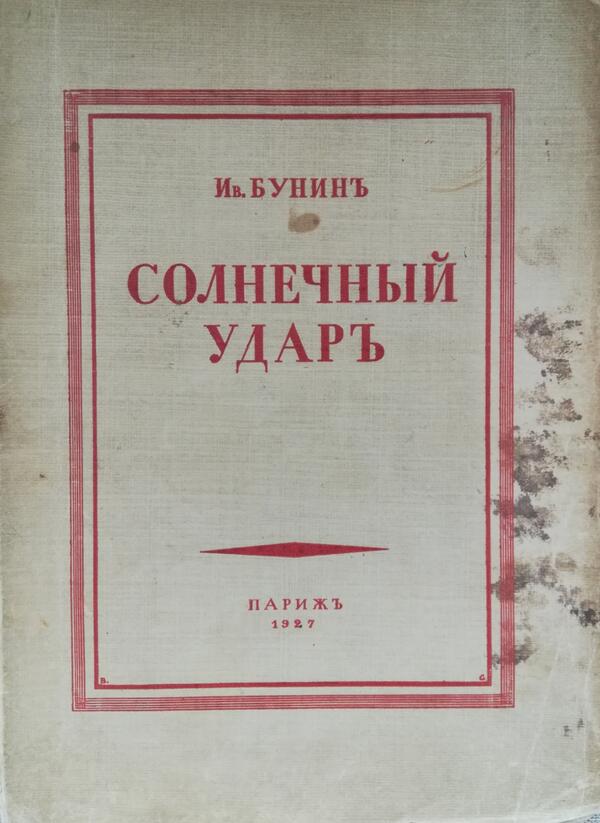
This book was published in Paris, by the RodnIk Publishing House in 1927. NikolAy KUlman, a literary critic wrote about this book in Revival, a Paris newspaper, the issue dated February 3, 1927:
‘The new collection of stories by Ivan Bunin - the “Sunstroke” should become a reference book for everyone who loves literature: it has so much inner luxuriance, grace, poetic charm, artistic wisdom, and something unexpectedly new. As usual with Bunin, there are no extra words, everything is concise, focused, everything is artistically necessary. Almost every story from this collection immediately captures the reader, like with some stormy aesthetic impulse, and then it keeps the reader interested to the end, completely /…/ Maybe the idea of the “Sunstroke” is that love which is the greatest pleasure and the hopelessness of the suffering are connected because only in the passion of love the joy of being can be experienced, when you’re merging with the world and yet, there is a terrible feeling of close death, all damaging and at the same time making you closer to the world and eternal? Love and death sharing the same field.’
‘The new collection of stories by Ivan Bunin - the “Sunstroke” should become a reference book for everyone who loves literature: it has so much inner luxuriance, grace, poetic charm, artistic wisdom, and something unexpectedly new. As usual with Bunin, there are no extra words, everything is concise, focused, everything is artistically necessary. Almost every story from this collection immediately captures the reader, like with some stormy aesthetic impulse, and then it keeps the reader interested to the end, completely /…/ Maybe the idea of the “Sunstroke” is that love which is the greatest pleasure and the hopelessness of the suffering are connected because only in the passion of love the joy of being can be experienced, when you’re merging with the world and yet, there is a terrible feeling of close death, all damaging and at the same time making you closer to the world and eternal? Love and death sharing the same field.’
Kulman N.К.
The name of this collection is the name of the first story “Sunstroke”, which had been published by Bunin in “Contemporary notes”, a Paris magazine, one year before. BUnin wrote the “Sunstroke” in 1925. It should be noted that the year when BUnin wrote this story, coincided with the period when the writer was working on stories dedicated to the theme of love. This is one of the factors that explains the psychological depth of the work.
The plot of the story is quite simple. The lieutenant met a beautiful lady on the ship, whose name, like his name, remained unknown to the reader. They both seemed to be struck by a sunstroke; bright passionate feelings flared up between them. The traveler and his companion left the ship and headed for the city, and the next day she got on the steamer and went to visit her family. The young officer was all alone and after a while he realized that he could no longer live without that woman. At the end of the story he was sitting under the awning on the deck, and felt ten years older. True love, which, according to the writer, can come completely suddenly, gave him only a moment of happiness, for which he had to pay with suffering. This story is the forerunner of Bunin’s book ‘Dark alleys’. The novelty of the narration was marked in the emigrant press. ‘In literature I cannot remember if anybody had managed to describe the sunlight in a way to make you perceive it almost physically, only genius of Manet and impressionist artists could bring the same experience, ” the critic wrote. — it is the intensity of feelings, the saturation with light, happiness and pain of love, and its burning vitality, which makes this little story a miracle’.
This collection also included the following stories by Bunin: ‘Ida’, ‘Mordovian sarafan’, ‘the Case of cornet Elagin’, ‘Terrible story’, ‘Notre-Dame de la Garde’, ‘Desecrated Savior’, ‘Burden’, ‘In the garden’, ‘Cicadas’, ‘Many of the waters’.
#36
Full name: Sunstroke. Book
Author: Bunin Ivan Alekseevich
Date: 1927 year
Technique: paper, typographic printing
Dimensions: 21×15 cm, 164 pages
Collection: Yelets Local History Museum
Copyright: Yelets Local History Museum
Author: Bunin Ivan Alekseevich
Date: 1927 year
Technique: paper, typographic printing
Dimensions: 21×15 cm, 164 pages
Collection: Yelets Local History Museum
Copyright: Yelets Local History Museum
#40
Cursed days. Book
#19
#32
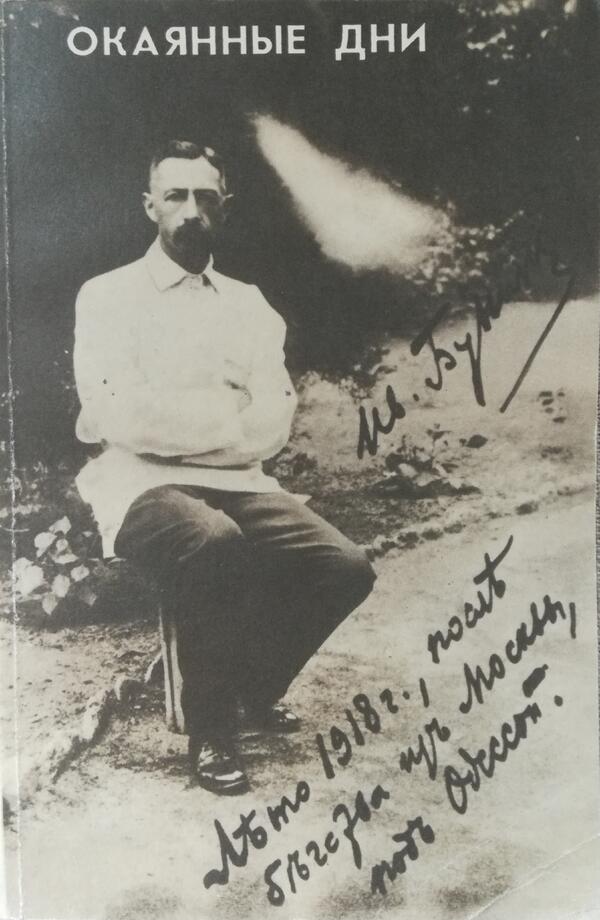
This is a book from the library of the ‘Word’ magazine, reproduced from the publication: Collected works of I.A. BUnin consisting of 11 volumes (Berlin, Petropolis publishing house, 1934 — 1936). For the first time, ‘Cursed days’ was published in the first issue of the newspaper ‘VozrozhdEnie’ (June 3, 1925). If you briefly answer the question about what this book is, you can say: about BUnin’s attitude to the revolution, about the civil war, about that “bloody nightmare” that accompanied the writer in the last years of his life in Russia. “Cursed days” is an “inconvenient” book which is difficult to read. It includes BUnin’s observations and thoughts of this period.
‘This is the book of curses, retribution and revenge, even though a verbal one, it has nothing to be compared with in terms of its temper, acrimony and rage in “sick” and fierce white journalism. Because even in anger, passion, almost frenzy, Bunin remains an artist: and in great injustice he is still an artist. It is HIS PAIN, the AGONY that he took with him into exile’.
Mikhailov O.N. ‘Bunin’s ‘Cursed days’
‘Almost every day, in any weather, Bunin walked around the city for several hours. He was walking, not strolling, with quick light steps, wearing a short knee-length light overcoat which was common to see in Moscow, with a cane, and an academic skullcap instead of a hat, he looked rushing, strained and attentive, lean … I watched Bunin at the soldiers 'flea market’, where he stood in the middle of the crowd with a notebook in his hands, calmly and unhurriedly writing down the ditties, which two brothers - the Black sea military sailors were shouting out, dancing with their hands on each other’s shoulders and shaking their wide “bell-bottoms”, — it was popular song “Apple” or “Deribasovskaya” … I remember the fainting, sickening smell of sesame oil, garlic, and human sweat. But Bunin paid no attention to this and worked quietly, covering page after page with his notes. The most striking thing was that no one paid any attention to him, despite his academic appearance, which was so much distinguished from the market crowd, or perhaps thanks to his appearance: who knows who they took him for’.
Kataev V.P. ‘The Herb of Oblivion’.
‘This is the book of curses, retribution and revenge, even though a verbal one, it has nothing to be compared with in terms of its temper, acrimony and rage in “sick” and fierce white journalism. Because even in anger, passion, almost frenzy, Bunin remains an artist: and in great injustice he is still an artist. It is HIS PAIN, the AGONY that he took with him into exile’.
Mikhailov O.N. ‘Bunin’s ‘Cursed days’
‘Almost every day, in any weather, Bunin walked around the city for several hours. He was walking, not strolling, with quick light steps, wearing a short knee-length light overcoat which was common to see in Moscow, with a cane, and an academic skullcap instead of a hat, he looked rushing, strained and attentive, lean … I watched Bunin at the soldiers 'flea market’, where he stood in the middle of the crowd with a notebook in his hands, calmly and unhurriedly writing down the ditties, which two brothers - the Black sea military sailors were shouting out, dancing with their hands on each other’s shoulders and shaking their wide “bell-bottoms”, — it was popular song “Apple” or “Deribasovskaya” … I remember the fainting, sickening smell of sesame oil, garlic, and human sweat. But Bunin paid no attention to this and worked quietly, covering page after page with his notes. The most striking thing was that no one paid any attention to him, despite his academic appearance, which was so much distinguished from the market crowd, or perhaps thanks to his appearance: who knows who they took him for’.
Kataev V.P. ‘The Herb of Oblivion’.
The ‘Cursed days’ captured only the most important pictures of the new life. BUnin attempted to write not just a ‘diary’ consisting of daily notes, but a kind of chronicle of the collapse of the great state. Proud of his unbiased attitude to the revolution in 1905, BUnin, an honorary academician in fine literature, threw himself into the boiling whirlpool of street life, greedily absorbing what was happening in Moscow and OdEssa, but finally became more and more convinced that Russia has died.
#33
Full name: Cursed days. Book
Author: Bunin Ivan Alekseevich
Date: 1935 year
Technique: paper, offset printing
Dimensions: 18,5×12,5 cm, 174 pages
Collection: Yelets Local History Museum
Copyright: Yelets Local History Museum
Author: Bunin Ivan Alekseevich
Date: 1935 year
Technique: paper, offset printing
Dimensions: 18,5×12,5 cm, 174 pages
Collection: Yelets Local History Museum
Copyright: Yelets Local History Museum
#41
Arseniev’s Life. A novel
#25
#34
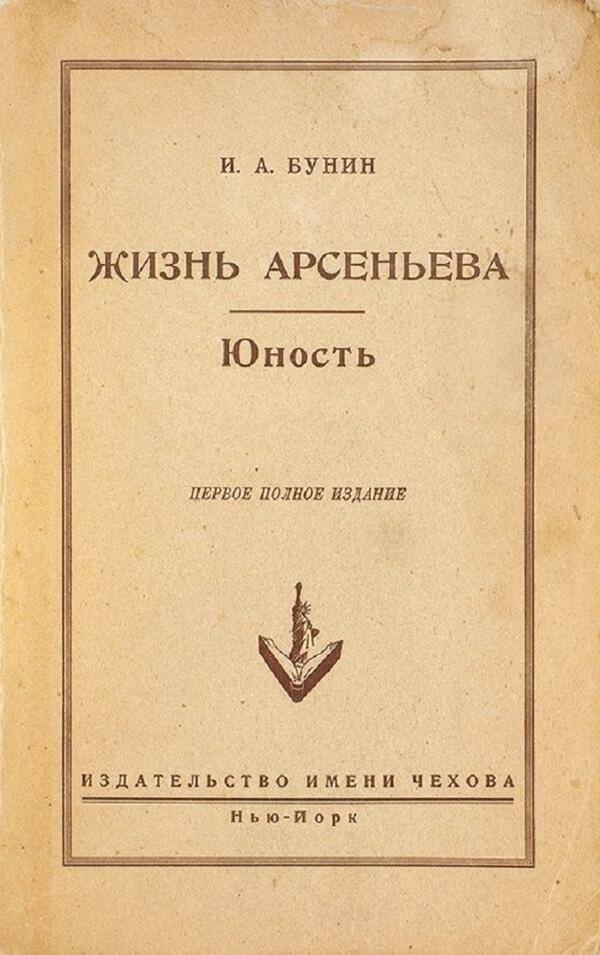
The complete novel was first published in New York by the ChEkhov Publishing House in 1952. Fragments of the novel were published in the newspapers ‘Days’ (1927), ‘Latest news’ (1928 — 1929), ‘Russia’ (1927), in ‘Modern Notes’ (1928 — 1929). The first four books of the novel were published as a separate book in Paris in 1930 with the subtitle ‘the Origins of Days’. According to IvAn AleksEevich, he began to work on the novel on July 22, 1927. GalIna KuznetsOva wrote on January 12, 1929:
‘We talked about the reviews for ArsEniev”s Life and, in particular, about the WEidle”s review, who wrote that this novel is a kind of enthusiastic hymn to life, to the beauty of the world, to himself, and compared this novel with an ode. And this is completely right. And I got an idea that struck me. Now, when everyone around us is crying about the spiritual deterioration inside the emigration community for which there are some good reasons — grief, adversity, lots of deaths - all this has affected us badly — while other writers write either something sullen or plaintive, or ecclesiastical, or just funereal, like almost all poets; in distress, hardship and loneliness, deprived of his homeland and everything connected with it, a “fanatic” or, as the Bolsheviks called him, “Grand Inquisitor”, BUnin enthusiastically praises the Creator, Heaven and earth, who gave birth to him and allowed him to see much more misery, humiliation, and grief than happiness and joy. When else? During the most difficult time for him, not only in general, but also in a personal, individual sense… Yes, this is a real miracle, and no one sees this miracle, no one can understand it! What a great gift of mental and physical health (in spite of everything) the Lord gave him! ’
Kuznetsova G.N. ‘Grasse diary’
‘Ivan Alekseevich was angry he heard other people saying that Arseniev”s Life was an autobiography. Of course, Arseniev is not 100% Bunin, but there is a lot of Bunin in him: his thoughts, his feelings, his views on life, his attitude to people. Many times Bunin was offered to write the second volume, but he always refused: “I wrote there about people who had died long before, about things that are forever over. In the continuation of the novel I would have to write in an artistic form about those who are still alive - how can I do this?” And I never wrote it’.
Aldanov M.A. ‘About Bunin’
Irina Odoevtseva had interesting memories about the meetings with Ivan Alekseevich. They discussed many different topics. Bunin told her the following things about his novel:
‘Everyone thinks that Arseniev’s Life is my autobiography. But I didn’t write about many things, very many things, the most difficult ones. “Arseniev”s Life” is much happier than my life. Many things were hidden, many were embellished. But no one believes it. And this makes me frustrated. — Ivan Alekseevich, why don’t you write comments on the ‘Arseniev”s Life’ and put everything in its place? He winced ‘Well, no. That’s not needed. I’m not able to do this. I was just trying to write the truth about myself. But I failed. It must be from mental shyness. I am painfully shy, chaste, and self-conscious inside myself -although no one believes me. I’m kind of ashamed to write the truth about myself’.
Odoevtseva I.V. “On the Seine shores”
‘We talked about the reviews for ArsEniev”s Life and, in particular, about the WEidle”s review, who wrote that this novel is a kind of enthusiastic hymn to life, to the beauty of the world, to himself, and compared this novel with an ode. And this is completely right. And I got an idea that struck me. Now, when everyone around us is crying about the spiritual deterioration inside the emigration community for which there are some good reasons — grief, adversity, lots of deaths - all this has affected us badly — while other writers write either something sullen or plaintive, or ecclesiastical, or just funereal, like almost all poets; in distress, hardship and loneliness, deprived of his homeland and everything connected with it, a “fanatic” or, as the Bolsheviks called him, “Grand Inquisitor”, BUnin enthusiastically praises the Creator, Heaven and earth, who gave birth to him and allowed him to see much more misery, humiliation, and grief than happiness and joy. When else? During the most difficult time for him, not only in general, but also in a personal, individual sense… Yes, this is a real miracle, and no one sees this miracle, no one can understand it! What a great gift of mental and physical health (in spite of everything) the Lord gave him! ’
Kuznetsova G.N. ‘Grasse diary’
‘Ivan Alekseevich was angry he heard other people saying that Arseniev”s Life was an autobiography. Of course, Arseniev is not 100% Bunin, but there is a lot of Bunin in him: his thoughts, his feelings, his views on life, his attitude to people. Many times Bunin was offered to write the second volume, but he always refused: “I wrote there about people who had died long before, about things that are forever over. In the continuation of the novel I would have to write in an artistic form about those who are still alive - how can I do this?” And I never wrote it’.
Aldanov M.A. ‘About Bunin’
Irina Odoevtseva had interesting memories about the meetings with Ivan Alekseevich. They discussed many different topics. Bunin told her the following things about his novel:
‘Everyone thinks that Arseniev’s Life is my autobiography. But I didn’t write about many things, very many things, the most difficult ones. “Arseniev”s Life” is much happier than my life. Many things were hidden, many were embellished. But no one believes it. And this makes me frustrated. — Ivan Alekseevich, why don’t you write comments on the ‘Arseniev”s Life’ and put everything in its place? He winced ‘Well, no. That’s not needed. I’m not able to do this. I was just trying to write the truth about myself. But I failed. It must be from mental shyness. I am painfully shy, chaste, and self-conscious inside myself -although no one believes me. I’m kind of ashamed to write the truth about myself’.
Odoevtseva I.V. “On the Seine shores”
#35
Full name: Arseniev’s Life. A novel
Author: Bunin Ivan Alekseevich
Date: 1952 year
Technique: book printing
Dimensions: 21×14 cm
Collection: Municipal budgetary institution of culture ‘Yelets Local History Museum’
Copyright: Municipal budgetary institution of culture ‘Yelets Local History Museum’
Author: Bunin Ivan Alekseevich
Date: 1952 year
Technique: book printing
Dimensions: 21×14 cm
Collection: Municipal budgetary institution of culture ‘Yelets Local History Museum’
Copyright: Municipal budgetary institution of culture ‘Yelets Local History Museum’
read morehide
Books by Bunin I.A.
Collection
Exhibition
0
 Point your smartphone camera to open in the app
Open in app
Share