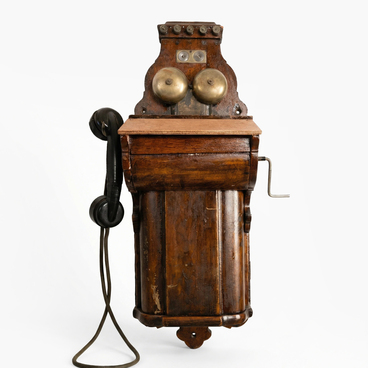
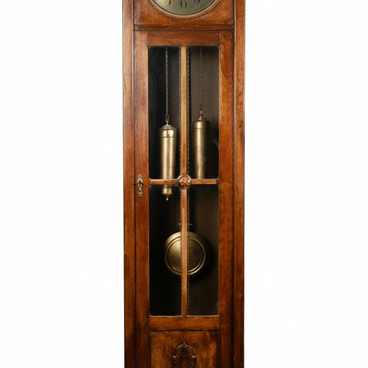
The history of Unecha is inseparable from the development of railway transport. Hence, the museum’s collection includes numerous exhibits dedicated to the railway, among which the token instrument stands out as both remarkable and enigmatic. More precisely, it is an electric apparatus with tokens used in railway signaling, a once-vital piece of safety equipment in railway operations.
Safety has always been paramount in railway work. One of the earliest signaling systems was the semaphore, but even during the steam locomotive era, a single semaphore proved insufficient to reliably manage train movements. A more robust method was needed to prevent a train from being dispatched onto a section of track already occupied by another.
This need gave rise to the token system, which ensured safe railway operations by guaranteeing that only one train could occupy a given track section at a time, thereby preventing head-on collisions. At stations marking the ends of a controlled section, paired electric apparatuses were installed. Each device held between 20 and 40 special metal rods — always an even number. The token itself served as a physical symbol granting permission to enter the section: the train driver received it from the attendant at the departure station and was required to surrender it to the attendant at the destination station.
The design made it mechanically impossible to remove more than one token at a time. Dispatching a train without a token — or failing to surrender it at the next station — was considered a grave violation and was met with the harshest penalties.
The Thomson token system, developed in England, was introduced on Russian railways in the late 19th century. However, these early devices were bulky and prone to failure. In the 1920s, a far more reliable alternative emerged: the token instrument invented by Daniil Semyonovich Treger — the very device now on display in the museum.
Treger completed his invention in 1919, while imprisoned in Chelyabinsk. He was sentenced to death by hanging. His life was spared when Red Army forces liberated the city. Soon afterward, he secured an audience with Felix Dzerzhinsky, then People’s Commissar of Railways, and presented his technical drawings. The adoption of the Treger system enabled the People’s Commissariat of Railways to save five million gold rubles — a staggering sum at the time.
Production of Treger tokens continued until the 1960s, and even today, Russian railway regulations permit their use in certain special or emergency circumstances.