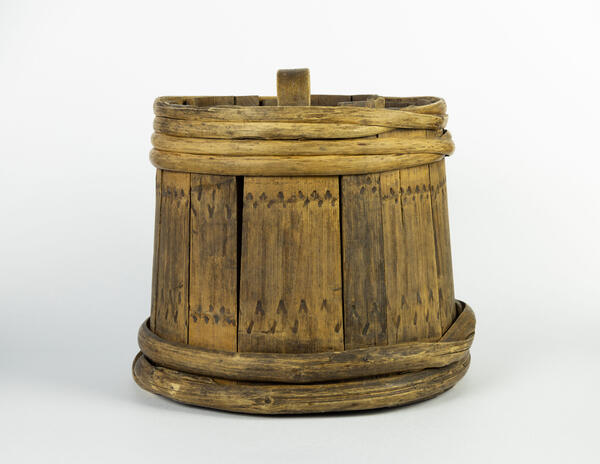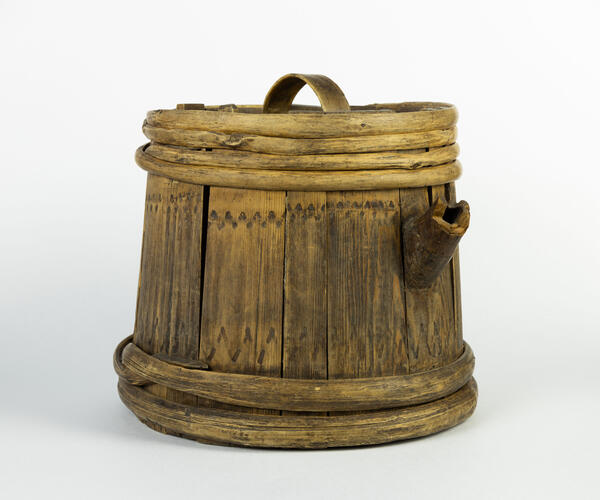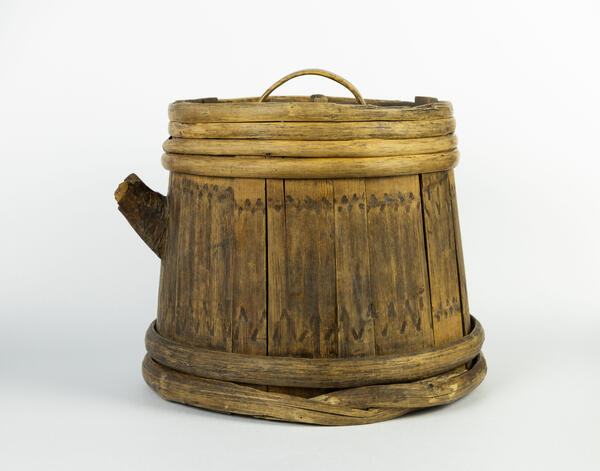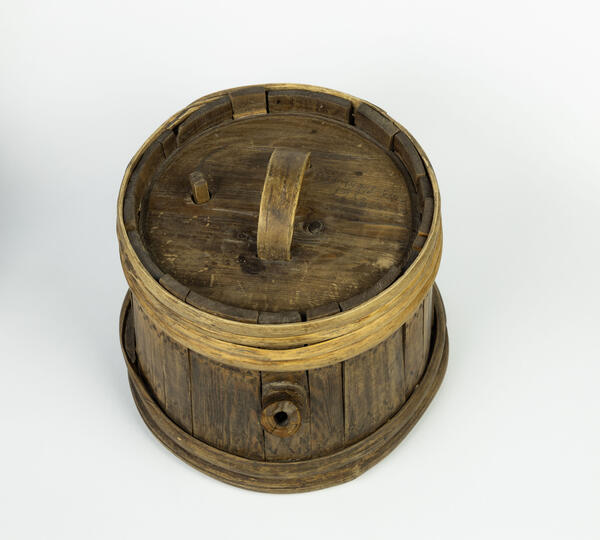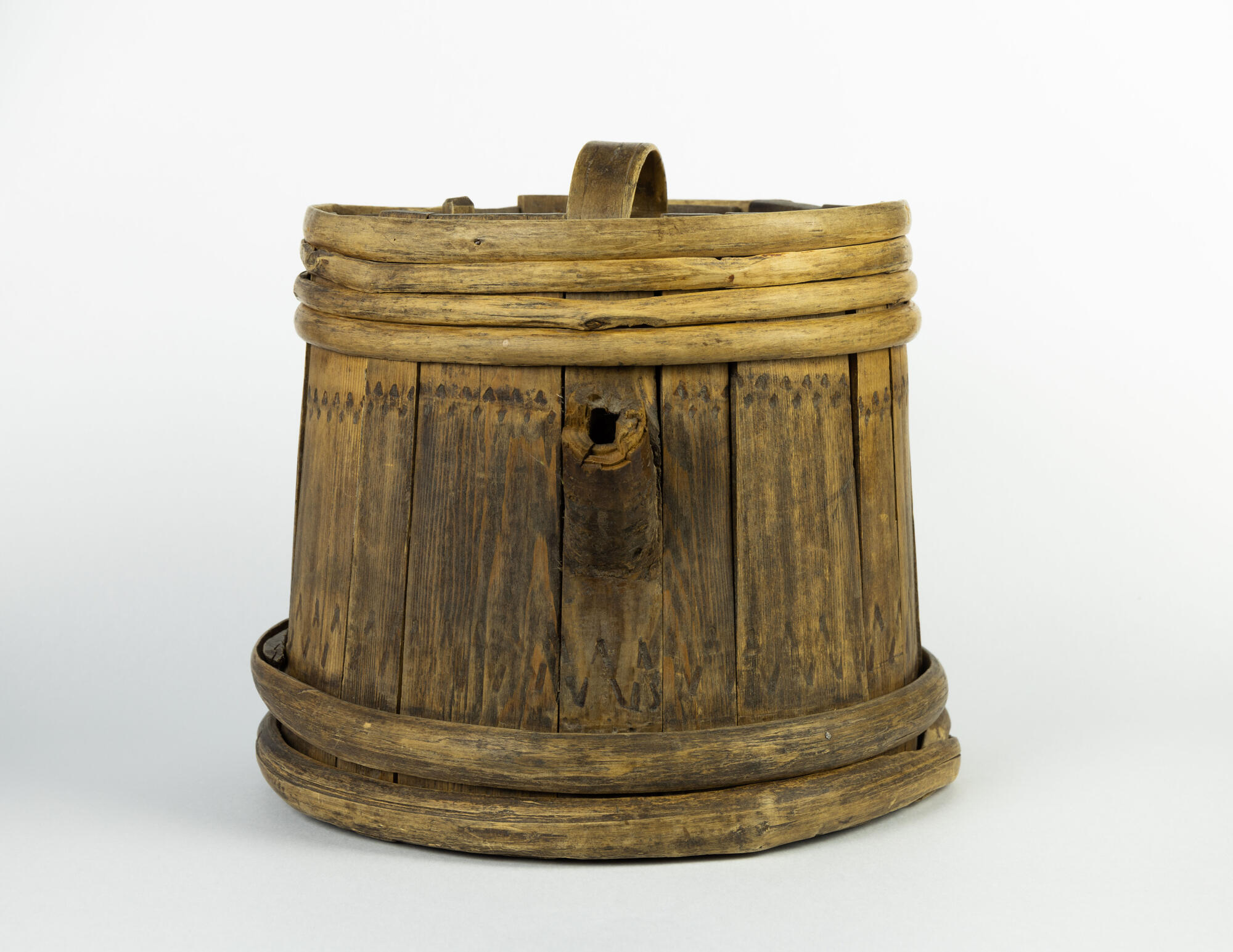


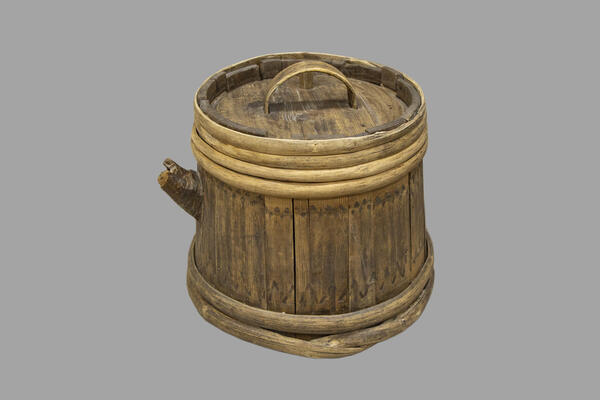
A keg, or a zhban in Russian, is a wooden vessel for liquid with a tight lid and handle. This word was first recorded in Rus around the 12th century. The vessel is distinguished from other types of cooperage products by a small spout. There is a hole in the lid of the keg, which was closed with a wooden cork. If the cork was in place, the keg was airtight, and when it was removed, the liquid could be easily poured into mugs.
A cooper is a person trained to make wooden items from timber — long trapezoidal or rounded staves. The Udmurts mastered this craft ages ago, turning the manufacture of kegs, buckets, washtubs, vessels for bathhouses, and tubs with handles into a true form of art. The cooper’s skill is still in demand, mainly in terms of making wooden barrels.
The beer keg from the exhibition of the Glazov Museum of Local Lore was made by hand in the early 20th century in the Vyatka Governorate. Along the upper and lower circumference, it is decorated with zigzag patterns that symbolize the liquid. The Northern Udmurts used such a keg until the middle of the 20th century and called it “sur bekche” — a beer barrel. Sur is Udmurt beer, a sweet and thick low-alcohol drink that quenched thirst well. It was brewed using malt and hops and drank on holidays. The keg perfectly preserved the temperature of the drink and kept it fresh. People kept these kegs at home or brought them on the road when they called on neighbors. Kvass and wine were also stored in jars.
The best wood for cooperage is oak. It splits well, becomes malleable after steaming and can be stored for a long time. However, oak is not common in the territory of Udmurtia, so spruce, fir or birch were used for the manufacture of cooperage products. Using an axe and other carpentry tools, the cooper joined the staves, whittling them and fitting them to each other with the help of special wood joint. The bottom parts were fastened with hoops of withies. Malleable, thin trunks of cherry or willow, as well as young pine roots, were usually used for the hoops. Coopers also used the bark of linden, willow, elm, maple and hazel.
A cooper is a person trained to make wooden items from timber — long trapezoidal or rounded staves. The Udmurts mastered this craft ages ago, turning the manufacture of kegs, buckets, washtubs, vessels for bathhouses, and tubs with handles into a true form of art. The cooper’s skill is still in demand, mainly in terms of making wooden barrels.
The beer keg from the exhibition of the Glazov Museum of Local Lore was made by hand in the early 20th century in the Vyatka Governorate. Along the upper and lower circumference, it is decorated with zigzag patterns that symbolize the liquid. The Northern Udmurts used such a keg until the middle of the 20th century and called it “sur bekche” — a beer barrel. Sur is Udmurt beer, a sweet and thick low-alcohol drink that quenched thirst well. It was brewed using malt and hops and drank on holidays. The keg perfectly preserved the temperature of the drink and kept it fresh. People kept these kegs at home or brought them on the road when they called on neighbors. Kvass and wine were also stored in jars.
The best wood for cooperage is oak. It splits well, becomes malleable after steaming and can be stored for a long time. However, oak is not common in the territory of Udmurtia, so spruce, fir or birch were used for the manufacture of cooperage products. Using an axe and other carpentry tools, the cooper joined the staves, whittling them and fitting them to each other with the help of special wood joint. The bottom parts were fastened with hoops of withies. Malleable, thin trunks of cherry or willow, as well as young pine roots, were usually used for the hoops. Coopers also used the bark of linden, willow, elm, maple and hazel.