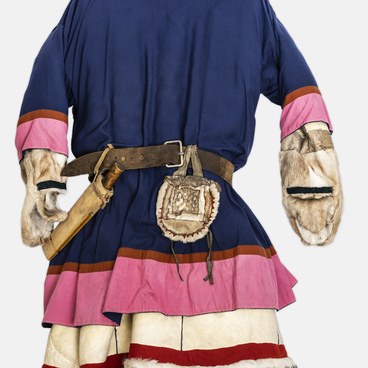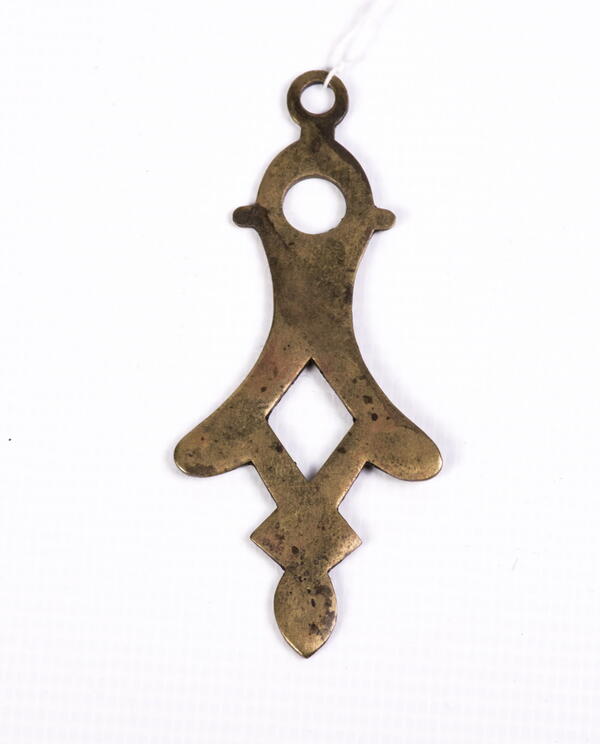
Jewelry has always been an important element of traditional women’s and men’s clothing in various cultures. The indigenous peoples of the North used cast copper and brass figurines to decorate clothing, cult objects, houses, reindeer harnesses, and the main means of transportation — sleds. The Khanty revered metal as a pure material and presented it as sacrificial offerings to their deities.
The demand for sewn-on and suspended plates, chains, and bells was so great that it gave rise to a trade of its own. In Siberia and the European North, workshops emerged that smelted copper and produced plates and jewelry based on the designs of the indigenous peoples of the North.
Although cast plates were produced in large quantities, they were still expensive. Jewelry was paid for in furs — sable, squirrel, marten, and fox. Customers were willing to dip into their pockets because chains, plates, and bells were worn not only for adornment but also for protection against evil spirits. The ringing of metal was traditionally believed to protect its wearer from evil forces.
Copper jewelry in braids also served as amulets and talismans. Eastern Khanty women braided ribbons into their hair. Such ribbons ended with three bead strings and ancient bronze tags. A Northern Khanty bride was supposed to have two sets of jewelry for braids: a small one for everyday use and another one with a metal pendant that was worn on festive occasions, on journeys, and when receiving guests.
Bells were also used in the main Khanty ritual — the bear games. Bells were used to announce the end of a song and were tied to sacred utensils, such as hats, robes, and special frames. When performing sacred dances, bells were attached to the elbows, the cap, or the scarf on the back.
Copper jewelry was handed down from generation to generation as family heirlooms. Thanks to this, some items have survived to this day. The shapes of copper plates usually imitated silhouettes of plants or allegorically depicted animals.