There is a lot of meaning in a small hat that fits on top of the head. Just like a mosque dome, a tubeteika represents the vault of heaven under which a person is born, lives and dies. In the East, the form and symbolism of this headdress pervades all spheres of life: a yurt is a tubeteika enlarged hundreds of times; a bowl that is used to drink tea and a “kasa” — the traditional deep dish for food or liquid — are dome-shaped. The design of a tubeteika is also symbolical — most often the headdress consists of four wedges, and each wedge represents a certain period of a person’s life: childhood, adolescence, young and old age.
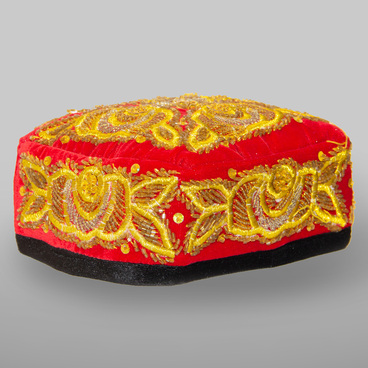
A tubeteika is a headdress worn by both men and women. Men’s tubeteikas were usually made from black sateen or velvet. Women’s tubeteikas were sewn from silk, velvet, and brocade. They could have a high or low rim, be trimmed with a monochromatic or multi-color border made of other fabrics, embroidered with silk, beads, as well as metalized thread, glass beads, and metal overlays. The embroidery on the men’s headdress is usually made in two or three colors, and the patterns on women’s tubeteikas have a richer color scheme.
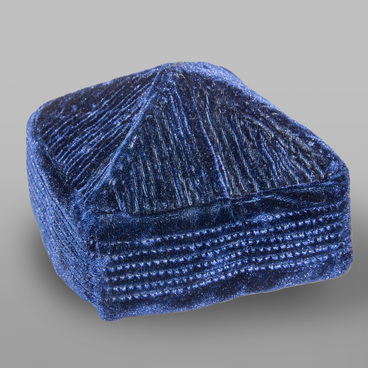
Each embroiderer has her own secrets of the craft, but her work always reflects local traditions. From the patterns embroidered in gold and silver, it is easy to determine where the tubeteika has been made: such tubeteikas are called gold-embroidered Bukhara ones. Gold and silver signify the wearer’s high status or the special importance of the occasion on which the headdress is worn. In the north of Tajikistan, men wear square tubeteikas, and in the south and east — round ones. The square signifies the four elements or the four seasons, and the circle symbolizes the shape of the sun. In the Pamirs, many patterns have been preserved since the time of Zoroastrianism. The pattern on top of the tubeteika means the sun, the patterns on the sides protect from the evil eye.
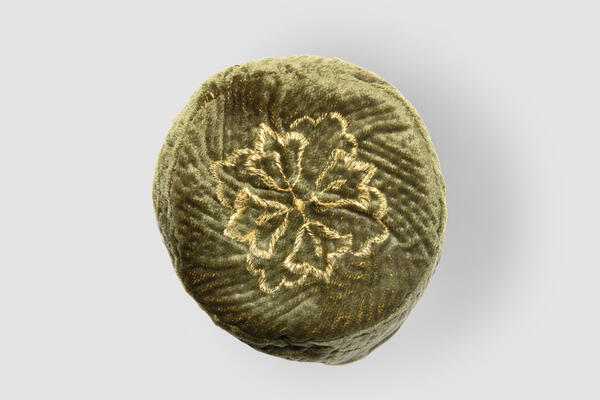
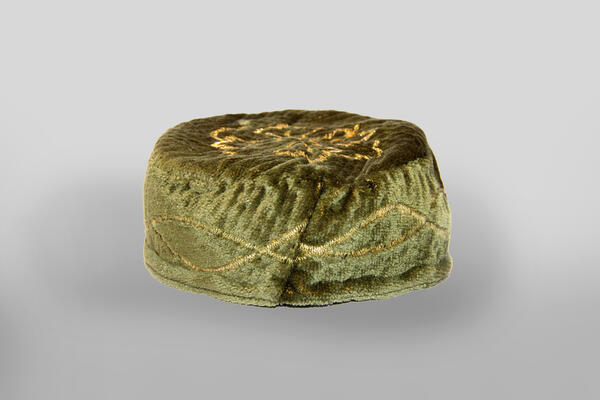
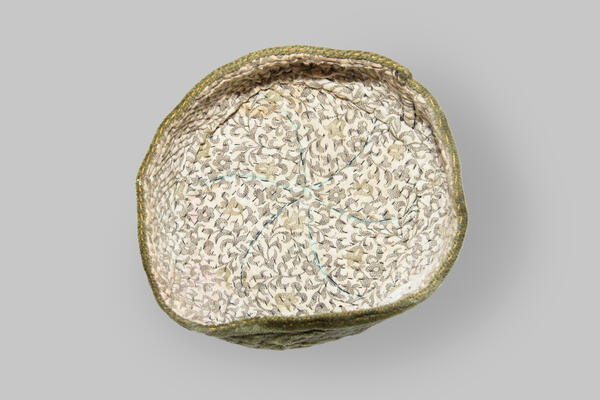
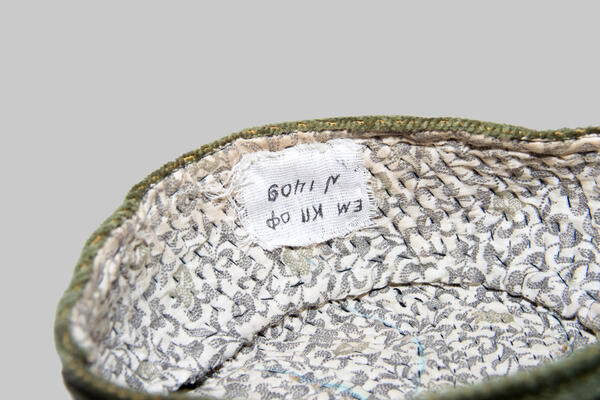
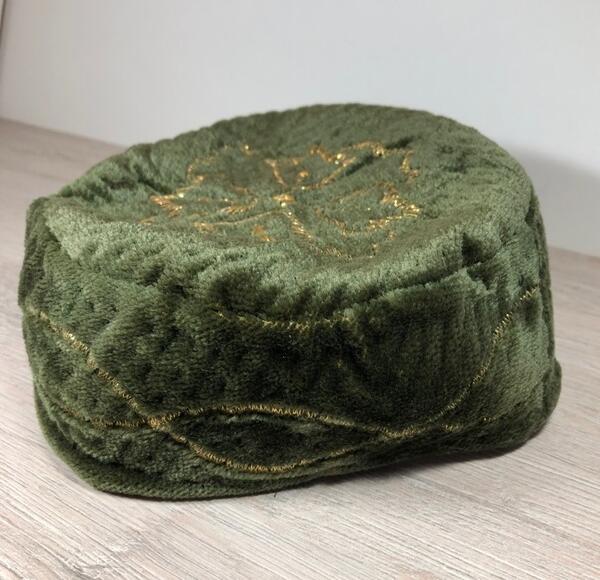
The museum displays a green men’s tubeteika. It is trimmed with a wavy pattern embroidered in yellow. The upper part is decorated with a floral pattern. The tubeteika is lined with a yellow-gray fabric.
A tubeteika is a headdress worn by both men and women. Men’s tubeteikas were usually made from black sateen or velvet. Women’s tubeteikas were sewn from silk, velvet, and brocade. They could have a high or low rim, be trimmed with a monochromatic or multi-color border made of other fabrics, embroidered with silk, beads, as well as metalized thread, glass beads, and metal overlays. The embroidery on the men’s headdress is usually made in two or three colors, and the patterns on women’s tubeteikas have a richer color scheme.
Each embroiderer has her own secrets of the craft, but her work always reflects local traditions. From the patterns embroidered in gold and silver, it is easy to determine where the tubeteika has been made: such tubeteikas are called gold-embroidered Bukhara ones. Gold and silver signify the wearer’s high status or the special importance of the occasion on which the headdress is worn. In the north of Tajikistan, men wear square tubeteikas, and in the south and east — round ones. The square signifies the four elements or the four seasons, and the circle symbolizes the shape of the sun. In the Pamirs, many patterns have been preserved since the time of Zoroastrianism. The pattern on top of the tubeteika means the sun, the patterns on the sides protect from the evil eye.
The museum displays a green men’s tubeteika. It is trimmed with a wavy pattern embroidered in yellow. The upper part is decorated with a floral pattern. The tubeteika is lined with a yellow-gray fabric.