
As a device for generating flame, a lighter was invented a long time ago, long before matches. One of the first lighters was designed by the genius Leonardo da Vinci. However, it was a giant mechanism made up of numerous springs, levers, gear wheels, and chains leading to a flint, and it looked quite scary. This is why this device was never adopted on a large scale.
On the bright side, da Vinci used the same mechanism to develop a wheel-lock for firearms. A spark that was necessary to ignite gunpowder was generated by a spinning ribbed wheel. This invention was adopted widely during the inventor’s lifetime.
The next stage in the invention of a lighter is related to the name of the German chemist Johann Wolfgang Döbereiner who was born in the late 18th century. In 1823, he invented the first hydrogen-based tabletop lighter. Instead of the steel and flint, it used oxygen to heat platinum particles and ignite hydrogen. The lighter produced a high-quality and gentle flame. However, if treated carelessly, it could occasionally blow up.
In 1867, the Cartier company patented the first lighter imitating the design of flintlock mechanisms. Although explosion-proof, it was too cumbersome.
A real breakthrough in the development of safe and compact lighters was achieved by the Austrian chemist Carl Auer von Welsbach in 1903. He identified the best alloy for a fire striker by combining iron and cerium. The technology has been used to this day.
In Imperial Russia, gasoline lighters were particularly popular. Various models of such devices were produced. Their development advanced swiftly during World War I. This was also when lighters became widespread among Don Cossacks.
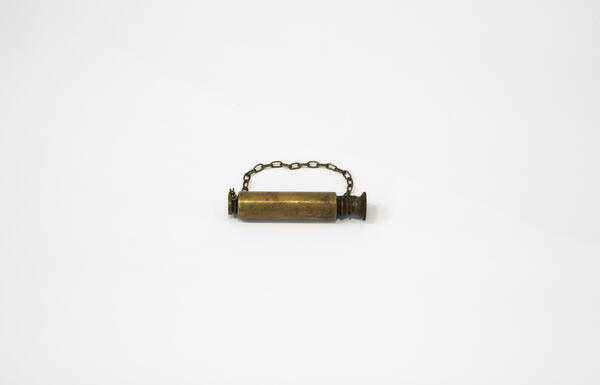
By that time, most soldiers had switched to cigarettes and needed a convenient method of lighting them. The design of the first lighters was based on cartridge cases made of copper and brass.
At the end of the 19th century, the entrepreneur Vasily Cornel founded an electromechanical plant in Moscow which supplied components for telegraph services and the railway. The plant also produced lighters. The plant’s advertising catalog for 1913 features a lighter similar to the one from the museum’s collection. It was listed under No. 9 as a “Cartridge with a wheel” in the category of “first-class cigarette lighters”.
On the bright side, da Vinci used the same mechanism to develop a wheel-lock for firearms. A spark that was necessary to ignite gunpowder was generated by a spinning ribbed wheel. This invention was adopted widely during the inventor’s lifetime.
The next stage in the invention of a lighter is related to the name of the German chemist Johann Wolfgang Döbereiner who was born in the late 18th century. In 1823, he invented the first hydrogen-based tabletop lighter. Instead of the steel and flint, it used oxygen to heat platinum particles and ignite hydrogen. The lighter produced a high-quality and gentle flame. However, if treated carelessly, it could occasionally blow up.
In 1867, the Cartier company patented the first lighter imitating the design of flintlock mechanisms. Although explosion-proof, it was too cumbersome.
A real breakthrough in the development of safe and compact lighters was achieved by the Austrian chemist Carl Auer von Welsbach in 1903. He identified the best alloy for a fire striker by combining iron and cerium. The technology has been used to this day.
In Imperial Russia, gasoline lighters were particularly popular. Various models of such devices were produced. Their development advanced swiftly during World War I. This was also when lighters became widespread among Don Cossacks.
By that time, most soldiers had switched to cigarettes and needed a convenient method of lighting them. The design of the first lighters was based on cartridge cases made of copper and brass.
At the end of the 19th century, the entrepreneur Vasily Cornel founded an electromechanical plant in Moscow which supplied components for telegraph services and the railway. The plant also produced lighters. The plant’s advertising catalog for 1913 features a lighter similar to the one from the museum’s collection. It was listed under No. 9 as a “Cartridge with a wheel” in the category of “first-class cigarette lighters”.