

#1
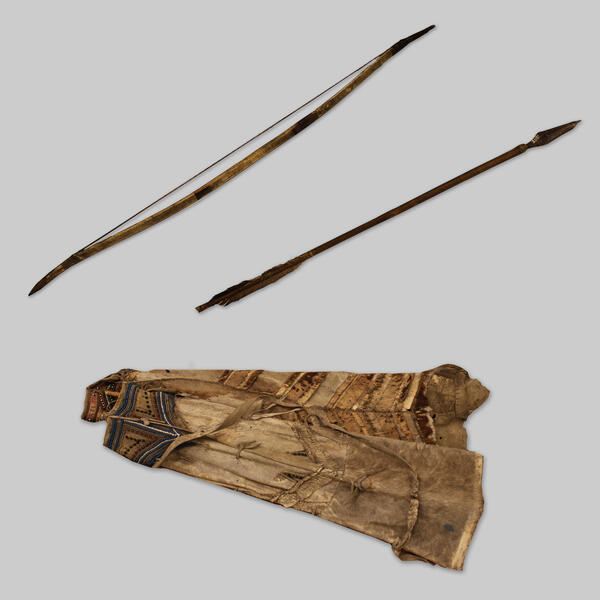
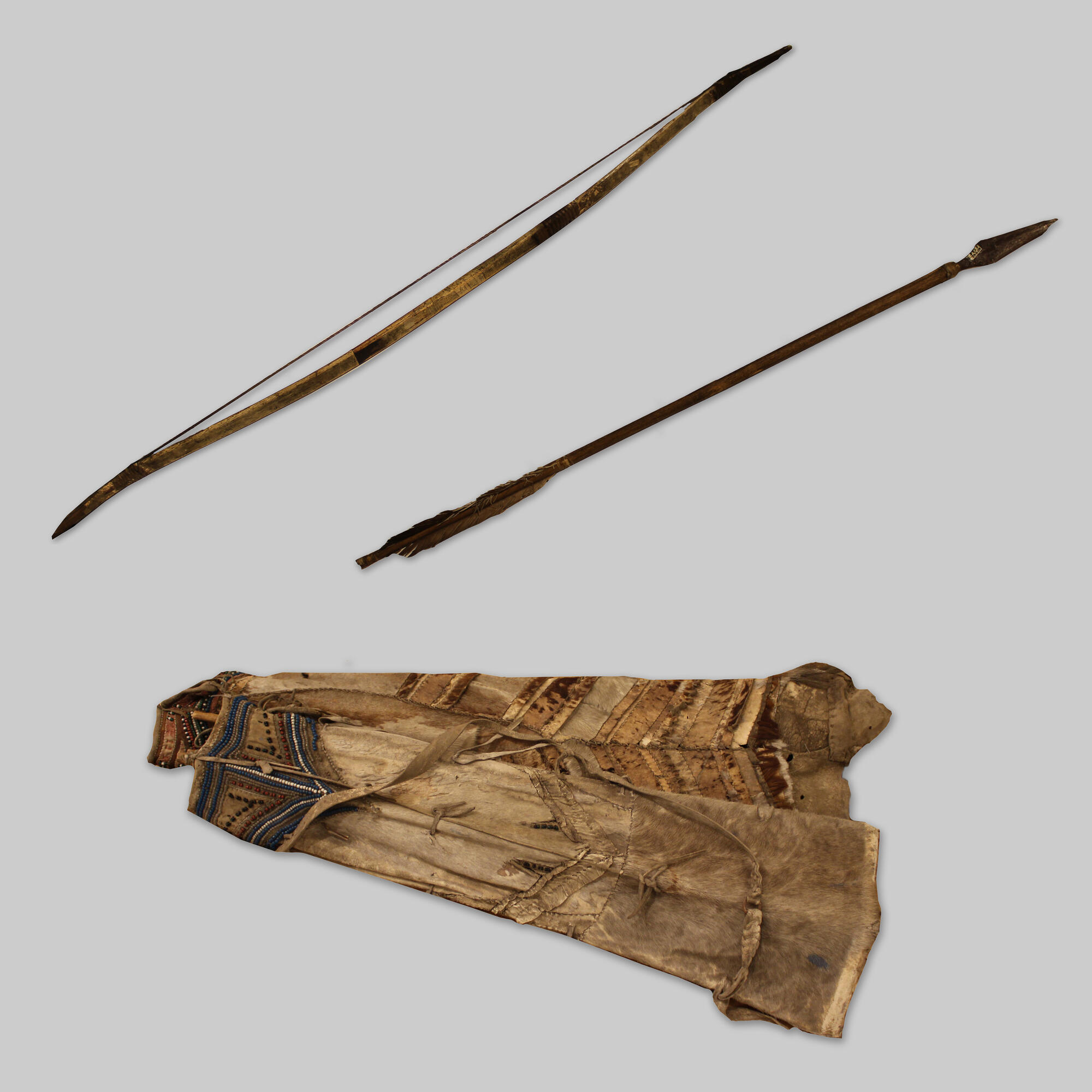
Ostyak hunting bow, Metal-tipped hunting arrow, Arrow quivers are made of deer skin with fur trim, embroidered with beads
#2
#11
#5
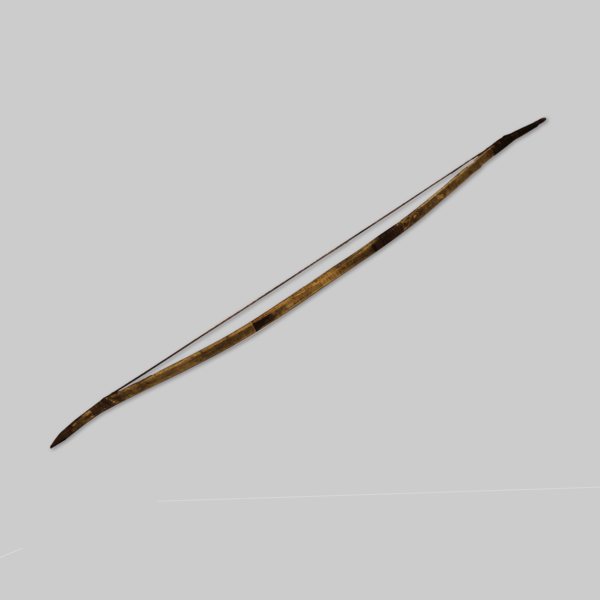
The people of the north had two types of bows — simple and complex. The simple one was a flexible, arched shaft that was cut from a piece of coniferous or deciduous wood. The ends of the shaft were tied together with a grass string. Complex bow consisted of several parts, and each of them had its own name: the middle of the shaft was called the handle, the ends were called fingers, the joints of the parts were knots, and the long elastic parts between the handle and the ends were called horns or shoulders. The simple bow was usually longer, but lighter than a complex one.
The showpiece presented at the museum refers to a simple type of bow. To make it from a chunk, the carved shaft was soaked in water and then shaped. A string made of strong grass was attached to the ends of the bow. The joints were fixed, and the bow was covered with thin strips of birch bark — to prevent it from moisture. Most often, sturgeon or pike glue was used for pasting.
Making a complex bow took a lot more time, resources and skill. The backrest was made of durable resinous coniferous wood. The blanks were dried for two or three days, cut with an ax, shaped into planks and bent on a wooden arch. To preserve their shape, they were soaked in cedar resin — heated over a fire and rubbed in the resin until it stopped being absorbed. Then the planks were cleaned of excess resin, tied with a cedar root (sargi) and glued.
The bound billets were dried for another day, after which fingers made from bird cherry bars were glued to them. The joints were firmly fastened with a solid coil of tendon threads. All the bows were tied with a sarga and dried, then scraped with a knife, pasted over with birch bark boiled in fish glue and dried again. The weapons were reinforced with bone and horn pads on the ends and on the handle. Sometimes the bow was ornamented with ownership marks.
Ket bows and arrows for hunting animals and birds were famous at North Yenisey and were the subject of exchange. For successful hunting, in addition to skill and an exceptional bow, according to beliefs, it was necessary to wear an amulet made of the skin of a piebald squirrel. In 1920, the bow as the main type of weapon was used only in a third of the Ket households. Modern methods of hunting had already supplanted in the 1930s.
The showpiece presented at the museum refers to a simple type of bow. To make it from a chunk, the carved shaft was soaked in water and then shaped. A string made of strong grass was attached to the ends of the bow. The joints were fixed, and the bow was covered with thin strips of birch bark — to prevent it from moisture. Most often, sturgeon or pike glue was used for pasting.
Making a complex bow took a lot more time, resources and skill. The backrest was made of durable resinous coniferous wood. The blanks were dried for two or three days, cut with an ax, shaped into planks and bent on a wooden arch. To preserve their shape, they were soaked in cedar resin — heated over a fire and rubbed in the resin until it stopped being absorbed. Then the planks were cleaned of excess resin, tied with a cedar root (sargi) and glued.
The bound billets were dried for another day, after which fingers made from bird cherry bars were glued to them. The joints were firmly fastened with a solid coil of tendon threads. All the bows were tied with a sarga and dried, then scraped with a knife, pasted over with birch bark boiled in fish glue and dried again. The weapons were reinforced with bone and horn pads on the ends and on the handle. Sometimes the bow was ornamented with ownership marks.
Ket bows and arrows for hunting animals and birds were famous at North Yenisey and were the subject of exchange. For successful hunting, in addition to skill and an exceptional bow, according to beliefs, it was necessary to wear an amulet made of the skin of a piebald squirrel. In 1920, the bow as the main type of weapon was used only in a third of the Ket households. Modern methods of hunting had already supplanted in the 1930s.
#6
Date: XVII–XVIII centuries
Technique: wood, glue
Place: Yeniseysk district
Dimensions: 177×3 cm
Collection: Yenisei Museum of Local Lore, History and Economy named after Alexander Ignatievich Kytmanov, Yeniseisk, Krasnoyarsk Territory
Copyright: Yenisei Museum of Local Lore, History and Economy named after Alexander Ignatievich Kytmanov, Yeniseisk, Krasnoyarsk Territory
Technique: wood, glue
Place: Yeniseysk district
Dimensions: 177×3 cm
Collection: Yenisei Museum of Local Lore, History and Economy named after Alexander Ignatievich Kytmanov, Yeniseisk, Krasnoyarsk Territory
Copyright: Yenisei Museum of Local Lore, History and Economy named after Alexander Ignatievich Kytmanov, Yeniseisk, Krasnoyarsk Territory
#3
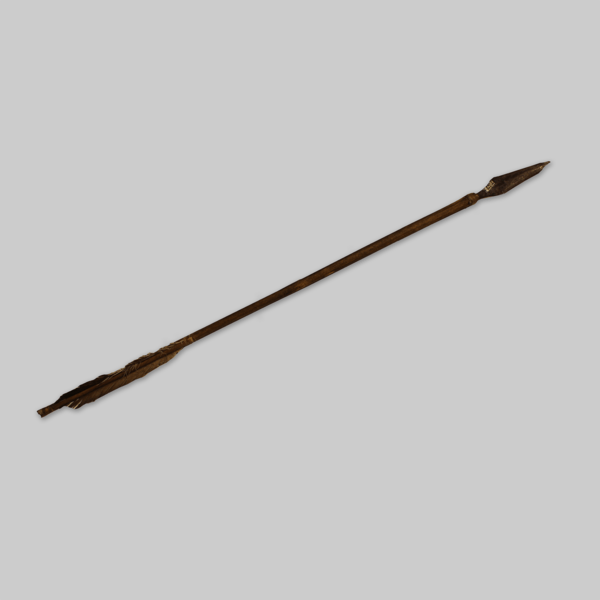
Metal-tipped hunting arrow
#12
#7
The basis of hunting of Ket — a small indigenous people of the Krasnoyarsk territory — at the end of the XIX century was the fur trade, which had a commercial value. An equally important role was played by the extraction of large ungulates, forest and waterfowl-along together with fishing, this was the main source of food.
The Ket bow was famous throughout the North of Yenisey and was an object of exchange with others — it was valued for its unique fighting qualities. In addition, it remained the main tool for hunting for longer than all other Northern peoples — it was used for all types of animals and birds until the 1930s.
Bows were glued together from different types of wood — birch, larch and cherry. The bowstring was made from animal tendons or plant fibers. Both the bow and string were covered with thin birch bark to protect them from moisture.
Arrows with a length of 62 to 80 cm come with three types of tips. The first type is characterized by an iron tip of various shapes and sizes — such arrows are intended for hunting fish, foxes, otters, geese, loons. When hunting ducks, arrows with a spear-shaped end or a small pitchfork at the end are used. Arrows of the second type — without an iron tip and with a blunt thickening made of bone are suitable for hunting squirrels and capercaillies. The third type — arrows with a tip inside which is empty in thickness. When flying, it emits a whistle similar to that of a hawk, which hares and ducks are afraid of. For this feature, it is called ‘hawk-arrow’ or ‘Whistler-arrow’.
All the arrows had eagle feathers — they determined the direction. The projectile could fly at 120-150 paces, but at this distance, hitting the target was out of the question. However, if the arrow was shot into a dense flock of birds, the shot was usually successful. If necessary, the Kets smeared the tip with fish venom, so that even a small injury to the prey made the hunt effective.
Generally, archery is not a difficult task, but hitting the target can be difficult. Therefore, the Kets taught their children into this type of weapon from an early age — they made their own small bow from spruce.
The Ket bow was famous throughout the North of Yenisey and was an object of exchange with others — it was valued for its unique fighting qualities. In addition, it remained the main tool for hunting for longer than all other Northern peoples — it was used for all types of animals and birds until the 1930s.
Bows were glued together from different types of wood — birch, larch and cherry. The bowstring was made from animal tendons or plant fibers. Both the bow and string were covered with thin birch bark to protect them from moisture.
Arrows with a length of 62 to 80 cm come with three types of tips. The first type is characterized by an iron tip of various shapes and sizes — such arrows are intended for hunting fish, foxes, otters, geese, loons. When hunting ducks, arrows with a spear-shaped end or a small pitchfork at the end are used. Arrows of the second type — without an iron tip and with a blunt thickening made of bone are suitable for hunting squirrels and capercaillies. The third type — arrows with a tip inside which is empty in thickness. When flying, it emits a whistle similar to that of a hawk, which hares and ducks are afraid of. For this feature, it is called ‘hawk-arrow’ or ‘Whistler-arrow’.
All the arrows had eagle feathers — they determined the direction. The projectile could fly at 120-150 paces, but at this distance, hitting the target was out of the question. However, if the arrow was shot into a dense flock of birds, the shot was usually successful. If necessary, the Kets smeared the tip with fish venom, so that even a small injury to the prey made the hunt effective.
Generally, archery is not a difficult task, but hitting the target can be difficult. Therefore, the Kets taught their children into this type of weapon from an early age — they made their own small bow from spruce.
#8
Date: XIX century
Technique: wood, metal, feather
Place: Yeniseysk district
Dimensions: 70×2 cm
Collection: Yenisei Museum of Local Lore, History and Economy named after Alexander Ignatievich Kytmanov, Yeniseisk, Krasnoyarsk Territory
Copyright: Yenisei Museum of Local Lore, History and Economy named after Alexander Ignatievich Kytmanov, Yeniseisk, Krasnoyarsk Territory
Technique: wood, metal, feather
Place: Yeniseysk district
Dimensions: 70×2 cm
Collection: Yenisei Museum of Local Lore, History and Economy named after Alexander Ignatievich Kytmanov, Yeniseisk, Krasnoyarsk Territory
Copyright: Yenisei Museum of Local Lore, History and Economy named after Alexander Ignatievich Kytmanov, Yeniseisk, Krasnoyarsk Territory
#4
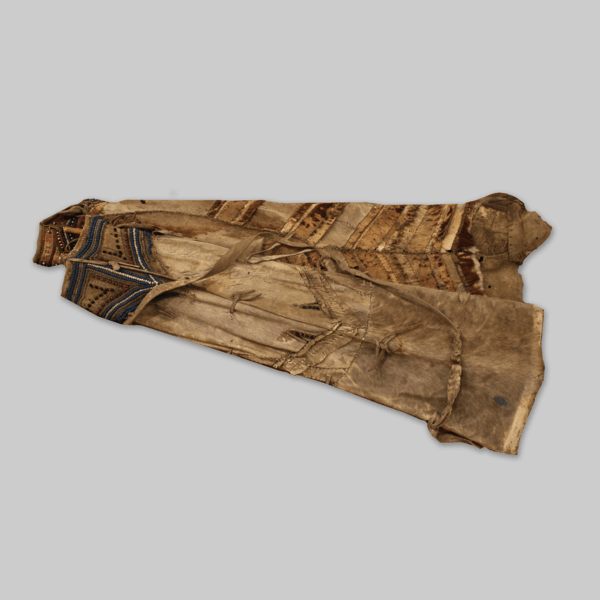
Arrow quivers are made of deer skin with fur trim, embroidered with beads
#13
#9
A quiver — a special case for arrows, which at different times was made of leather, wood, fabric, metal. Many peoples have used the quiver for storing and carrying arrows since the Neolithic era. In the North of the Yeniseysk district, residents made quivers from deer skins, decorated with beads and fabric. The arrows needed to be well balanced, and they had to be well dried and protected from moisture, so both bows and arrows were carried in special cases.
Before the use of the quiver, a shell for arrows served as a case for arrows, which was worn at the waist and was part of the equipment of an archer on foot (tulovets). However, this method of carrying arrows was not suitable for a horse archer, since the arrows became useless due to shaking during the race and it was difficult to get them for shooting at a gallop.
Therefore, the Tul gradually gave way to the quiver borrowed from the Turkic people — a flat leather case with additional ribs or partitions inside prevented the arrows from shaking when jumping. The quiver could have separate external pockets for placing a whip, knife, flail. Sometimes it was worn on top of the so-called Tohtuy — cover for protection from precipitation. The arrows in the quiver were placed with their plumage upward so that they were easy to reach.
During shooting, the archer would take the arrow out of the quiver with his right hand, set the arrowhead forward, holding the arrow shaft with the fingers of his left hand, squeezing the back of the bow, and checked the quality of the arrow (no shavings, roughness, condition of plumage). When he reached the ear of the arrow, he put it on the string with a sharp movement. He would pull the bowstring until the arrowhead reached the thumb of his left hand. Then he would fire a shot.
With the development of firearms, archers gradually disappeared from the armies, and archery became an entertainment as well as sports. In 1900, at the summer Olympics in Paris, the first archery competition was held with arrows for accuracy or range. At the same time, the quiver remained one of the most important accessories for archers.
Before the use of the quiver, a shell for arrows served as a case for arrows, which was worn at the waist and was part of the equipment of an archer on foot (tulovets). However, this method of carrying arrows was not suitable for a horse archer, since the arrows became useless due to shaking during the race and it was difficult to get them for shooting at a gallop.
Therefore, the Tul gradually gave way to the quiver borrowed from the Turkic people — a flat leather case with additional ribs or partitions inside prevented the arrows from shaking when jumping. The quiver could have separate external pockets for placing a whip, knife, flail. Sometimes it was worn on top of the so-called Tohtuy — cover for protection from precipitation. The arrows in the quiver were placed with their plumage upward so that they were easy to reach.
During shooting, the archer would take the arrow out of the quiver with his right hand, set the arrowhead forward, holding the arrow shaft with the fingers of his left hand, squeezing the back of the bow, and checked the quality of the arrow (no shavings, roughness, condition of plumage). When he reached the ear of the arrow, he put it on the string with a sharp movement. He would pull the bowstring until the arrowhead reached the thumb of his left hand. Then he would fire a shot.
With the development of firearms, archers gradually disappeared from the armies, and archery became an entertainment as well as sports. In 1900, at the summer Olympics in Paris, the first archery competition was held with arrows for accuracy or range. At the same time, the quiver remained one of the most important accessories for archers.
#10
Date: XVII–XVIII century
Technique: the skin of a deer, fur, beads
Place: Yeniseysk district
Dimensions: 71×15 cm
Collection: Yenisei Museum of Local Lore, History and Economy named after Alexander Ignatievich Kytmanov, Yeniseisk, Krasnoyarsk Territory
Copyright: Yenisei Museum of Local Lore, History and Economy named after Alexander Ignatievich Kytmanov, Yeniseisk, Krasnoyarsk Territory
Technique: the skin of a deer, fur, beads
Place: Yeniseysk district
Dimensions: 71×15 cm
Collection: Yenisei Museum of Local Lore, History and Economy named after Alexander Ignatievich Kytmanov, Yeniseisk, Krasnoyarsk Territory
Copyright: Yenisei Museum of Local Lore, History and Economy named after Alexander Ignatievich Kytmanov, Yeniseisk, Krasnoyarsk Territory
read morehide
00:00
00:00
1x
Bow, Hunting arrow, Arrow quivers
Collection
Exhibition
2
 Point your smartphone camera to open in the app
Open in app
Share