

#1
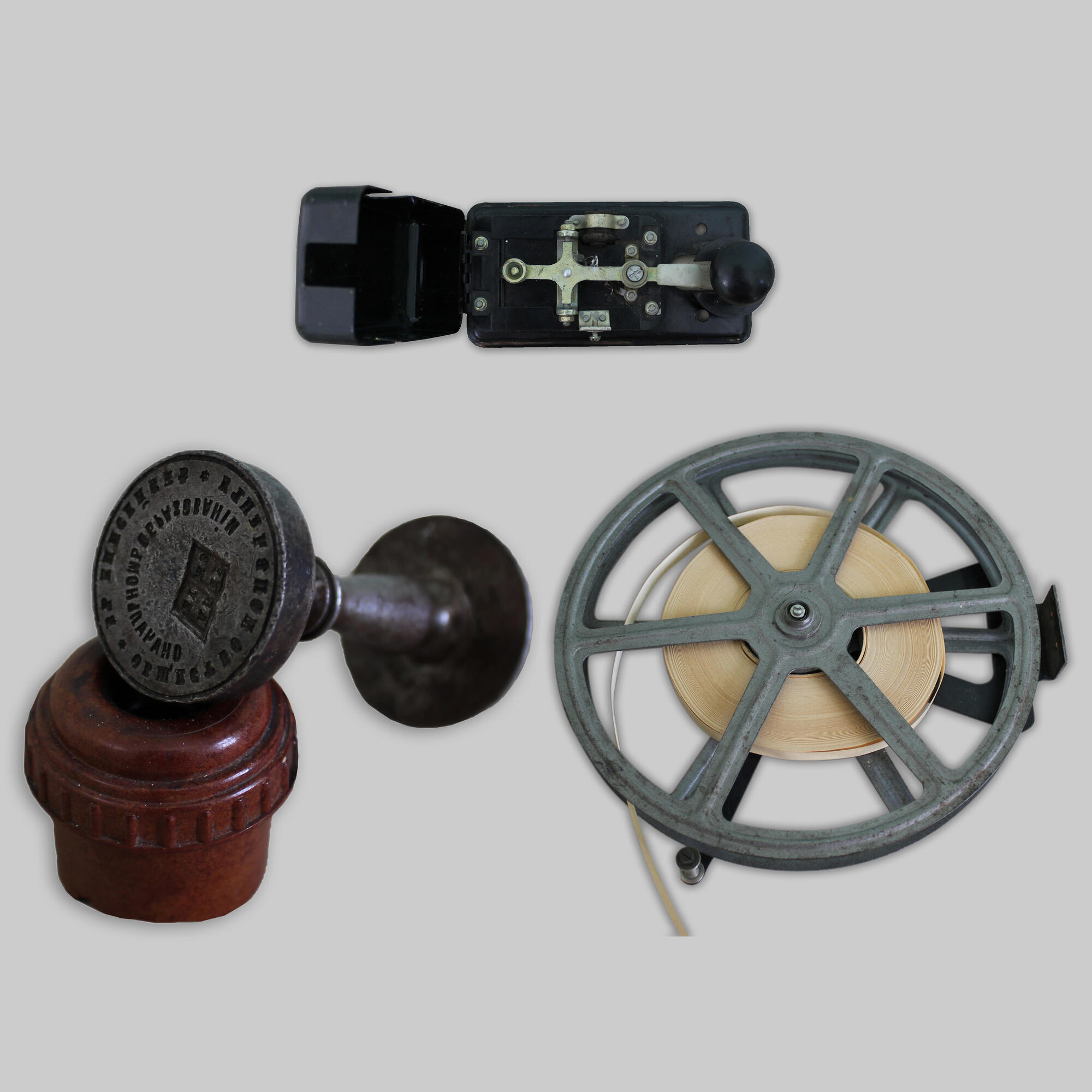
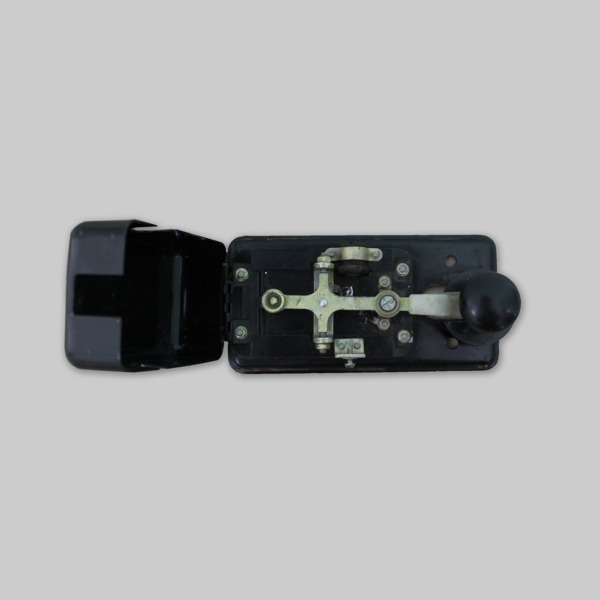
Traditional Telegraph key (Morse key), Wax stamp Of the Society for the Care of Primary Education in Yeniseysk, Reel with paper tape for telegrams transmission
#2
#11
#5
Morse code — a sign encoding method that represents letters, numbers, punctuation marks, and other characters as a sequence of long (‘dash’) and short (‘dot’) signals. The duration of a single point is taken as a unit of time. The length of the dash is equal to three points. Pause between elements of the same sign — one point, between characters in a word — three points between words — seven points. The method is named after the American inventor and artist Samuel Morse.
A traditional telegraph key, or Morse key, is a spring-loaded rocker mounted on a fairly stable base that swings in a vertical plane. By pressing the end of the rocker arm, the operator closes the only electrical contact. The spring tension and the rocker arm stroke are adjustable to provide the operator with comfortable operation. Less common are specimens with a horizontal movement of the rocker arm. There are also keys that have two contacts: one works for closing the circuit, the second simultaneously for opening.
There are several ways to work on a mechanical key. The operator’s hand can rest on the table with the entire forearm, or be supported by the elbow, or suspended. The key is pressed with the movement of the fingers or wrist, with the fingers in different ways on the head of the key. At different times in different countries and departments, one or the other method prevailed, respectively, different keys were used.
Similar keys were used for all types of manual telegraphy. The traditional telegraph key, made of metal and plastic at the beginning of the XX century, was used by employees of the Yeniseysk post and telegraph office.
The ability to work on a mechanical key is considered a basic skill for a radio operator, regardless of how often they will use it in practice. Until recently, for example, in order to obtain an amateur radio license, it was necessary to pass a compulsory examination in the reception of radiograms by ear and transmission on a mechanical key. Now in many countries this requirement has been greatly simplified. The rate of transmission on a mechanical key is low — in practice, rarely more than 100-120 characters per minute are transmitted. Only trained speed athletes work faster.
A traditional telegraph key, or Morse key, is a spring-loaded rocker mounted on a fairly stable base that swings in a vertical plane. By pressing the end of the rocker arm, the operator closes the only electrical contact. The spring tension and the rocker arm stroke are adjustable to provide the operator with comfortable operation. Less common are specimens with a horizontal movement of the rocker arm. There are also keys that have two contacts: one works for closing the circuit, the second simultaneously for opening.
There are several ways to work on a mechanical key. The operator’s hand can rest on the table with the entire forearm, or be supported by the elbow, or suspended. The key is pressed with the movement of the fingers or wrist, with the fingers in different ways on the head of the key. At different times in different countries and departments, one or the other method prevailed, respectively, different keys were used.
Similar keys were used for all types of manual telegraphy. The traditional telegraph key, made of metal and plastic at the beginning of the XX century, was used by employees of the Yeniseysk post and telegraph office.
The ability to work on a mechanical key is considered a basic skill for a radio operator, regardless of how often they will use it in practice. Until recently, for example, in order to obtain an amateur radio license, it was necessary to pass a compulsory examination in the reception of radiograms by ear and transmission on a mechanical key. Now in many countries this requirement has been greatly simplified. The rate of transmission on a mechanical key is low — in practice, rarely more than 100-120 characters per minute are transmitted. Only trained speed athletes work faster.
#6
Date: The first half of the XX century
Technique: metal, plastic
Dimensions: 13×7 cm
Collection: Yenisei Museum of Local Lore, History and Economy named after Alexander Ignatievich Kytmanov, Yeniseisk, Krasnoyarsk Territory
Copyright: Yenisei Museum of Local Lore, History and Economy named after Alexander Ignatievich Kytmanov, Yeniseisk, Krasnoyarsk Territory
Technique: metal, plastic
Dimensions: 13×7 cm
Collection: Yenisei Museum of Local Lore, History and Economy named after Alexander Ignatievich Kytmanov, Yeniseisk, Krasnoyarsk Territory
Copyright: Yenisei Museum of Local Lore, History and Economy named after Alexander Ignatievich Kytmanov, Yeniseisk, Krasnoyarsk Territory
#3
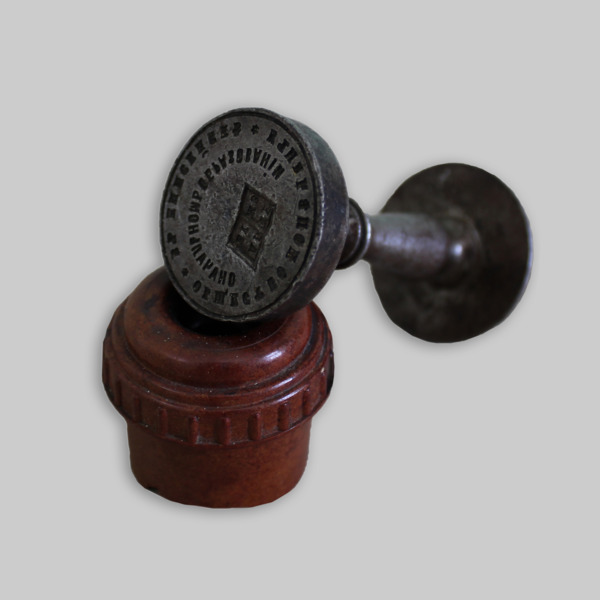
Wax stamp Of the Society for the Care of Primary Education in Yeniseysk
#12
#7
Stamp — one of the simplest tools for verifying the authenticity of documents. The imprint obtained with its help also bears the same name. Stamp on a ring is called a signet ring. For legal purposes, the definition of seal can be expanded to include stamps and even the spelling of special words.
If the impression is made as a relief, with the help pressure on the paper, and has seals at the places where the stamp touches — this is a dry print. In other cases, a liquid or plastic substance such as ink, wax, or sealing wax is used — it usually differs in color from the paper.
Not so long ago, ink or sealing wax seals were applied to letters and parcels to check whether the item was opened after applying the seal. This sealed the item from hacking, and proved that the parcel is not fake and really came from the declared sender. Despite the fact that many documents still require seals to confirm their authenticity, individuals are using this tool less often.
The seal presented in the exhibition was used for approving reports of the Board of the Society for the Care of Primary Education in Yeniseysk, receipts and expenditures in city parochial schools and a women’s Sunday school.
Usually, seals are placed directly on the front side of the document or attached to the document with a cord, tape, or a narrow strip that is not separated from the document. This allows you to ensure authenticity without allowing the seal to be reused. If an attacker tries to open the document, he will under no circumstances be able to preserve the integrity of the imprint.
The auxiliary historical discipline sigillography deals with the study of seals. At first, it was developed as part of diplomacy, and its task was to determine the authenticity of documents. However, archaeologists found more and more seals themselves, as well as imprint on ceramics, so sigillography developed into a whole science that focuses on the classification, chronology, and typification of seals of an archaeological culture, state, or civilization. Among the famous representatives of this field is Nikolai Likhachyov, Russian and Soviet historian, academician of the USSR Academy of Sciences.
If the impression is made as a relief, with the help pressure on the paper, and has seals at the places where the stamp touches — this is a dry print. In other cases, a liquid or plastic substance such as ink, wax, or sealing wax is used — it usually differs in color from the paper.
Not so long ago, ink or sealing wax seals were applied to letters and parcels to check whether the item was opened after applying the seal. This sealed the item from hacking, and proved that the parcel is not fake and really came from the declared sender. Despite the fact that many documents still require seals to confirm their authenticity, individuals are using this tool less often.
The seal presented in the exhibition was used for approving reports of the Board of the Society for the Care of Primary Education in Yeniseysk, receipts and expenditures in city parochial schools and a women’s Sunday school.
Usually, seals are placed directly on the front side of the document or attached to the document with a cord, tape, or a narrow strip that is not separated from the document. This allows you to ensure authenticity without allowing the seal to be reused. If an attacker tries to open the document, he will under no circumstances be able to preserve the integrity of the imprint.
The auxiliary historical discipline sigillography deals with the study of seals. At first, it was developed as part of diplomacy, and its task was to determine the authenticity of documents. However, archaeologists found more and more seals themselves, as well as imprint on ceramics, so sigillography developed into a whole science that focuses on the classification, chronology, and typification of seals of an archaeological culture, state, or civilization. Among the famous representatives of this field is Nikolai Likhachyov, Russian and Soviet historian, academician of the USSR Academy of Sciences.
#8
Date: XIX century
Technique: metal, cast
Place: Yeniseysk city
Dimensions: 7×4 cm
Collection: Yenisei Museum of Local Lore, History and Economy named after Alexander Ignatievich Kytmanov, Yeniseisk, Krasnoyarsk Territory
Copyright: Yenisei Museum of Local Lore, History and Economy named after Alexander Ignatievich Kytmanov, Yeniseisk, Krasnoyarsk Territory
Technique: metal, cast
Place: Yeniseysk city
Dimensions: 7×4 cm
Collection: Yenisei Museum of Local Lore, History and Economy named after Alexander Ignatievich Kytmanov, Yeniseisk, Krasnoyarsk Territory
Copyright: Yenisei Museum of Local Lore, History and Economy named after Alexander Ignatievich Kytmanov, Yeniseisk, Krasnoyarsk Territory
#4
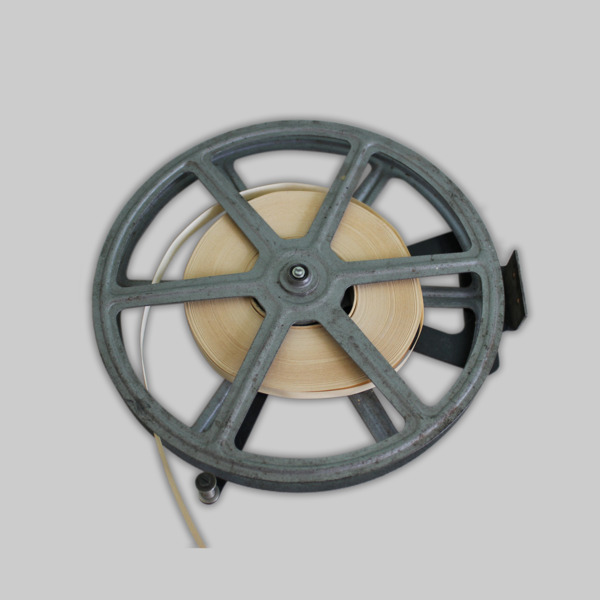
Reel with paper tape for telegrams transmission
#13
#9
The invention of the Telegraph was a huge breakthrough in the field of communication — no wonder it was later combined with the post office and are located in the same building. The main advantage of the telegram was speed, the main disadvantage — a higher rate for forwarding than the letter. Therefore, at first they tried to transmit only the most important and urgent messages by telegram. The text of the telegram was printed on a paper tape, which was then pasted on a blank form. If desired, and for an additional fee, greeting telegrams were glued on corresponding holiday cards.
Before the advent of electric telegraph, the speed of information distribution for most people was limited by the speed of postal services. At one time, many scientists and inventors worked on methods of transmitting it over long distances, including Claude Chappe, Georges — Louis Le Sage, Pavel Schilling, Samuel Morse, Alexander Bain, Alexander Popov and Jean Baudot. In the history of this development up to 1839, there were several dozen different systems — most of them remained on paper, but there were also those that persistently moved to practical use.
Finally, the introduction of the telegraph freed communications from space-time constraints and revolutionized the global economy and public relations. By the end of the XIX century, Telegraph became a common means of communication for ordinary people.
Telegraphy on a global scale has also changed the approach to collecting information for news reports. Messages and information now spread far and wide, and the telegraph demanded the introduction of a language ‘free from local regional and non-literary aspects’.
Thomas Edison in 1869 created one of the earliest implementations of the telegraph — the ticker tape machine. A special typewriter was connected to telegraph wires for connection at the opposite end to a ticker tape machine. The typed text appeared on a narrow continuous paper ribbon at the opposite end of the link. The machine had a printing speed of approximately one character per second. Employees of the Yeniseysk postal and Telegraph office also used such a telegraph tape in their work.
Before the advent of electric telegraph, the speed of information distribution for most people was limited by the speed of postal services. At one time, many scientists and inventors worked on methods of transmitting it over long distances, including Claude Chappe, Georges — Louis Le Sage, Pavel Schilling, Samuel Morse, Alexander Bain, Alexander Popov and Jean Baudot. In the history of this development up to 1839, there were several dozen different systems — most of them remained on paper, but there were also those that persistently moved to practical use.
Finally, the introduction of the telegraph freed communications from space-time constraints and revolutionized the global economy and public relations. By the end of the XIX century, Telegraph became a common means of communication for ordinary people.
Telegraphy on a global scale has also changed the approach to collecting information for news reports. Messages and information now spread far and wide, and the telegraph demanded the introduction of a language ‘free from local regional and non-literary aspects’.
Thomas Edison in 1869 created one of the earliest implementations of the telegraph — the ticker tape machine. A special typewriter was connected to telegraph wires for connection at the opposite end to a ticker tape machine. The typed text appeared on a narrow continuous paper ribbon at the opposite end of the link. The machine had a printing speed of approximately one character per second. Employees of the Yeniseysk postal and Telegraph office also used such a telegraph tape in their work.
#10
Technique: metal, paper
Dimensions: Diameter — 20 cm
Collection: Yenisei Museum of Local Lore, History and Economy named after Alexander Ignatievich Kytmanov, Yeniseisk, Krasnoyarsk Territory
Copyright: Yenisei Museum of Local Lore, History and Economy named after Alexander Ignatievich Kytmanov, Yeniseisk, Krasnoyarsk Territory
Dimensions: Diameter — 20 cm
Collection: Yenisei Museum of Local Lore, History and Economy named after Alexander Ignatievich Kytmanov, Yeniseisk, Krasnoyarsk Territory
Copyright: Yenisei Museum of Local Lore, History and Economy named after Alexander Ignatievich Kytmanov, Yeniseisk, Krasnoyarsk Territory
read morehide
00:00
00:00
1x
Telegraph key, Wax stamp, Reel
Collection
Exhibition
1
 Point your smartphone camera to open in the app
Open in app
Share