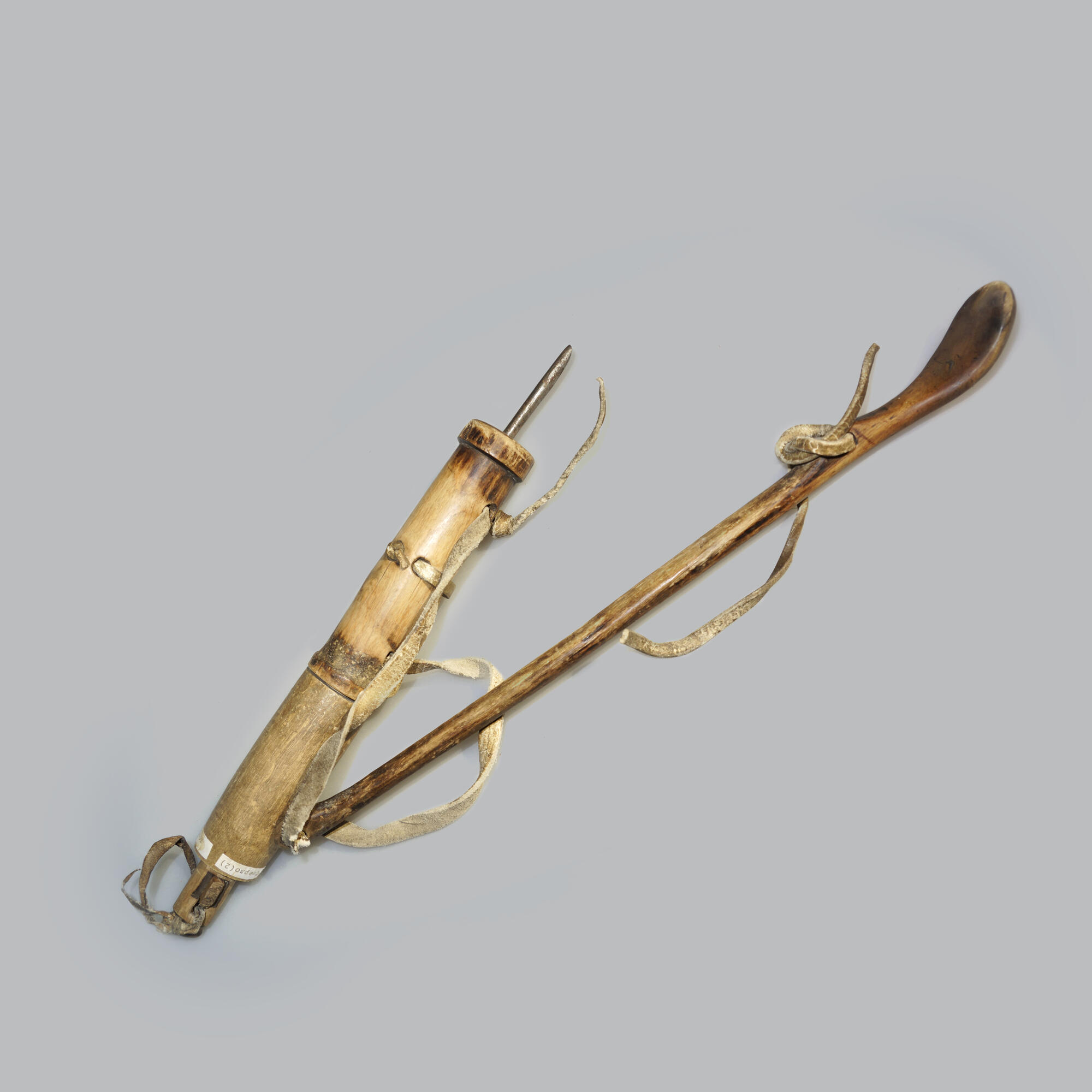


The bow drill, displayed in the museum, was made in 1930 by Ilya Randymov from the village of Kazym in the Beloyarsky district.
The drill consists of a metal working part — a tip, a wooden handle, a leather strap and a bow — a connector. The handle is mounted on a spindle with a rounded end. There are protrusions at both ends and in the middle part of the handle. One of them works as a stop for the tip, the other two — for the cylinder spindle rotating around the narrow upper part of the handle. Three holes are made in the lower part of the handle, through which a hide rope goes, connected to the bow.
When operating, the bow moves, the rope attached to it wraps around the working part, and the drill rotates. The handle is held with the left hand, and the right hand sets the bow in motion.
In the old days, the spindle of a bow drill was made of birch, alder or spruce, and the framework was made exclusively of larch. The metal rod was handmade from an available material. For this, for example, old pitchfork tines or parts of a travois could be used. To increase the durability of the metal after sharpening, the rod was heated, and then immediately cooled by putting it into ice-cold water. To make the edge of the cutting part strong, it was smeared with fish oil, and then heated with a burning piece of birch bark.
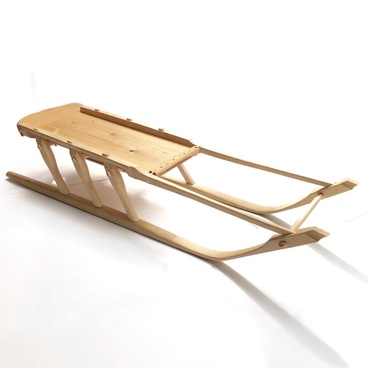
The bow drill was used in many traditional crafts. This small tool was a must-have when making sleds: with its help, holes were made in the stanchions — the bars, which increased the stability of the sleds. The tool was also used to drill holes for pins that adjusted the thickness of the sides and bottom of a wooden boat.
The indigenous peoples of the North made household items on their own, manually, taking into account the needs of a family. For working with wood or processing other hard materials, each master used a personal set of working tools. Every Khanty man, and even many teenagers had an wide range of craft utensils. Children also had miniature copies of carpentry tools.
The drill consists of a metal working part — a tip, a wooden handle, a leather strap and a bow — a connector. The handle is mounted on a spindle with a rounded end. There are protrusions at both ends and in the middle part of the handle. One of them works as a stop for the tip, the other two — for the cylinder spindle rotating around the narrow upper part of the handle. Three holes are made in the lower part of the handle, through which a hide rope goes, connected to the bow.
When operating, the bow moves, the rope attached to it wraps around the working part, and the drill rotates. The handle is held with the left hand, and the right hand sets the bow in motion.
In the old days, the spindle of a bow drill was made of birch, alder or spruce, and the framework was made exclusively of larch. The metal rod was handmade from an available material. For this, for example, old pitchfork tines or parts of a travois could be used. To increase the durability of the metal after sharpening, the rod was heated, and then immediately cooled by putting it into ice-cold water. To make the edge of the cutting part strong, it was smeared with fish oil, and then heated with a burning piece of birch bark.
The bow drill was used in many traditional crafts. This small tool was a must-have when making sleds: with its help, holes were made in the stanchions — the bars, which increased the stability of the sleds. The tool was also used to drill holes for pins that adjusted the thickness of the sides and bottom of a wooden boat.
The indigenous peoples of the North made household items on their own, manually, taking into account the needs of a family. For working with wood or processing other hard materials, each master used a personal set of working tools. Every Khanty man, and even many teenagers had an wide range of craft utensils. Children also had miniature copies of carpentry tools.