

The name ‘barite’ is derived from the ancient Greek βαρύς, ‘heavy’, so the second name of the mineral is ‘heavy spar’. It belongs to the class of sulfates, its chemical formula is BaSO4, and it crystallizes in orthorhombic system.
Barite is considered a whimsical stone, and not without a reason. Given its high density, it is very weighty and fragile at the same time, so it is difficult to facet. The most commonly occurring lamellar and tabular crystals are not amenable to processing, and prismatic and needle-like varieties are rare. Due to its low hardness (only 3.5 on the Mohs scale), the mineral is easily scratched with an ordinary knife.
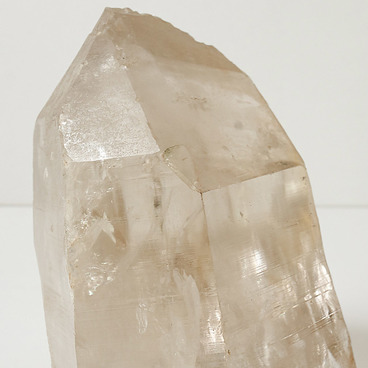
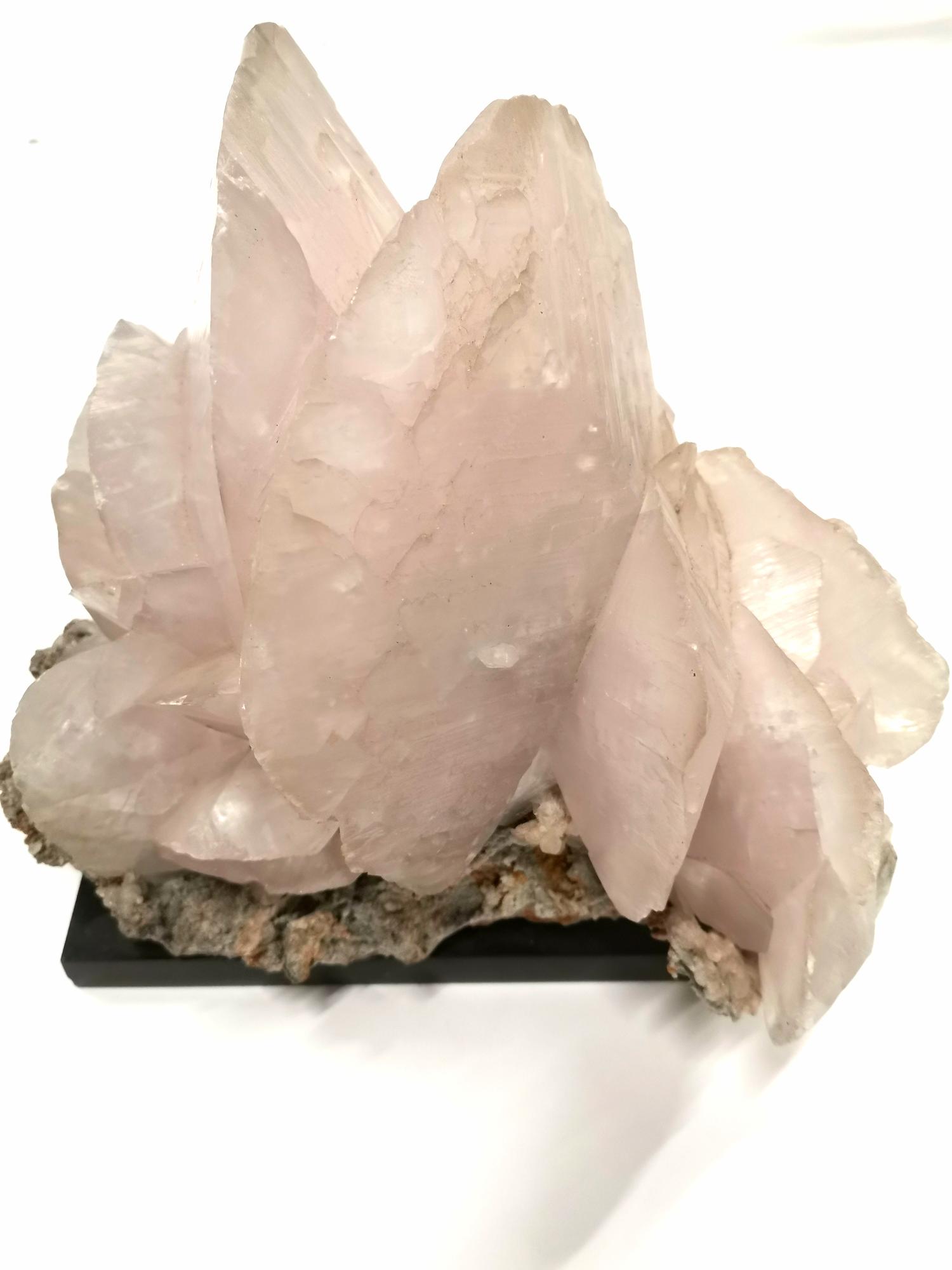
The external appearance of barite is variable. Nature made its varieties completely different from one another. Each sample has its own color, and barites from different mines can vary beyond recognition. This enormous range of shades is due to impurities of lead, iron oxides, sulfides, strontium and calcium. The crystals have a beautiful glass luster.
The mineral turns burner flame yellow-green. Barite powder is soluble in concentrated sulfate acid. If water is added to the solution, muddy sediment will appear. Thermoluminescent specimens will fluoresce and phosphoresce in UV light.
Ancient warriors had piety for barite. A small barite pebble used in a sling turned out to be excellent ammunition due to its impressive weight. So barite brought the first benefit to the man on the battlefield to defeat the enemy.
This mineral was officially discovered in 1640. It was then that Fortunio Liceti from Italy described barite in detail, assigning the name of Bologna stone to it, because the invaluable specimen had been found in Bologna.
We owe the modern name of the mineral to German mineralogist Dietrich Karsten, and we do rejoice that he abandoned the term ‘stangenspat’ in favor of a much more harmonious word.
Barite’s origin is mainly hydrothermal: the mineral is born in the earth’s crust with the participation of hot aqueous solutions. Most of the ore veins are formed in the same way, and the voids in them serve as the birthplace of delightful druses and crystals.
Barite serves as raw material for the production of barium, which is in demand in various industries. Finely ground powder is used as a weighting agent for drilling mud, serving to bond together loose rocks.
Barite is used the chemical industry for the manufacture of ceramic enamel; it is also used to manufacture materials for the leather industry, and in the production of sugar. From transparent crystals, glasses for optics are smelted.
In Russia, the main deposits of barite are Quartzite Sopka in Kemerovo region, Molodezhnoye in Chelyabinsk region and Tolcheinskoye in Khakassia. Commercial production of the mineral is taking place there. There is also Belorechensk ore occurrence in the North Caucasus supplying unique collection samples; however, it turned out to be unprofitable.
Barite is considered a whimsical stone, and not without a reason. Given its high density, it is very weighty and fragile at the same time, so it is difficult to facet. The most commonly occurring lamellar and tabular crystals are not amenable to processing, and prismatic and needle-like varieties are rare. Due to its low hardness (only 3.5 on the Mohs scale), the mineral is easily scratched with an ordinary knife.
The external appearance of barite is variable. Nature made its varieties completely different from one another. Each sample has its own color, and barites from different mines can vary beyond recognition. This enormous range of shades is due to impurities of lead, iron oxides, sulfides, strontium and calcium. The crystals have a beautiful glass luster.
The mineral turns burner flame yellow-green. Barite powder is soluble in concentrated sulfate acid. If water is added to the solution, muddy sediment will appear. Thermoluminescent specimens will fluoresce and phosphoresce in UV light.
Ancient warriors had piety for barite. A small barite pebble used in a sling turned out to be excellent ammunition due to its impressive weight. So barite brought the first benefit to the man on the battlefield to defeat the enemy.
This mineral was officially discovered in 1640. It was then that Fortunio Liceti from Italy described barite in detail, assigning the name of Bologna stone to it, because the invaluable specimen had been found in Bologna.
We owe the modern name of the mineral to German mineralogist Dietrich Karsten, and we do rejoice that he abandoned the term ‘stangenspat’ in favor of a much more harmonious word.
Barite’s origin is mainly hydrothermal: the mineral is born in the earth’s crust with the participation of hot aqueous solutions. Most of the ore veins are formed in the same way, and the voids in them serve as the birthplace of delightful druses and crystals.
Barite serves as raw material for the production of barium, which is in demand in various industries. Finely ground powder is used as a weighting agent for drilling mud, serving to bond together loose rocks.
Barite is used the chemical industry for the manufacture of ceramic enamel; it is also used to manufacture materials for the leather industry, and in the production of sugar. From transparent crystals, glasses for optics are smelted.
In Russia, the main deposits of barite are Quartzite Sopka in Kemerovo region, Molodezhnoye in Chelyabinsk region and Tolcheinskoye in Khakassia. Commercial production of the mineral is taking place there. There is also Belorechensk ore occurrence in the North Caucasus supplying unique collection samples; however, it turned out to be unprofitable.