Font
Color
Graphics
Изображение точки

To see AR mode in action:

1. Install ARTEFACT app for iOS or Android;

2. Find the exhibition «The Music Ark»

3. Push the «Augmented reality» button and point your phone's camera at the exhibit;

Скрыть точки интересаПоказать точки интереса
Показать в высоком качестве

Baroque violin, Alto recorder

Exhibition
0
Open in app
#1

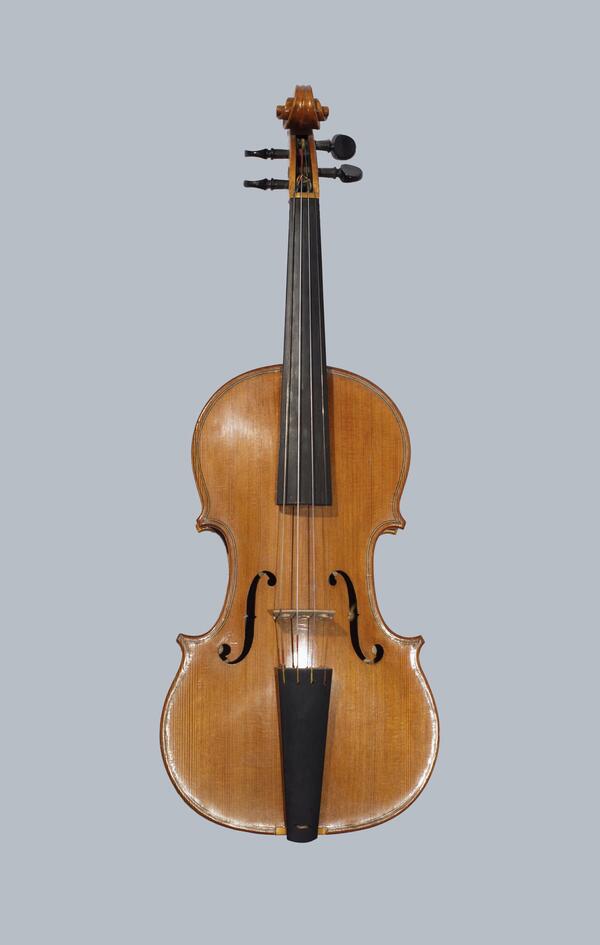
Baroque violin

#3

Nikolaus Harnoncourt, an Austrian writer and pioneer of Historically Informed Performance, wrote,“For the sake of the soloist, the Baroque period broke the barriers imposed on each instrument by nature. Like no other musical instrument, the violin embodies the spirit of the Baroque age.”

The development of the Baroque violin started in the 16thcentury, and different craftsmen designed their own versions of the instrument. The design became fairly consistent only by the 1660s.

In the early 17thcentury, Giovanni Paolo Cima composed his first sonatas for solo violin. Ensemble music gave way to monody — instrumental solo music or singing with instrumental accompaniment. According to Nikolaus Harnoncourt,“music took on the character of a dialog, and all music instructors of the Baroque age demanded, above all, a ‘speaking’ manner of playing.”

The Baroque violin is distinguished from the traditional violin by its thicker and wider fingerboard, shortened at the bottom, as well as the size and appearance of the bass bar and tailpiece. The violin’s “waist” is formed by two concave C-bouts. The instrument does not have a chin rest or bridge; the hair tension is adjusted using a screw mechanism that came into use by the end of the 18thcentury (until then, musicians used “clip-in” models).

Baroque violins were almost always fitted with gut strings, and the bow was typically made from strong snakewood and horsehair. Bows of the early 17thcentury were used interchangeably between violins and viols.

Baroque violin music came into fashion in the 1950s and 1960s. In the absence of old recordings, musicians attempted to learn the techniques of the past centuries based on written sources. This practice is referred to as Historically Informed Performance.

The same time, the middle — second half of the 20thcentury, was marked by an increased demand for authentic instruments. In 1998, Barnaul Music College acquired the displayed instrument for its students to learn to play and use in concerts. The instrument was used at concerts of the “Ars longa” ensemble led by Vladimir Anisimov, an Altai popularizer of music of the 16th–18thcenturies.

The violin, made by the craftsman Victor Nikiforov, was played by Anna Merkulova, a member of the ensemble, a graduate of Barnaul Music College, nowadays recognized as a well-known Russian and Swiss violinist.
#4
Name: Baroque violin
Author: Viktor Nikiforov
Date of creation: 1988
Place of creation: Moscow, the USSR
Technique: wood, lacquer; handmade, carving
Dimensions: 59×21×9 cm, fretboard — 36 cm
№: 8044624
#2
Alto recorder
#7

The recorder has been known since ancient times. One of its oldest analogs is considered to be the quena, the traditional flute of the Andes, known to the Incas. This woodwind instrument is basically a direct descendant of the whistle, equipped with finger holes for changing the pitch.

In the 14thcentury, this instrument with its soft and sweet sound was popular among traveling musicians in present-day England, Germany, the Netherlands, and Poland. They performed songs to the accompaniment of a recorder. During the Renaissance, the recorder continued to be used in folk music. This was also when the first sheet music for the recorder appeared.

During the Baroque period (16th–17thcenturies), the instrument was modified and became known as the Baroque recorder. Composers who wrote sonatas, operas, and oratorios for the recorder include Antonio Vivaldi, George Frideric Handel, Alessandro Scarlatti, and Johann Sebastian Bach.

In the 18thcentury, the transverse flute overtook the recorder in popularity as an instrument with a richer sound and a wider range, and many pieces were rearranged for the flute. Only in the first half of the 20thcentury did the popularity of the ancient instrument begin to revive.

Although rarely heard in classical compositions, the recorder is still used quite widely. Music school students are taught to play the recorder, and the instrument is used in pop and rock music.

These instruments were traditionally made of boxwood, pear, and plum; the most affordable models were more often made of maple, while professional instruments were made of mahogany.

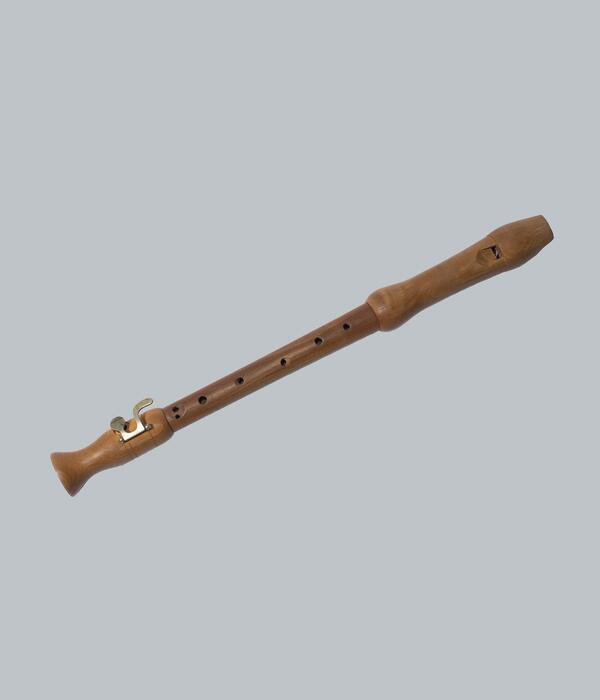
The displayed alto recorder, also known as a treble, allows the musician to play all the notes of the chromatic scale. It is distinguished by a rich sound and its basic scale is in F, ranging from F4 to G6.

In the 1980s, this recorder, as well as other baroque-style instruments, was purchased by Barnaul Music College for both teaching and performing purposes. It was played at concerts of the “Ars longa” ensemble led by the flutist Vladimir Anisimov.

#6
Name: Alto recorder
Date of creation: the 1980s
Place of creation: the USSR
Technique: wood, metal; factory production
Dimensions: 49×1×1 cm
№: 8044629
#5
read morehide

Baroque violin, Alto recorder

Exhibition
0
Point your smartphone camera to open in the app
Share
VkontakteOdnoklassnikiTelegram
Share on my website
Copy linkCopied
Copy
Open in app
To see AR mode in action:
  1. Install ARTEFACT app for 
  2. iOS or Android;
  3. Find and download the «Paintings in Details» exhibition
  4. Push the «Augmented reality» button and point your phone's camera at the painting;
  5. Watch what happens on your phone screen whilst you flip through the pictures.
 
We use Cookies
Cookies on the Artefact Website. We use cookies to ensure that we give you the best experience on our website. If you continue without changing your settings, we'll assume that you are happy to receive all cookies on the Artefact website. However, if you would like to, you can change your cookie settings at any time.
Learn more about useHide
Content is available only in Russian

X

Нашли опечатку?...

%title%%type%