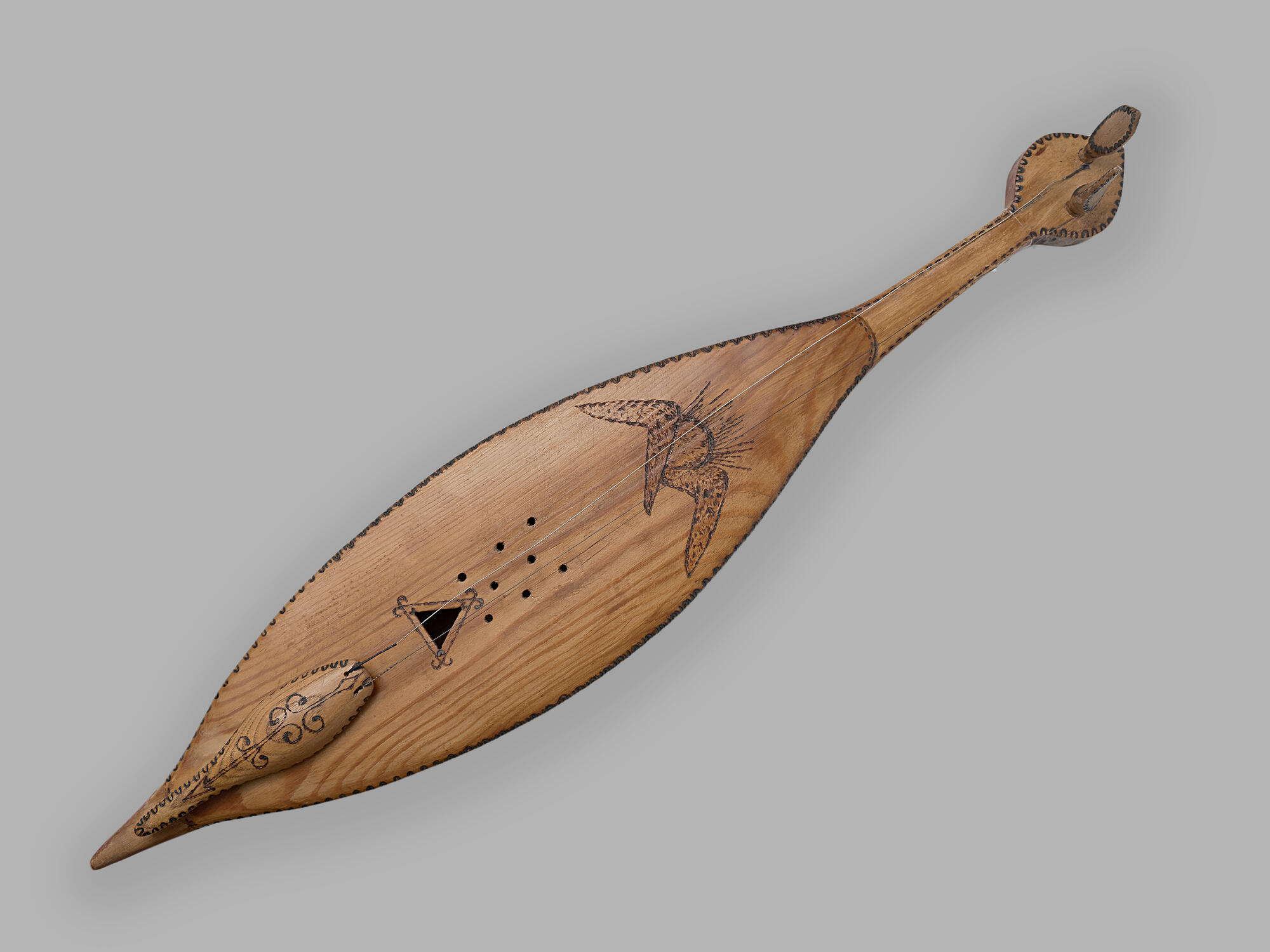


The shichepshin violin is an ancient Adyghe (Circassian) musical instrument of the bowed string instruments category. The violin has long been a part of the culture of the Adyghe people. It was played by folk musicians at festivals and celebrations.
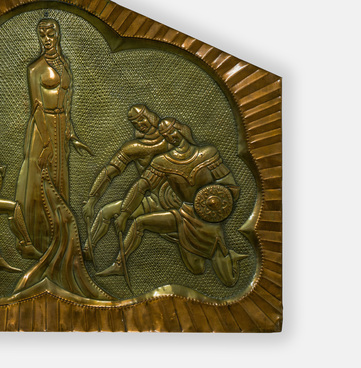
For the Adyghe, the shichepshin was and remains one of the most famous national instruments. For centuries, Adyghe storytellers performed folk songs and tunes, told legends and fables, as well as heroic tales from the Nart saga to the sound of this instrument.
Traditionally, the shichepshin was either boat- or dagger-shaped. Along its hardwood body, two or three horsehair strings were stretched. The resonator holes on the top deck were in the shape of a circle, rhombus or, sometimes, in the form of a national pattern or even an ancestral tamga. The sound was extracted by dragging the bow across the strings.
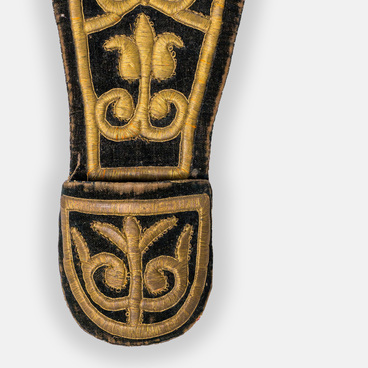
The violin was also treated as a sacred instrument with magical powers. To protect the instrument from evil energies, spirits or the evil eye, it was only played indoors and stored in a special case that should never be opened in the dark or on the street. The case was covered with a floral ornamental charm. If the instrument was not played for a long time or deteriorated, magical cleansing rituals were performed on it.
The violin was made by Bayzet Ilyasovich Ujukhu, who gave it to the Adygeysk Museum of Local Lore in 1991. He started making national musical instruments back in the 1980s.
The art of playing the shichepshin violin in Adygea experienced a revival that began at the end of the 20th century. Since then, there has been a whole galaxy of talented musicians who can both play and make this instrument.
Zamudin Guchev, a researcher of Adyghe folk music and Honored Artist of Adygea is credited with bringing the instrument back to the spotlight. This is what he said regarding the instrument: