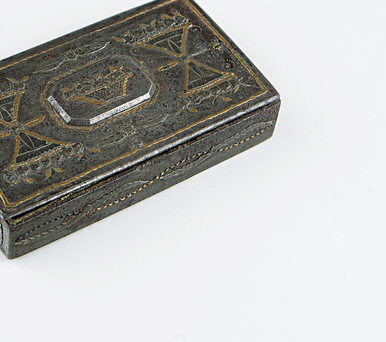
Tula was famous for its artistic metalwork in weapons and samovar production. But it was not just the weapons and samovars that brought Tula craftsmen their fame. Local metalworkers also made many household items and utensils, tools and appliances, watches and jewelry.
Ironmongery is one of the oldest traditional Tula crafts. It existed long before the Blacksmith (Armory) settlement in Tula at the end of the 16th century. According to statistics, in the early 1880s, the absolute majority of the population of the Tula Governorate was engaged in various crafts. Of the 39 crafts, 6 were related to metal, and the most common was the production of ironmongery. Initially, in addition to doing state-issued orders for weapons, Tula artisans also forged small and large hardware products at home for sale. In 1825, there were 44 metal workshops owned by city gunsmiths, and by 1910 there were already 1,140 of them.
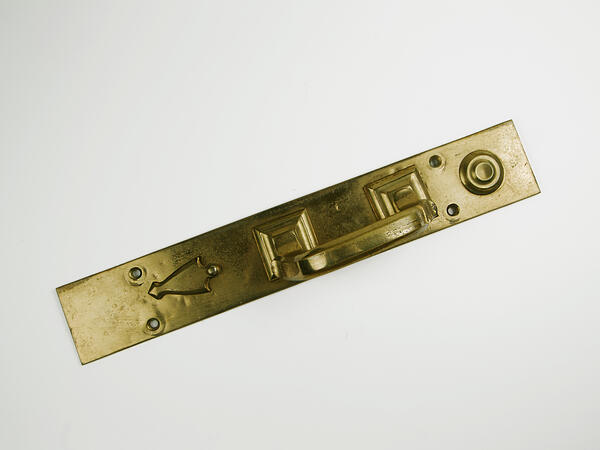
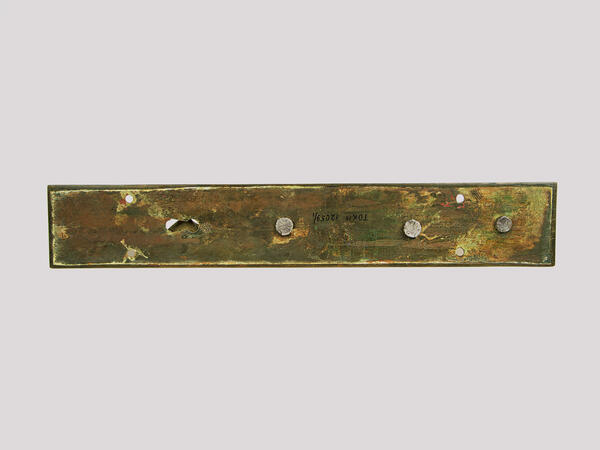
In the late 19th — early 20th centuries, artisanal workshops co-existed with larger establishments, such as the “Hardware establishment of the brothers Nikolai and Ivan Grigorievich Shcherbakov”, “The Hardware Manufacturing Partnership of engineer N.I. Zantfleben in Tula”, “The Partnership of the Teplov brothers”, “The Hardware Factory of S.P. Chentsov in Tula” and many others. The Historical and Memorial Museum of the Demidovs presents products made in these factories, as well as products with the brands of smaller manufacturers: the Kiselyov brothers, Panov, Kuprin, Kushnikov, and Krapiventsev.
The range of hardware products took into account almost all the needs of the population in metal goods. Window hardware was made to fit every taste: from the most basic for middle-class houses to the most refined for the homes of the wealthy. Each workshop sought to make its products unique and different from the rest. The craftsmen strived to be inventive and to hone their skills. There were a multitude of window handles with peculiar and descriptive names which when translated sound something like: “ear”, “ear on buttons”, “horse”, “bow”, “shoes”, etc.